Kamika Ekadashi: The Sacred Fast of Lord Vishnu
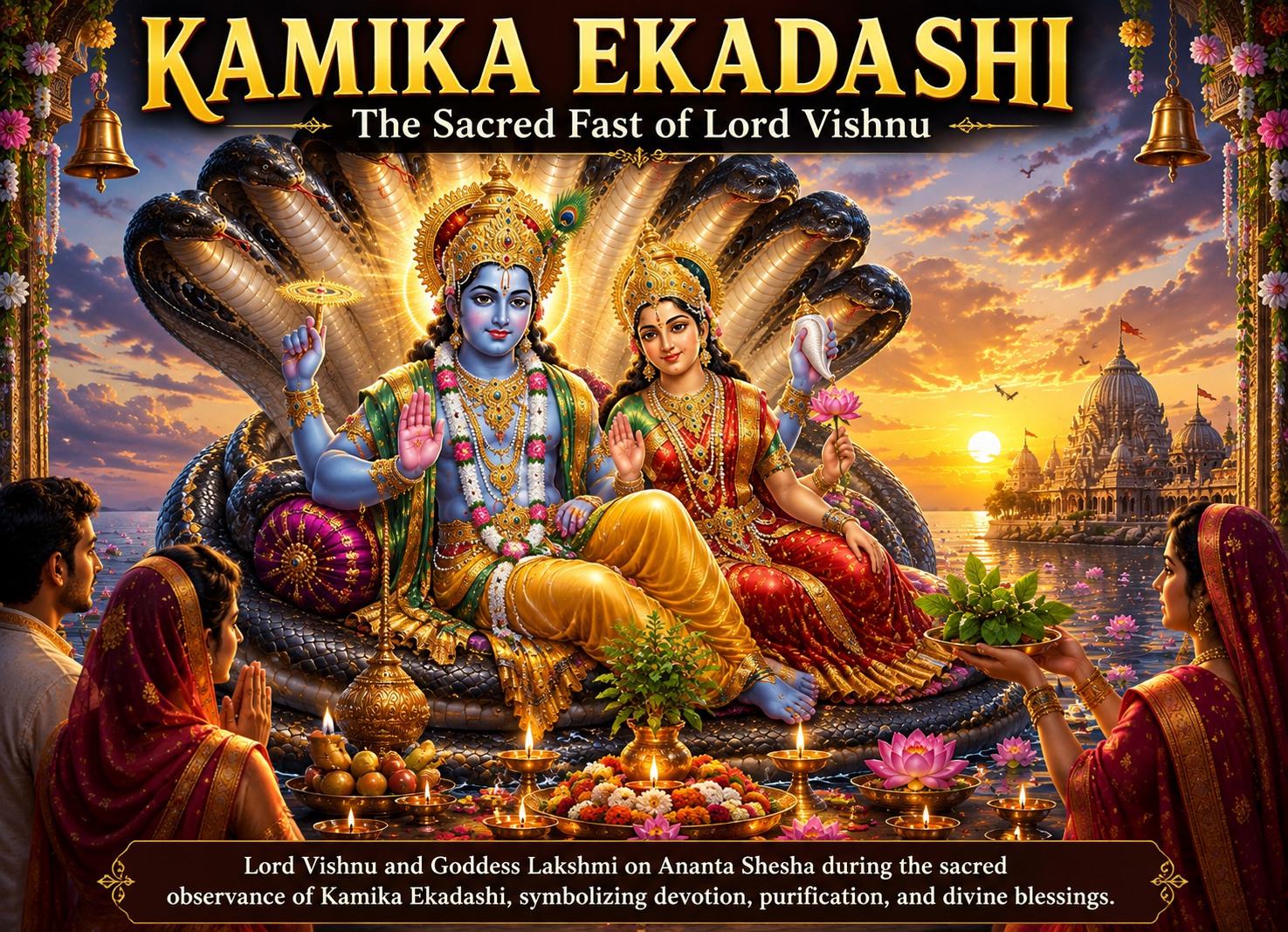
Among the twenty-four Ekadashis observed each year, Kamika Ekadashi occupies a special place in Hinduism. It falls during the Krishna Paksha (waning phase of the Moon) in the sacred month of Shravana (Sawan). Dedicated to Lord Vishnu, this holy day is believed to destroy sins, purify the heart, and lead devotees toward spiritual liberation.
The word “Kamika” means that which fulfills righteous desires. According to the ancient scriptures, observing this Ekadashi with devotion grants both material well-being and spiritual progress. It is said that worshipping Lord Vishnu on this day yields the same merit as performing many great sacrifices or visiting sacred pilgrimage sites.
The greatness of Kamika Ekadashi is beautifully described in the Brahma Vaivarta Purana, where Lord Krishna explains its significance to King Yudhishthira. The vrata is especially recommended for those seeking forgiveness, peace of mind, prosperity, and ultimately moksha (liberation).
This article explores the history, significance, rituals, fasting rules, legend, benefits, and spiritual teachings of Kamika Ekadashi in detail.
What is Kamika Ekadashi?
Kamika Ekadashi is the eleventh lunar day (Ekadashi Tithi) of the Krishna Paksha in the month of Shravana. Since Shravana is considered one of the holiest months for worship, this Ekadashi becomes especially powerful.
The festival emphasizes:
- Devotion to Lord Vishnu
- Self-control
- Compassion
- Charity
- Spiritual purification
Devotees believe that sincere fasting and prayers on this day erase accumulated sins and strengthen one’s relationship with the Supreme Lord.
Meaning of the Name “Kamika”
The Sanskrit word Kamika comes from Kama, meaning desire or wish.
However, this does not imply worldly greed. Instead, Kamika Ekadashi fulfills:
- Spiritual aspirations
- Desire for inner peace
- Devotion toward God
- Freedom from negative karma
- Progress toward liberation
The observance teaches devotees to replace selfish desires with devotion and righteousness.
Scriptural Origin
The glory of Kamika Ekadashi appears in the Brahma Vaivarta Purana.
King Yudhishthira asked Lord Krishna:
“O Janardana, please tell me about the Ekadashi that occurs during the dark fortnight of Shravana.”
Lord Krishna replied by explaining that this sacred Ekadashi destroys even severe sins and grants immense spiritual merit.
The scriptures declare that simply hearing the glories of Kamika Ekadashi bestows blessings upon devotees.
Why Kamika Ekadashi is Important
Kamika Ekadashi is regarded as one of the easiest and most effective ways to please Lord Vishnu.
Its importance includes:
- Removal of accumulated sins
- Purification of mind
- Growth in devotion
- Protection from negative influences
- Blessings of health and prosperity
- Peace in family life
- Advancement toward moksha
The vrata teaches that sincere devotion is more valuable than expensive rituals.
Spiritual Philosophy Behind Kamika Ekadashi
Fasting is much more than avoiding food.
The real purpose is:
- Controlling the senses
- Purifying thoughts
- Practicing compassion
- Remembering God throughout the day
- Detaching from worldly distractions
True fasting includes avoiding:
- Anger
- Pride
- Jealousy
- Gossip
- Violence
- False speech
The body fasts from food while the mind fasts from negativity.
The Sacred Legend of Kamika Ekadashi
One famous story associated with Kamika Ekadashi speaks of a man who unknowingly committed a grave sin by killing a Brahmin during an argument.
Overcome with guilt, he sought guidance from wise sages. They advised him to observe Kamika Ekadashi with complete sincerity.
He fasted, prayed to Lord Vishnu, remained awake throughout the night singing devotional hymns, and sincerely repented for his actions.
Pleased by his devotion, Lord Vishnu forgave his sins and granted him peace and spiritual upliftment.
The story teaches that sincere repentance combined with devotion has the power to transform even the greatest sinner.
Kamika Ekadashi and Tulsi Worship
One of the unique features of Kamika Ekadashi is the importance of Tulsi (Holy Basil).
According to the scriptures:
- Offering even a single Tulsi leaf to Lord Vishnu brings immense merit.
- Worshipping Tulsi on this day removes sins.
- Lighting a lamp near the Tulsi plant is considered highly auspicious.
Tulsi symbolizes purity, devotion, and surrender to God.
Worship of Lord Vishnu
On Kamika Ekadashi devotees worship Lord Vishnu in His various forms such as:
- Narayana
- Krishna
- Venkateswara
- Jagannath
- Lakshmi Narayana
Offerings generally include:
- Tulsi leaves
- Flowers
- Fruits
- Sandalwood paste
- Incense
- Ghee lamps
- Sacred water
The chanting of:
“Om Namo Bhagavate Vasudevaya”
is highly recommended throughout the day.
Kamika Ekadashi Vrat Vidhi (Ritual Procedure)
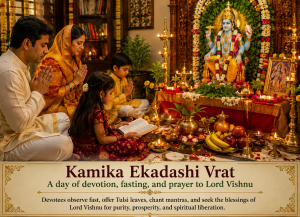
Before Sunrise
Devotees:
- Wake up during Brahma Muhurta.
- Take a holy bath.
- Wear clean clothes.
- Make a vow (Sankalpa) to observe the fast.
Morning Worship
After bathing:
- Clean the prayer room.
- Install or worship the image of Lord Vishnu.
- Offer flowers.
- Offer Tulsi leaves.
- Light incense and a lamp.
- Recite Vishnu Sahasranama.
During the Day
Devotees spend time in:
- Prayer
- Reading scriptures
- Charity
- Bhajans
- Meditation
- Chanting Vishnu’s names
Evening Worship
In the evening:
- Perform Vishnu Aarti.
- Offer fresh flowers.
- Light another ghee lamp.
- Read Kamika Ekadashi Katha.
Many devotees remain awake throughout the night singing devotional songs.
Types of Fasting
Different devotees observe the vrata according to their health and capability.
Nirjala Fast
No food or water.
This is the strictest form.
Water Fast
Only water is consumed.
Fruit Fast
Fruits, milk, and nuts are allowed.
Satvik Fast
Only Ekadashi-approved foods are eaten.
These may include:
- Milk
- Fruits
- Coconut water
- Makhana
- Sabudana
- Singhara flour
- Rock salt
Foods to Avoid
Traditional rules advise avoiding:
- Rice
- Wheat
- Lentils
- Beans
- Onion
- Garlic
- Meat
- Eggs
- Alcohol
These foods are believed to increase worldly attachment during the sacred fast.
Charity on Kamika Ekadashi
Donation is considered highly meritorious.
Common charitable acts include:
- Feeding the poor
- Giving clothes
- Donating food grains
- Offering cows (symbolically today through charity)
- Donating scriptures
- Supporting temples
Charity performed with humility multiplies the spiritual benefits.
Benefits of Kamika Ekadashi
The scriptures mention numerous blessings.
1. Cleansing of Sins
Even severe past mistakes can be forgiven through sincere devotion.
2. Spiritual Growth
The vrata strengthens faith and devotion toward Lord Vishnu.
3. Peace of Mind
Prayer and fasting help reduce stress and anxiety.
4. Prosperity
Many devotees pray for success, wealth, and family happiness.
5. Good Health
Moderate fasting, when practiced safely, encourages discipline and mindful eating.
6. Protection
Devotees believe Lord Vishnu protects sincere worshippers from difficulties.
7. Liberation
The highest blessing is freedom from the cycle of birth and death.
Importance of Night Vigil (Jagaran)
Remaining awake while remembering Lord Vishnu is highly praised.
Devotees spend the night:
- Singing bhajans
- Reading scriptures
- Chanting mantras
- Listening to devotional stories
The scriptures state that one night of sincere Jagaran yields immense spiritual merit.
Vishnu Mantras for Kamika Ekadashi
Popular mantras include:
Om Namo Bhagavate Vasudevaya
Om Namo Narayanaya
Hare Krishna Hare Krishna Krishna Krishna Hare Hare
Hare Rama Hare Rama Rama Rama Hare Hare
Regular chanting purifies the mind and deepens devotion.
Kamika Ekadashi in Different Regions
Across India, the observance reflects local traditions while preserving the same devotional spirit.
In North India, devotees visit Vishnu and Krishna temples, especially during the month of Sawan.
In South India, special pujas are performed in Vishnu temples, and recitations from the Vishnu Sahasranama and Bhagavad Gita are common.
In Odisha, many devotees worship Lord Jagannath with great reverence.
In West Bengal and Bangladesh, Vaishnava communities often organize kirtans, scripture readings, and community prayers.
Kamika Ekadashi and Environmental Values
An often-overlooked aspect of Kamika Ekadashi is its connection with nature.
The worship of Tulsi and the emphasis on simplicity encourage devotees to:
- Respect plants and trees.
- Avoid unnecessary consumption.
- Practice gratitude for natural resources.
- Live with moderation and compassion.
These values align with the broader Hindu understanding that nature is sacred and should be protected.
Lessons from Kamika Ekadashi
Kamika Ekadashi is not merely about abstaining from food; it is a day of inner transformation. Its teachings remain relevant in modern life:
- Self-discipline: Fasting cultivates control over desires and habits.
- Compassion: Charity reminds us to care for those in need.
- Forgiveness: The vrata emphasizes repentance and spiritual renewal.
- Mindfulness: Devotional practices help calm the mind amid daily stress.
- Faith: Trust in Lord Vishnu inspires hope and resilience during difficult times.
By practicing these principles, devotees can carry the spirit of Kamika Ekadashi beyond a single day and into everyday life.
Frequently Asked Questions (FAQs)
Can everyone observe Kamika Ekadashi?
Yes. People may choose the type of fast according to their age, health, and physical condition. Those with medical concerns should consult a healthcare professional before undertaking a strict fast.
Is Tulsi necessary for worship?
Tulsi leaves are considered especially dear to Lord Vishnu and are traditionally offered. If unavailable, sincere devotion remains the most important element of worship.
Can one drink water during the fast?
Many devotees do. Others observe stricter forms such as Nirjala. The level of austerity depends on individual capacity and tradition.
When is the fast broken?
The fast is generally broken on Dwadashi, the following day, during the prescribed Parana time after offering prayers to Lord Vishnu.
Conclusion
Kamika Ekadashi stands as one of the most spiritually enriching observances in the Hindu calendar. Rooted in devotion to Lord Vishnu, it combines fasting, prayer, charity, and self-discipline into a path of inner purification. The scriptures emphasize that even a simple offering of Tulsi leaves made with sincere faith is more pleasing to the Lord than elaborate rituals performed without devotion.
Whether one seeks forgiveness, peace, prosperity, or spiritual growth, Kamika Ekadashi offers an opportunity to renew one’s relationship with the Divine. Its timeless message is that true transformation begins within—through humility, compassion, and unwavering faith.
For devotees around the world, observing Kamika Ekadashi is not only a sacred tradition but also a reminder that the greatest blessings come from a heart dedicated to righteousness, service, and the loving remembrance of Lord Vishnu.
*Related articles:
- 24 Ekadashi Days
- Apara Ekadashi: The Sacred Day of Limitless Blessings and Spiritual Cleansing
- Papmochani Ekadashi: Liberation through Fasting
- Amalaki Ekadashi: Legends, Rituals and Significance
- Vaikuntha Ekadashi: Gateway to Divine Abode
- Utthana Ekadashi
- Rama Ekadashi: A Sacred Hindu Fasting Ritual in the Kartik Month
- Indira Ekadashi: Legend, Significance and Rituals
- Parsva Ekadashi: A Path to Liberation
- Parama Ekadashi: The Auspicious Fast of Generosity
- Sayana Ekadashii: Honoring the Divine Slumber