Chhath Puja: The Sacred Festival of the Sun God, Nature and Devotion
Chhath Puja is one of the most sacred, distinctive and spiritually meaningful festivals in Hinduism. Dedicated primarily to Surya Dev, the Hindu Sun God, and Chhathi Maiya, the divine mother associated with protection, well-being and the blessing of children, this festival represents humanity’s gratitude towards the natural forces that sustain life on Earth.
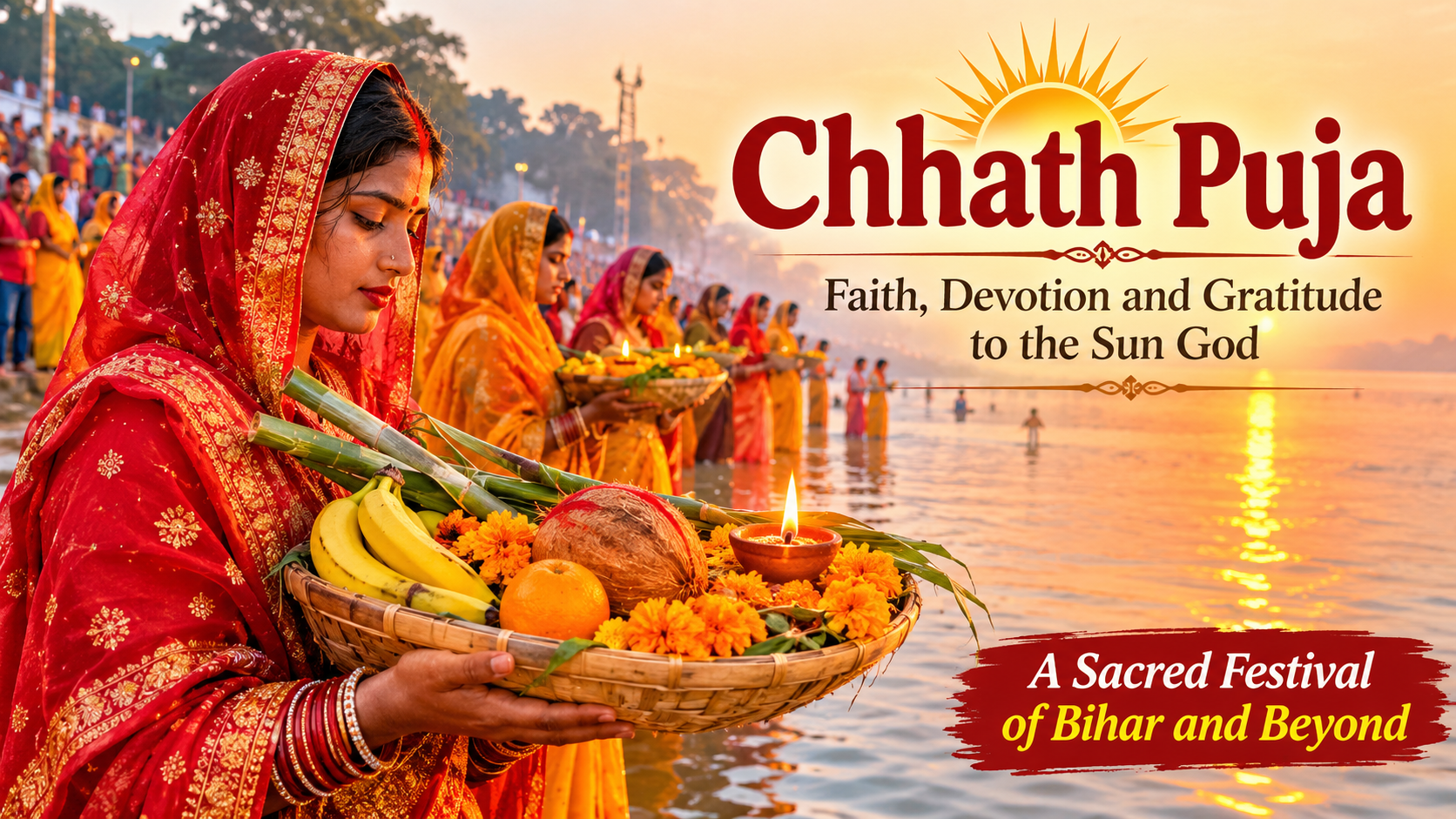
Unlike many other Hindu festivals, Chhath Puja does not depend on elaborate temple ceremonies, grand idols or complicated arrangements. Its central worship takes place in the natural surroundings of rivers, ponds, lakes and other water bodies. Devotees stand in the water, hold bamboo baskets filled with fruits and traditional offerings, and offer prayers to both the setting and the rising Sun.
The festival is particularly popular in Bihar, Jharkhand, eastern Uttar Pradesh and the Terai region of Nepal. However, its popularity has expanded considerably, and Hindu communities living in different parts of India and around the world now celebrate it with great enthusiasm.
Chhath Puja is also known as Surya Shashthi, Chhath Mahaparv and Dala Chhath. The word ‘Chhath’ is associated with the sixth lunar day, Shashthi, on which the principal evening worship takes place during the traditional autumn celebration.
The festival is observed over four days, involving ritual bathing, purification, fasting, preparation of traditional food, offerings to the Sun and the singing of devotional folk songs.
One of the most remarkable features of Chhath Puja is the worship of the setting Sun. While many traditions primarily celebrate sunrise as a symbol of new beginnings, Chhath devotees also offer their prayers to the Sun at sunset. This expresses gratitude for the entire cycle of life, acknowledging that endings are as meaningful as beginnings.
At its heart, Chhath Puja teaches gratitude, discipline, purity, environmental responsibility, family devotion and harmony between humanity and nature.
1. What Is Chhath Puja?
Chhath Puja is an ancient Hindu festival dedicated to the worship of Surya Dev and Chhathi Maiya. It is a four-day religious observance in which devotees express their gratitude to the Sun for providing light, energy, warmth and the conditions necessary for life.
The Sun has occupied an important position in Hindu religious philosophy since the Vedic period. It is regarded as a visible manifestation of divine energy and the source of vitality for all living beings.
In Hindu tradition, Surya is associated with health, prosperity, knowledge, strength and spiritual illumination. The festival also honours Chhathi Maiya, commonly identified with Shashthi Devi, who is worshipped as a protective mother and a divine guardian of children and families.
The central rituals involve offering Arghya, a respectful offering of water and other sacred materials, to the setting Sun on the sixth day and to the rising Sun on the following morning.
Devotees observe strict rules of cleanliness and self-discipline. Many undertake a rigorous fast, traditionally continuing without food and water from the evening of Kharna until the completion of the morning worship.
Chhath Puja is unusual in its simplicity. The Sun is worshipped directly in the open air, without requiring an elaborate temple structure or a priest to perform every part of the ceremony. The devotee, nature and the divine become closely connected through prayer.
This direct relationship between human beings and the natural world gives Chhath Puja its special spiritual character.
2. Historical Origins of Chhath Puja
The exact historical origin of Chhath Puja is difficult to establish. It is widely regarded as an ancient tradition of Sun worship that developed through the religious and cultural practices of the Indian subcontinent.
The worship of the Sun is deeply rooted in the Vedic tradition. The Rig Veda contains several hymns dedicated to Surya, Savitr and other solar manifestations. These hymns praise the Sun as a source of light, movement, vitality and cosmic order.
One of the best-known Vedic prayers associated with solar worship is the Gayatri Mantra, which invokes Savitr, the divine solar principle, for the illumination of human understanding.
The festival of Chhath is not described in the same form in every ancient text. Instead, its origin is connected with several religious legends, regional traditions and the continuing practice of nature worship.
The historical development of Chhath is particularly associated with Bihar and neighbouring regions. Over generations, the festival became an important part of the cultural identity of communities living along the Ganges and its tributaries.
The agricultural background of the region also helps explain the importance of the festival. Traditional societies depended heavily on sunlight, seasonal rainfall, fertile soil and rivers for their survival. Worshipping the Sun was therefore an expression of gratitude towards the natural forces that sustained agriculture and human life.
The autumn observance takes place during the Kartik month, generally in October or November. This period is associated with the post-monsoon agricultural season and the preparation for winter.
Today, Chhath Puja has become a major cultural and religious celebration, preserving traditional customs while connecting people across geographical boundaries.
3. Religious Significance of Surya Dev
कौन हैं भगवान सूर्य? ब्रह्मांडीय चेतना के आधार और प्रत्यक्ष देवता | Who is Lord Surya? Understanding the Cosmic Significance and Mythology of Sun Godpratahkal.com
Surya Dev occupies a highly respected position in Hinduism. He is regarded as the visible source of light and energy, without which life on Earth would not be possible.
The Sun provides warmth, supports the growth of plants, influences seasonal cycles and makes the natural world flourish. For this reason, ancient Hindu sages recognised the Sun as a powerful manifestation of divine energy.
In Hindu iconography, Surya is commonly depicted riding a magnificent chariot drawn by seven horses. These horses are traditionally associated with the seven colours of sunlight and various symbolic interpretations of cosmic movement and time. The chariot is driven by Aruna, who is described as the charioteer of the Sun.
Surya is also associated with the removal of darkness and ignorance. Just as sunlight illuminates the physical world, divine knowledge is believed to illuminate the human mind.
During Chhath Puja, devotees worship the Sun with sincere prayers, seeking:
- Good health and physical strength.
- Prosperity and happiness in family life.
- The well-being and longevity of children.
- Success in personal and professional life.
- Mental peace and spiritual development.
- Protection from difficulties and negative influences.
- Gratitude for the gifts of nature.
An important aspect of Chhath Puja is that devotees worship the Sun during both sunset and sunrise. The setting Sun is not considered less worthy of reverence than the rising Sun.
This practice expresses a profound spiritual idea: every phase of life deserves respect. Youth and old age, success and difficulty, beginnings and endings are all parts of the same natural cycle.
4. Who Is Chhathi Maiya?
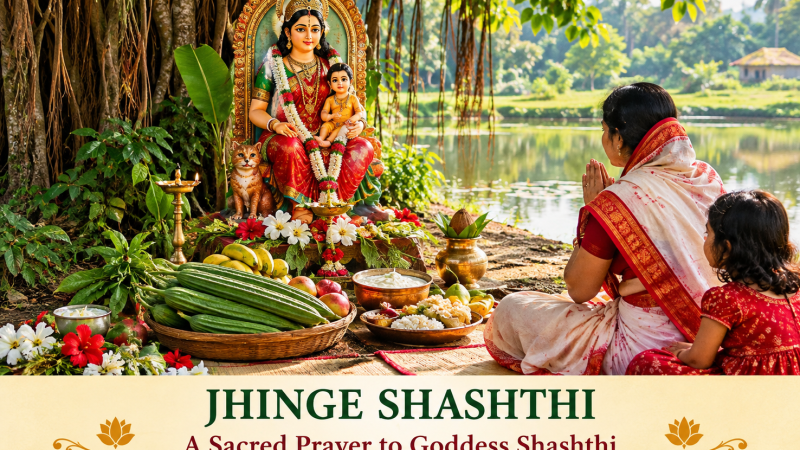
Chhathi Maiya is one of the principal divine figures associated with Chhath Puja. She is worshipped as a mother goddess who protects children, blesses families and supports the well-being of devotees.
She is commonly associated with Shashthi Devi, a goddess traditionally connected with childbirth, fertility and the protection of infants.
According to Hindu religious traditions, Shashthi Devi is regarded as a divine protector of children and a benevolent mother who blesses families with happiness and prosperity.
In regional traditions, Chhathi Maiya is also associated with the divine feminine power of nature. Some traditions connect her with Usha, the Vedic goddess of dawn, although the precise theological identifications vary across regions and religious narratives.
The worship of Chhathi Maiya reflects the importance of motherhood, family protection and the nurturing power of the universe.
Devotees, especially women, observe the Chhath fast with deep faith and dedication. They pray for the happiness, health and long life of their children and family members.
However, Chhath Puja is not limited to women. Men also observe the fast and participate in the religious ceremonies.
The worship of Chhathi Maiya gives the festival a deeply emotional dimension. It is not simply an occasion to honour the Sun but also an expression of maternal devotion, family responsibility and faith in divine protection.
5. Mythological Stories Associated with Chhath Puja
Several stories from Hindu mythology and regional folklore are associated with Chhath Puja. These narratives explain the importance of Sun worship and the spiritual values represented by the festival.
It is important to understand that some of these accounts are traditional interpretations and popular regional beliefs rather than universally established descriptions of the festival’s historical origin.
5.1 Karna and the Worship of Surya Dev
Meena Sankranti 2026: Date, Timings & Significanceradhakrishnatemple.net
One of the most popular stories associated with Chhath Puja concerns Karna, the heroic warrior of the Mahabharata.
Karna was the son of Kunti and Surya Dev. According to the Mahabharata, Kunti received a divine boon from the sage Durvasa, through which she could invoke a deity and receive a child from that deity.
When Kunti invoked Surya before her marriage, Karna was born with divine armour and earrings. These extraordinary gifts made him a remarkable warrior.
Karna grew up to become a generous and courageous ruler. He is remembered for his extraordinary generosity, loyalty and commitment to his promises.
Popular Chhath traditions associate Karna with regular worship of Surya Dev. According to these beliefs, he offered prayers to his divine father while standing in water and sought his blessings.
Some regional traditions consider Karna one of the earliest devotees associated with the practice of Sun worship that later became an important part of Chhath Puja.
The story reminds devotees of the importance of devotion, discipline, gratitude and generosity.
5.2 Draupadi and the Blessings of the Sun
Another popular legend connects Chhath Puja with Draupadi, the wife of the five Pandavas.
According to traditional accounts, during the period of their exile, the Pandavas experienced numerous difficulties. They faced uncertainty, hardship and the challenge of maintaining their lives in the forest.
In a popular narrative, Draupadi sought divine assistance to overcome their difficulties. She was advised to worship Surya Dev and observe a religious fast.
Surya is also associated with the Akshaya Patra, the inexhaustible vessel that provided food to the Pandavas during their exile, according to the Mahabharata.
Regional traditions connect Draupadi’s devotion to the Sun with the spiritual practices of Chhath.
The story teaches that sincere prayer, patience and self-discipline can give people courage during difficult periods of life.
5.3 Lord Rama and Goddess Sita
Ravi Pradosh March 2026 Date, Time, Significanceradhakrishnatemple.net
A popular regional tradition connects Chhath Puja with Lord Rama and Goddess Sita.
According to this belief, after returning to Ayodhya from their fourteen years of exile and the victory over Ravana, Rama and Sita performed a sacred ritual in honour of Surya Dev.
They are traditionally believed to have observed a fast and offered prayers to the Sun as part of their religious observances.
Some versions of the story associate this worship with Kartik Shukla Shashthi, the sixth day of the bright lunar fortnight during the month of Kartik.
The story highlights the importance of gratitude towards the divine after achieving success and overcoming difficulties.
It also connects Chhath Puja with the ideals of righteousness, devotion and family harmony represented by Rama and Sita.
5.4 King Priyavrat and Shashthi Devi
Another important legend associated with Shashthi Devi appears in the Brahmavaivarta Purana.
According to the popular account, King Priyavrat and his queen Malini were deeply distressed because they could not have a child.
After performing religious observances, the queen gave birth to a child, but the infant appeared lifeless. The royal family was overcome with grief.
At that moment, a divine goddess appeared and introduced herself as Shashthi Devi, a manifestation of divine feminine power.
Through her blessings, the child was restored to life.
The goddess also declared that she would protect children and bless families who worshipped her with devotion.
This story is particularly significant because it explains the association of Shashthi Devi with childbirth, motherhood and the protection of children.
In the Chhath tradition, Chhathi Maiya is worshipped with similar faith and devotion.
6. When Is Chhath Puja Celebrated?
Chhath Puja is traditionally celebrated twice a year, although the autumn observance is considerably more popular.
The two main observances are:
Kartik Chhath: Celebrated during the bright lunar fortnight of Kartik, generally in October or November. It is the principal and most widely observed Chhath festival.
Chaiti Chhath: Celebrated during the bright lunar fortnight of Chaitra, generally in March or April. It is a smaller observance compared with Kartik Chhath.
The autumn festival begins on Kartik Shukla Chaturthi and concludes on Kartik Shukla Saptami. Its principal evening offering takes place on Shashthi, the sixth lunar day.
The dates change every year according to the Hindu lunar calendar.
For 2026, Kartik Chhath Puja is observed in November. Devotees should consult a reliable local Hindu Panchang for the precise regional tithi and sunrise and sunset timings.
The festival is especially associated with the period following Diwali, making it one of the most important religious celebrations of the Kartik month.
7. The Four Days of Chhath Puja and Their Rituals
Chhath Puja is observed over four consecutive days. Each day has a particular religious purpose and a set of traditional customs. The entire observance is centred on purification, self-discipline, devotion and gratitude.
The four principal stages are Nahay Khay, Kharna, Sandhya Arghya and Usha Arghya.
7.1 First Day: Nahay Khay
Chhath Puja 2022: छठ पूजा नहाय खाय पर जरूर खाएं ये चीजें | Nahaye Khaye Vrat Food | *Religious – video Dailymotiondailymotion.com
The first day of Chhath Puja is known as Nahay Khay, meaning bathing and eating.
It marks the beginning of the four-day religious observance. Devotees, particularly those undertaking the fast, begin by cleaning their homes and preparing themselves physically and spiritually for the festival.
The devotee takes a ritual bath, often in a river or another sacred water body. Those who cannot visit a river may bathe at home while maintaining the traditional rules of cleanliness.
The kitchen and cooking utensils are thoroughly cleaned. Food is prepared with particular care, and traditional customs require the use of pure ingredients and a clean cooking environment.
A traditional meal on this day generally consists of:
- Rice.
- Chana dal (Bengal gram).
- Pumpkin or bottle gourd.
- Rock salt.
- Other permitted vegetarian ingredients.
The food is usually prepared without onion and garlic, according to the customs followed by many families.
The devotee traditionally eats this meal once and begins the period of restraint and purification.
Nahay Khay is not merely a preparation for the main worship. It symbolises the cleansing of the body and mind before entering a sacred period of devotion.
7.2 Second Day: Kharna
Chhath Puja Day 2 (Kharna): Significance of Jaggery Kheer and Roti | Chhathi Maiya Puja | Top Indian Newstopindiannews.com
The second day is known as Kharna or Lohanda.
On this day, devotees observe a fast throughout the day. They generally avoid food and water until the evening, when they perform the Kharna ritual.
After sunset, the devotee prepares a special meal and offers it to the divine before consuming it as Prasad.
The traditional Kharna offering commonly includes:
- Rice pudding prepared with milk and jaggery.
- Wheat flour roti.
- Seasonal fruits.
- Other simple and pure food items according to family tradition.
The rice pudding is often cooked slowly and carefully. Jaggery is used instead of refined sugar in many traditional preparations.
After the offering, the devotee consumes the Prasad and shares it with family members and other people.
An important feature of Kharna is that the completion of this evening ritual marks the beginning of the more rigorous fast, which traditionally continues until the morning Arghya on the fourth day.
This fast is often described as a 36-hour Nirjala Vrat, meaning a fast without food and water. Its actual duration depends on the timing of the rituals.
Kharna represents self-control, sacrifice, purity and dedication.
7.3 Third Day: Sandhya Arghya
Chhath Puja 2026: Arghya Times & Vrat | PanchangBodhpanchangbodh.com
The third day is the most visually impressive part of Chhath Puja. It is known as Sandhya Arghya, meaning the evening offering to the setting Sun.
On this day, devotees prepare traditional offerings and carry them to nearby rivers, ponds, lakes or specially arranged Chhath ghats.
The atmosphere becomes deeply devotional. Families walk together carrying bamboo baskets filled with fruits, sweets, sugarcane and other sacred offerings.
The devotees stand in the water and wait for sunset. As the Sun gradually approaches the horizon, they offer Arghya to Surya Dev.
The ritual is accompanied by traditional Chhath songs, devotional prayers and expressions of gratitude.
The main offerings generally include:
Thekua: A traditional sweet prepared with wheat flour and jaggery. It is one of the most recognisable Prasad items associated with Chhath Puja.
Fruits: Bananas, coconuts, apples, oranges and seasonal fruits are commonly included.
Sugarcane: Sugarcane is an important traditional offering and symbolises agricultural abundance.
Coconut: Coconut is offered as a sacred fruit representing purity and devotion.
Rice laddoo: Traditional sweets made from rice flour or puffed rice may also be included.
Other seasonal produce: Different regions include locally available fruits and agricultural products.
The offerings are traditionally arranged in bamboo baskets called soop and daura.
As the evening light gradually fades, hundreds or thousands of devotees can be seen standing in the water, offering prayers to the setting Sun.
The scene is particularly beautiful when the water reflects the golden rays of the Sun and the devotional songs fill the surroundings.
The worship of the setting Sun carries a profound message. It teaches people to express gratitude not only during periods of growth and success but also when life enters a period of decline or uncertainty.
The setting Sun is honoured with the same respect as the rising Sun.
This is one of the most meaningful spiritual lessons of Chhath Puja.
7.4 Fourth Day: Usha Arghya
Chhath Puja 2025 Vrat Paran Vidhi: 36 घंटे के व्रत का इस तरह किया जाता है पारण, जानें प्रात: अर्घ्य की विधि और महत्व – chhath puja 2025 vrat paran vidhi 36-hour fast paran niyam vidhi know importance of morining arghya | Moneycontrol Hindihindi.moneycontrol.com
The fourth and final day is known as Usha Arghya or Bhorwa Arghya.
It is dedicated to the worship of the rising Sun.
Devotees wake up early in the morning, often before dawn, and return to the riverbanks or other designated worship places.
They carry the same traditional offerings and prepare themselves for the final ceremony.
As the first rays of the Sun appear over the horizon, devotees stand in the water and offer Arghya to Surya Dev.
The morning offering is associated with Usha, the divine principle of dawn and the arrival of a new day.
Devotees pray for good health, prosperity, peace and the well-being of their families.
After completing the worship, they receive blessings and share Prasad with family members, neighbours and other devotees.
The completion of Usha Arghya marks the end of the principal Chhath observance. The devotee then breaks the fast through a ritual known as Parana.
This final stage symbolises renewal, hope and the victory of light over darkness.
The festival concludes with a feeling of spiritual fulfilment and collective happiness.
8. Important Offerings and Prasad of Chhath Puja
Chhath puja 2025: छठ पूजा की संपूर्ण सामग्री और विधि – Chhath Puja Date, Samagri n Vidhi | Webdunia Hindihindi.webdunia.com
Food offerings occupy a central position in Chhath Puja. Unlike elaborate feasts prepared for some other Hindu festivals, Chhath offerings are generally simple, traditional and closely connected with agricultural life.
Every offering has cultural and devotional significance.
Thekua
Thekua is perhaps the most famous food associated with Chhath Puja.
It is a traditional sweet prepared using wheat flour, jaggery and ghee or another suitable cooking fat. The dough is shaped into small pieces, often decorated with traditional wooden moulds, and fried until golden brown.
Thekua is considered an essential Prasad in many Chhath traditions. Families prepare it with great care, observing strict cleanliness.
Bananas
Bananas are among the most common fruits offered during Chhath Puja.
They represent natural abundance and are valued as a nutritious fruit. Whole bunches of bananas are often arranged in bamboo baskets.
Sugarcane
Sugarcane is another important offering.
It represents agricultural prosperity and the sweetness of life. Sugarcane stalks are often arranged around the worship area or included in the offerings.
Coconut
Coconut is considered sacred in Hindu worship. It symbolises purity, devotion and auspiciousness.
It is commonly placed in the offering baskets along with other fruits.
Rice Laddoo
Rice-based sweets and laddoos are also included in traditional offerings. Their preparation and ingredients may differ from one region to another.
Seasonal Fruits and Vegetables
Seasonal agricultural produce is another important part of Chhath Prasad. Sweet potatoes, water chestnuts, lemons and other locally available fruits and vegetables may be offered.
The use of seasonal produce reflects the festival’s close relationship with nature and agriculture.
9. The Spiritual Meaning of Offering Arghya to the Setting and Rising Sun
One of the most distinctive features of Chhath Puja is the worship of the Sun at two opposite moments of the day.
On the third day, devotees offer Arghya to the setting Sun. On the fourth day, they offer Arghya to the rising Sun.
These two rituals have deep philosophical significance.
Respect for Every Stage of Life
The setting Sun symbolises the completion of a cycle. It reminds humanity that every stage of existence has its own value.
Human life also passes through different stages, including childhood, youth, maturity and old age.
Chhath Puja teaches that people should respect every stage rather than celebrating only youth, power and success.
Hope and New Beginnings
The rising Sun represents hope, renewal and fresh opportunities.
Every sunrise brings a new opportunity to learn, improve and continue the journey of life.
Through Usha Arghya, devotees express their faith in the possibility of a brighter tomorrow.
Gratitude Towards Nature
The Sun is essential for the existence of life. Plants depend on sunlight for photosynthesis, and the Earth’s natural systems are influenced by solar energy.
Offering Arghya is therefore also a symbolic expression of gratitude towards the natural world.
Humility and Surrender
Standing in water with folded hands before the vast Sun reminds human beings of their small place within the universe.
It encourages humility and surrender before the divine power that sustains existence.
10. Why Is Water Important in Chhath Puja?
Water is another central element of Chhath Puja.
Most of the major rituals take place beside rivers, ponds, lakes or other water bodies. Devotees stand in the water while offering prayers to the Sun.
Water has great importance in Hindu philosophy. It is associated with purification, fertility, renewal and the continuation of life.
The rivers of India have also played a major role in the development of Hindu civilisation. They have supported agriculture, settlements, transportation and religious traditions for thousands of years.
In Chhath Puja, water becomes the sacred setting in which human devotion and natural energy come together.
The combination of sunlight and water is especially meaningful because both are essential for life.
The ritual bathing at the beginning of the festival symbolises purification. Standing in water during Arghya expresses humility and devotion.
The importance of water also reminds society to protect rivers and other natural resources.
A festival that celebrates nature should encourage responsible behaviour towards the environment.
11. Chhath Puja and Environmental Awareness
Chhath Puja has a particularly strong connection with environmental awareness.
The festival is celebrated in natural surroundings, and its traditional offerings consist largely of fruits, vegetables, agricultural products and other biodegradable materials.
Unlike many religious celebrations that depend on elaborate artificial decorations, the traditional Chhath observance uses simple materials such as bamboo baskets, earthen lamps and natural offerings.
Its environmental messages include:
- Respecting rivers, ponds and other water bodies.
- Keeping public worship places clean.
- Avoiding unnecessary plastic decorations.
- Using natural and biodegradable materials.
- Appreciating agricultural products and seasonal harvests.
- Encouraging community participation in cleaning riverbanks.
- Reducing waste after religious celebrations.
However, the environmental benefits of the festival depend on responsible practices. Large gatherings can create pollution if plastic, packaging, food waste and other materials are carelessly discarded.
Therefore, devotees and organisers should ensure that the ghats remain clean before, during and after the celebration.
The spiritual message of Chhath becomes more meaningful when people actively protect the natural elements they worship.
12. Cultural Importance of Chhath Puja in Bihar and Other Regions
Chhath Puja is deeply connected with the cultural identity of Bihar.
For many families, it is more than a religious festival. It is an occasion that brings relatives together, strengthens community relationships and preserves ancestral traditions.
In Bihar, the preparations begin several days before the festival. Houses are cleaned, traditional foods are prepared, baskets are arranged and local water bodies are decorated.
Entire communities participate in preparing the ghats. People volunteer to clean roads, arrange lighting and make the worship areas accessible.
The festival is also celebrated with great enthusiasm in:
Jharkhand: Chhath is an important religious and cultural celebration, particularly in urban and rural communities with strong connections to Bihar.
Eastern Uttar Pradesh: The festival is widely observed in districts along the Ganges and other rivers.
Nepal: Chhath is especially popular in the Terai region, where it is an important part of the cultural and religious life of many communities.
West Bengal: Communities with roots in Bihar, Jharkhand and eastern Uttar Pradesh celebrate Chhath in cities such as Kolkata and other locations.
Delhi and Mumbai: Large gatherings take place at designated riverbanks, lakes and artificial water bodies.
Chhath has also become an important festival for migrant communities who have carried their traditions to different parts of India and the world.
13. Chhath Puja Celebrations in Nepal and Around the World
आज छठ पर्वको मुख्य दिन, अस्ताउँदो सूर्यलाई अर्घ्य दिइँदै | Bittiya Postbittiyapost.com
Although Chhath Puja originated as a prominent regional tradition of the Indian subcontinent, its popularity has spread far beyond its traditional geographical boundaries.
In Nepal, particularly in the Terai region, Chhath is one of the most important Hindu festivals. Devotees gather beside rivers, ponds and other water bodies to offer prayers to Surya Dev and Chhathi Maiya.
The festival is also celebrated in Kathmandu, where devotees gather at designated water bodies and worship the Sun with traditional offerings.
In India, major celebrations take place in cities such as Patna, Ranchi, Varanasi, Delhi, Kolkata and Mumbai.
The banks of the Ganges in Bihar become especially vibrant during the festival. Thousands of devotees gather at the ghats, creating a remarkable atmosphere of faith and devotion.
With the migration of people from Bihar and neighbouring regions, Chhath Puja has also reached different countries.
Hindu communities in the United Kingdom, the United States, Canada, Australia and other countries organise Chhath celebrations.
In these places, devotees arrange suitable water bodies, prepare traditional offerings and perform the rituals according to their family customs.
The festival demonstrates how religious traditions can travel across borders while preserving their original cultural identity.
14. Chhath Puja in Bangladesh
Chhath Puja is also relevant to Hindu communities in Bangladesh, particularly those who maintain cultural and family connections with Bihar, Jharkhand, Uttar Pradesh and neighbouring parts of India.
Although it is not as widely observed throughout Bangladesh as Durga Puja, Kali Puja or Janmashtami, some devotees and migrant families observe Chhath according to their inherited traditions.
The festival’s central message of gratitude towards the Sun, respect for nature and devotion to family has universal relevance.
Wherever the festival is observed, devotees can follow its traditional principles while respecting local environmental conditions and maintaining cleanliness around the worship area.
The celebration also offers an opportunity for cultural exchange among different Hindu communities.
15. Folk Songs and Music of Chhath Puja
Chhath Geet: छठ गीतों की पवित्रता, जानें क्यों केवल इस महापर्व पर गाए जाते हैं?prabhatkhabar.com
Traditional folk songs are an essential part of Chhath Puja.
The festival is closely associated with Bhojpuri, Maithili and Magahi folk traditions. These songs express devotion towards Surya Dev and Chhathi Maiya while describing the emotions, hopes and experiences of devotees.
Many Chhath songs are passed from one generation to another. They are sung by women and other family members during preparations, while carrying offerings to the ghats and during the evening and morning worship.
The lyrics often describe:
- The greatness of Surya Dev.
- The blessings of Chhathi Maiya.
- A mother’s prayers for her children.
- The journey of devotees to the riverbank.
- The importance of family relationships.
- The beauty of sunrise and sunset.
- The spiritual discipline of the Chhath fast.
Folk music gives the festival a distinctive emotional identity.
The songs are not merely entertainment. They are an important expression of community memory, regional language and religious devotion.
Even when families move to distant cities or foreign countries, traditional Chhath songs help them preserve their cultural connections.
16. The Importance of Fasting During Chhath Puja
Fasting is one of the most significant aspects of Chhath Puja.
The devotee who undertakes the fast is commonly known as a Vrati.
The Vrati follows strict rules of purity, discipline and devotion throughout the festival. The fasting practices may vary according to family traditions, regional customs and individual circumstances.
The most demanding part is the Nirjala Vrat, traditionally observed after Kharna and continued until the morning offering.
During this period, devotees abstain from both food and water.
This practice represents extraordinary religious dedication and self-control.
However, the fast should not be interpreted as a requirement for every person. People with medical conditions, pregnant individuals, older adults and those who may be harmed by prolonged fasting should seek appropriate medical advice and follow safer alternatives.
The spiritual value of Chhath lies in sincere devotion rather than in putting one’s health at risk.
The festival reminds people that discipline, purity and devotion should be accompanied by wisdom and compassion.
17. The Social Message of Chhath Puja
Chhath Puja is not only a religious celebration but also an important social occasion.
Its community-based nature encourages people to work together, regardless of their social or economic circumstances.
Unlike certain elaborate ceremonies that may require specialised arrangements, the central worship of Chhath can be performed through simple offerings and personal prayers.
This gives the festival an inclusive character.
Unity and Cooperation
Families, neighbours and local organisations work together to prepare the ghats and arrange the necessary facilities.
Such cooperation strengthens community relationships.
Respect for Women
Women have traditionally played a prominent role in Chhath observances. Their dedication, discipline and organisational contributions are widely recognised.
At the same time, men also participate in the rituals, demonstrating that the festival belongs to the entire community.
Family Bonding
The preparations bring family members together. Younger generations learn traditional songs, food preparations and religious customs from their elders.
Equality and Simplicity
The Sun shines upon everyone without discrimination. This natural reality provides a powerful symbol of equality.
Chhath encourages people to recognise the shared human dependence on nature, regardless of caste, wealth or social position.
18. Chhath Puja and the Scientific Importance of the Sun
The religious significance of Surya Dev also provides an opportunity to appreciate the scientific importance of the Sun.
The Sun is the central star of our solar system. Its energy supports almost every major natural process necessary for life on Earth.
Some of its important contributions include:
Photosynthesis: Plants use sunlight to produce food through photosynthesis. This process forms the foundation of most terrestrial food chains.
Climate and Weather: Solar energy drives atmospheric circulation and influences the Earth’s climate and weather patterns.
Water Cycle: Solar heat causes water to evaporate, contributing to cloud formation and rainfall.
Vitamin D: Exposure to sunlight helps the human body produce vitamin D, which plays an important role in bone health and other physiological functions.
Agriculture: Sunlight is essential for the growth and development of crops.
These scientific facts help us understand why ancient communities regarded the Sun with such reverence.
However, religious rituals should not be confused with scientific treatments or medical procedures. The spiritual practice of Chhath and the scientific study of solar energy belong to different but complementary areas of human understanding.
The festival offers a meaningful opportunity to appreciate the natural processes that sustain life.
19. Important Rules and Preparations for Chhath Puja
Devotees traditionally follow several rules during Chhath Puja. Although practices may differ slightly between regions and families, certain principles are widely respected.
Cleanliness: The home, kitchen, cooking utensils and worship area should be thoroughly cleaned.
Purity of food: Traditional Prasad is prepared with carefully selected ingredients and in a clean environment.
Vegetarian diet: The Vrati follows a simple vegetarian diet according to the customs of the family.
Self-discipline: Devotees maintain restraint in their daily activities and focus on prayer and devotion.
Traditional offerings: Fruits, thekua, sugarcane, coconut and other seasonal products are arranged in bamboo baskets.
Respect for nature: Rivers, ponds and worship locations should be kept clean.
Community participation: Family members and neighbours help prepare the offerings and arrange the worship.
Devotional songs: Traditional songs and prayers are an important part of the celebration.
The most important principle is sincerity. Chhath Puja is observed with devotion, humility and gratitude rather than with a desire for public display.
20. The Difference Between Chhath Puja and Other Hindu Festivals
Chhath Puja has several distinctive features that make it different from many other Hindu festivals.
First, the Sun is the central object of worship. Although solar worship is found throughout Hindu religious traditions, Chhath gives it an especially prominent place.
Second, both the setting and rising Sun receive offerings. This is a particularly recognisable feature of the festival.
Third, the worship takes place mainly in natural surroundings rather than being centred on a temple or an elaborate idol.
Fourth, the four-day observance involves an exceptional degree of personal discipline and fasting.
Fifth, the festival has a strong community dimension. The preparation and maintenance of the ghats involve the collective efforts of many people.
Finally, Chhath Puja has a distinctive regional cultural identity, especially through Bhojpuri, Maithili and Magahi folk songs, traditional foods and customs.
These features make Chhath one of the most recognisable and meaningful festivals of Hindu solar worship.
21. How Can the Younger Generation Preserve the Tradition of Chhath Puja?
The continuation of traditional festivals depends greatly on the participation and understanding of younger generations.
Chhath Puja provides an excellent opportunity for young people to learn about Hindu philosophy, regional culture and environmental responsibility.
Families can encourage children to participate in the preparations, learn the meaning of the four-day rituals and understand why Surya Dev and Chhathi Maiya are worshipped.
Traditional folk songs should also be preserved. Recording elderly family members singing these songs can help protect cultural heritage.
Schools, cultural organisations and community groups can organise discussions about the historical, religious and environmental significance of the festival.
Digital platforms can also play a useful role. Articles, photographs, documentaries and educational videos can introduce Chhath traditions to people who may not have the opportunity to witness the celebration directly.
However, preserving a festival should not mean turning it into a commercial spectacle. Its original message of simplicity, discipline, gratitude and respect for nature should remain central.
22. The Universal Message of Chhath Puja
Although Chhath Puja is rooted in Hindu religious traditions, its central teachings have universal significance.
The festival teaches gratitude towards the natural world. Every living being depends on the Sun, water, air and fertile land. Recognising this dependence encourages humility and responsibility.
It also teaches that devotion requires discipline. The Vrati’s commitment throughout the four days demonstrates the importance of patience, determination and self-control.
The worship of the setting Sun reminds us that we should respect people and situations even when they are no longer at the height of their power or success.
The worship of the rising Sun encourages hope and confidence in new beginnings.
The participation of entire communities highlights the importance of unity, cooperation and mutual respect.
Above all, Chhath Puja reminds humanity that nature is not merely a resource to be used. It is the foundation of existence and deserves gratitude, protection and respect.
23. Conclusion: A Festival of Faith, Gratitude and Harmony with Nature
Chhath Puja is one of the most beautiful expressions of devotion in Hinduism. Through its four days of religious observances, it brings together spirituality, family traditions, cultural heritage and respect for nature.
The worship of Surya Dev reminds humanity of the importance of the Sun as the source of light, warmth and energy. The worship of Chhathi Maiya expresses faith in divine motherhood, protection and the well-being of families.
The four stages of the festival—Nahay Khay, Kharna, Sandhya Arghya and Usha Arghya—represent a spiritual journey from purification and discipline to gratitude and renewal.
Perhaps the most profound lesson of Chhath Puja lies in its worship of both the setting and the rising Sun. It teaches us that every stage of life deserves respect and that hope can emerge even after the darkest moments.
The festival also reminds us to protect rivers, respect natural resources and live in harmony with the environment.
As generations continue to celebrate Chhath Puja in India, Nepal, Bangladesh and different parts of the world, its timeless message remains meaningful: express gratitude for the gifts of nature, remain devoted to your responsibilities, respect all living beings and welcome every new sunrise with hope.
Chhath Puja is not merely a festival of Sun worship; it is a celebration of life itself.
24. Frequently Asked Questions About Chhath Puja
1. What is Chhath Puja?
Chhath Puja is a four-day Hindu festival dedicated to Surya Dev and Chhathi Maiya. Devotees observe fasting and offer prayers to the setting and rising Sun.
2. Why is Chhath Puja celebrated?
It is celebrated to express gratitude towards the Sun for sustaining life and to seek blessings for health, prosperity, family happiness and the well-being of children.
3. How many days does Chhath Puja last?
The main observance lasts four days: Nahay Khay, Kharna, Sandhya Arghya and Usha Arghya.
4. Who is Chhathi Maiya?
Chhathi Maiya is a mother goddess associated with Shashthi Devi. She is worshipped for the protection of children, family welfare and prosperity.
5. Why do devotees worship the setting Sun?
The setting Sun represents the completion of a natural cycle. Worshipping it teaches gratitude, humility and respect for every stage of life.
6. What is the main Prasad of Chhath Puja?
Thekua is the most recognisable traditional Prasad. Other offerings include bananas, coconuts, sugarcane, rice laddoos and seasonal fruits.
7. What is the meaning of Sandhya Arghya?
Sandhya Arghya means offering prayers and sacred offerings to the setting Sun on the evening of the third day.
8. What is Usha Arghya?
Usha Arghya is the final morning offering made to the rising Sun on the fourth day of Chhath Puja.
9. Where is Chhath Puja mainly celebrated?
It is especially popular in Bihar, Jharkhand, eastern Uttar Pradesh and Nepal. It is also celebrated in other Indian states and among Hindu communities worldwide.
10. Is Chhath Puja celebrated twice a year?
Yes. The two main observances are Kartik Chhath, celebrated in October or November, and Chaiti Chhath, celebrated in March or April.
*Related Article: Surya: The Radiant Sun God of Hinduism
*Updated on 14 November, 2026