Goddess Sheetla: The Cooling Mother of Compassion and Healing
Among the countless divine manifestations worshipped in Hinduism, Goddess Sheetla occupies a unique and deeply revered place in the hearts of devotees. Known as the goddess of healing, purification, and protection from infectious diseases, Sheetla Mata symbolizes both the fierce and compassionate aspects of Divine Mother Shakti. For centuries, millions of devotees across India, Bangladesh, Nepal, and other parts of South Asia have worshipped her with immense devotion, especially during epidemics and seasonal diseases.
The word “Sheetla” comes from the Sanskrit word Śītalā, meaning “coolness” or “the cooling one.” Her very name represents relief from fever, suffering, pain, and disease. Traditionally, she is associated with curing illnesses like smallpox, chickenpox, measles, and skin infections. Even today, she continues to be worshipped as a divine protector of family health and children’s well-being.
Origin and Mythological Background of Goddess Sheetla
According to Hindu scriptures and regional legends, Goddess Sheetla emerged from the divine energies of the universe to protect humanity from deadly diseases and epidemics. The Skanda Purana contains references to her origin and powers. One popular legend states that Lord Brahma created Sheetla Mata during a sacred yajna (fire sacrifice) to help control the spread of diseases among humans.
Another traditional story describes how Sheetla Mata traveled across heaven and earth with Jwarasura, the demon of fever. Wherever they went, diseases spread rapidly. When people prayed for mercy, the compassionate goddess agreed to heal humanity if they worshipped her with devotion and maintained purity and cleanliness.
These stories reflect a profound symbolic understanding present in ancient Hindu culture — diseases were not merely physical afflictions but also disturbances of balance between nature, body, and spirituality.
Iconography and Symbolism of Sheetla Mata
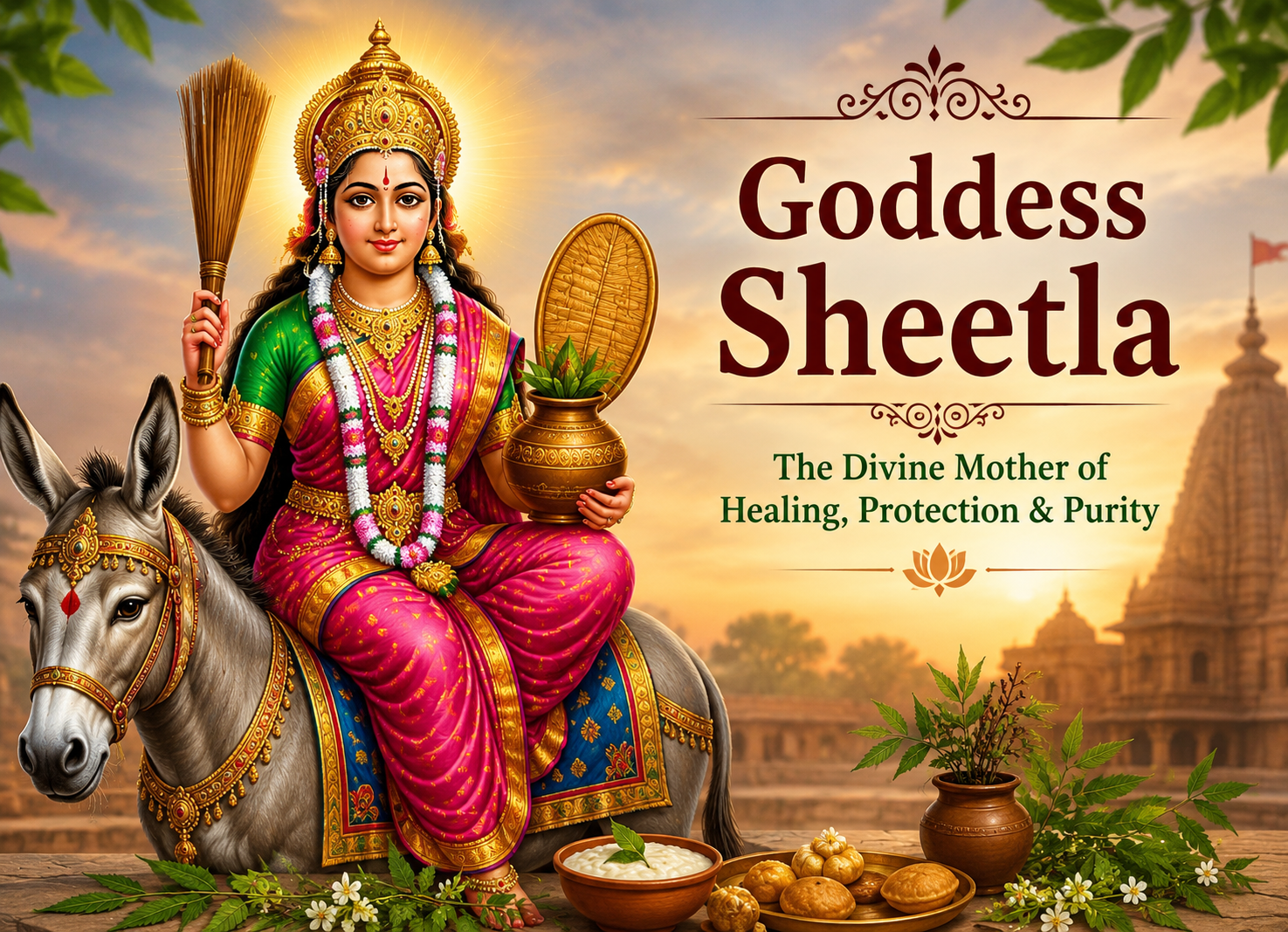
The image of Goddess Sheetla is rich with symbolism and spiritual meaning. She is usually depicted riding a donkey and carrying four important objects:
- A broom
- A water pot filled with holy water
- A winnowing fan
- A bowl or pot of medicinal substances
Her broom symbolizes cleanliness and purification. The water pot represents healing and cooling energy. The fan indicates relief from fever and suffering, while the medicinal bowl signifies restoration and cure.
Unlike many fierce warrior goddesses who carry weapons, Sheetla Mata’s symbols are connected with hygiene, healing, compassion, and disease prevention. Modern scholars often interpret her worship as an ancient cultural expression of public health awareness.
Goddess Sheetla and Smallpox
Historically, Sheetla Mata became widely worshipped during outbreaks of smallpox and other contagious diseases in India. Before the development of modern vaccines and medical science, communities sought divine blessings for protection and healing. The goddess was believed to both cause and cure diseases, depending on human conduct and devotion.
People maintained strict rituals during outbreaks:
- Houses were cleaned thoroughly
- Neem leaves were used extensively
- Cooling foods were consumed
- Fire and cooking were sometimes avoided
Interestingly, many of these practices had hygienic and medicinal benefits. Neem, for example, possesses antibacterial and antiviral properties and continues to be respected in Ayurveda.
Sheetla Ashtami and Sheetla Saptami
The most important festival dedicated to Goddess Sheetla is Sheetla Ashtami or Sheetla Saptami, celebrated mainly after Holi during the Hindu month of Chaitra. Devotees observe fasting, perform puja, and offer cold food prepared the previous day.
A remarkable aspect of this festival is the tradition of avoiding fresh cooking. Families consume “basi” or previously cooked food, including:
- Cold rice
- Sweet dishes
- Yogurt
- Poori
- Gur (jaggery)
- Cooling preparations
This tradition symbolizes calmness, cooling energy, discipline, and purification.
In states like Rajasthan, Gujarat, Uttar Pradesh, West Bengal, and Haryana, Sheetla Mata temples witness massive gatherings during this festival. Devotees pray for:
- Good health
- Family protection
- Children’s safety
- Freedom from diseases
Regional Forms of the Goddess
Goddess Sheetla is worshipped under different names across India:
- In North India: Sheetla Mata or Shitala Devi
- In West Bengal and Bangladesh: Highly revered in folk traditions and Mangal-kavya literature
- In South India: Worshipped as Mariamman, the goddess associated with rain, healing, and epidemics
Though names and rituals vary, the central idea remains the same — the Divine Mother protects humanity from suffering and restores balance.
Spiritual Significance of Goddess Sheetla
Beyond physical healing, Sheetla Mata represents deeper spiritual truths. She teaches devotees:
- Purity of mind and body
- Compassion toward others
- Respect for nature
- Cleanliness and discipline
- Faith during difficult times
Her worship reminds people that health is sacred and interconnected with lifestyle, environment, and spirituality.
Many devotees believe that praying to Sheetla Mata brings emotional peace and removes fear, anxiety, and negativity. Mothers especially worship her for the safety and healthy growth of children.
Rituals and Worship of Sheetla Mata
Devotees worship Sheetla Mata with great devotion, simplicity, and purity. Common practices include:
1. Cleaning the Home
Homes and temples are cleaned thoroughly before the puja. Cleanliness is considered essential in pleasing the goddess.
2. Offering Cold Food
Food prepared the previous night is offered to the goddess. This is known as Sheetal Bhog.
3. Neem Leaves
Neem leaves are placed near the altar and sometimes around beds of sick individuals. Neem is considered sacred to Sheetla Mata.
4. Chanting Mantras
Devotees chant hymns and mantras seeking protection and healing.
A popular mantra is:
“Om Sheetalayai Namah”
Meaning: Salutations to Goddess Sheetla.
5. Visiting Temples
Special prayers and community worship are organized at Sheetla Mata temples during Sheetla Ashtami.
Cultural Importance in Modern Times
Although smallpox has been eradicated globally, the worship of Goddess Sheetla continues with deep faith and cultural significance. During modern health crises and pandemics, many devotees once again turned toward spiritual practices connected with healing and protection.
Interestingly, scholars and historians often view Sheetla worship as evidence that ancient Indian communities understood the importance of hygiene, isolation, cooling treatments, and environmental cleanliness long before modern medical systems evolved.
Her worship beautifully combines:
- Spirituality
- Folk tradition
- Ayurveda
- Community health awareness
- Cultural unity
Goddess Sheetla in Bengali Traditions
In Bengal and Bangladesh, Goddess Sheetla holds a special place in rural religious traditions. Folk songs, devotional literature, and local legends celebrate her as a compassionate mother who protects villages from epidemics and suffering.
Many old Bengali households continue traditional Sheetla worship practices even today, especially during seasonal changes associated with fever and skin diseases.
Conclusion
Goddess Sheetla is far more than a deity associated with diseases. She is the embodiment of compassion, healing, purity, and divine maternal protection. Her worship reflects humanity’s eternal hope for relief from suffering and the restoration of balance in life.
In today’s world, where health and hygiene remain crucial concerns, the symbolism of Sheetla Mata continues to inspire millions. Her traditions remind us of the importance of cleanliness, discipline, faith, and respect for nature.
Whether worshipped as Sheetla Mata in North India, Mariamman in the South, or through regional folk traditions in Bengal and Bangladesh, the goddess continues to shine as a timeless symbol of healing grace and divine motherhood.
Jai Maa Sheetla. 🙏