Benaras Dev Deepawali Celebration 2026: A Divine Night of Lights
26 November 2026
The 2026 celebration of Dev Deepawali in Varanasi was observed on Tuesday, 24 November, coinciding with Kartik Purnima. The festival’s principal deep-daan period in Varanasi was listed from 5:08 pm to 7:47 pm local time. Drikpanchang+1
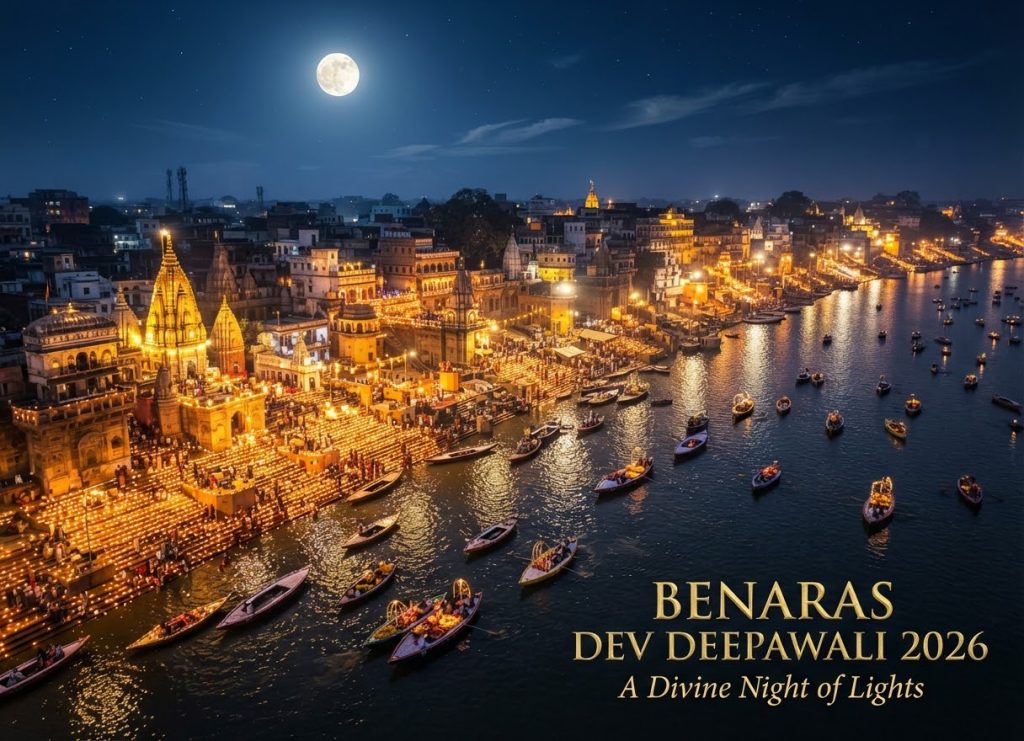
The city’s preparations included plans to illuminate all 84 ghats with earthen lamps, welcome a large number of pilgrims, and present a spectacular drone display. A report published on 23 November said more than 2,000 drones were expected to create religious and cultural formations in the sky, while officials anticipated over 10 lakh devotees. Hindustan Times
The occasion once again placed the ancient city of Kashi at the centre of India’s spiritual and cultural calendar. For devotees, the festival is not merely a public spectacle but an expression of gratitude to the Ganga, reverence for Lord Shiva, and remembrance of the triumph of divine light over darkness.
The celebration is also deeply connected with the legend of Tripurasura, whose defeat by Lord Shiva gave Kartik Purnima the name Tripurari Purnima. This mythological episode, rather than a section of the Ramayana, is the central sacred narrative associated with Dev Deepawali.
The sacred city of Benaras welcomes the divine festival
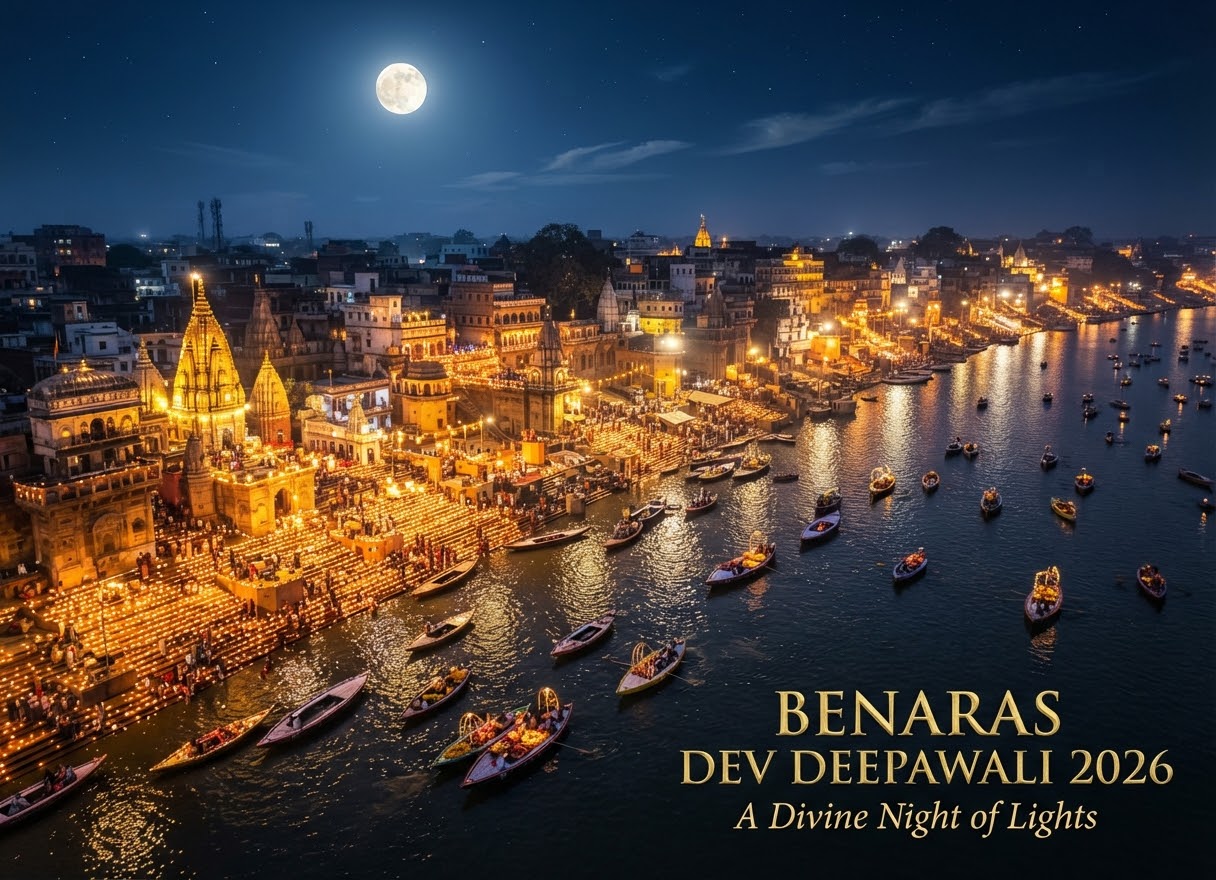
Cinematic night drone shot of Kashi glowing with thousands of diyas during Dev Deepawali. The Ganga River sparkles with light reflections, and boats float peacefully along the illuminated ghats.Dev Diwali 2025: देव दिवाली पर आज इन 7 जगहों पर जलाएं दीपक, मां लक्ष्मी समेत देव भी होंगे प्रसन्न – dev diwali 2025 light diya at these 7 places on dev deepawali goddess lakshmi dev will be pleased tvisg – AajTakDev Deepawali & Kartik Purnima 2025: Date, Timings, Puja Vidhi, Vrat Katha & Significance9
Benaras, also known as Varanasi or Kashi, is among the most revered pilgrimage destinations in Hinduism. Situated on the western bank of the River Ganga in Uttar Pradesh, the city is celebrated for its ancient temples, sacred riverfront, spiritual traditions, and association with Lord Shiva.
Kashi is traditionally regarded as the city of Shiva, where the divine presence is believed to guide devotees towards spiritual liberation. The city’s identity is inseparable from the Ganga, whose waters are worshipped as the sacred manifestation of Goddess Ganga.
Throughout the year, pilgrims visit Varanasi to perform religious ceremonies, offer prayers, undertake sacred bathing, and seek blessings at the temples. However, the city assumes a particularly extraordinary appearance during Dev Deepawali.
On this occasion, the ghats become an immense illuminated landscape. The stone steps, temple entrances, riverfront buildings, and pathways are decorated with rows of earthen lamps. The glow of the diyas creates a striking contrast against the darkening sky and the flowing waters of the Ganga.
The festival attracts pilgrims, photographers, cultural enthusiasts, domestic tourists, and international visitors. For many, witnessing Dev Deepawali in Kashi is a once-in-a-lifetime spiritual experience.
The 2026 celebration continued this tradition, bringing together religious devotion, cultural performances, public participation, and the visual splendour of the ancient riverfront.
Dev Deepawali 2026: Date and important timings
Dev Deepawali is celebrated on Kartik Purnima, the full-moon day of the Hindu lunar month of Kartik. In 2026, the festival fell on 24 November.
According to the Varanasi calendar, the Kartik Purnima tithi began at 11:42 pm on 23 November and ended at 8:23 pm on 24 November. The evening deep-daan period was calculated from 5:08 pm to 7:47 pm. Drikpanchang
| Event | Date and time |
|---|---|
| Dev Deepawali 2026 | Tuesday, 24 November |
| Kartik Purnima begins | 11:42 pm, 23 November |
| Kartik Purnima ends | 8:23 pm, 24 November |
| Deep-daan period | 5:08 pm–7:47 pm |
| Main celebration | Varanasi Ganga ghats |
These timings are based on the local Panchang calculations for Varanasi. The exact observance of religious activities may vary according to temple traditions and local arrangements.
The principal attraction of the festival is the evening illumination, when devotees light diyas along the ghats and offer them to the sacred river.
Why is Dev Deepawali called the Diwali of the Gods?
The name Dev Deepawali means the Deepawali of the gods. The festival is associated with the belief that celestial beings descend to the earthly realm on Kartik Purnima to celebrate the divine victory of Lord Shiva and worship the sacred Ganga.
According to popular religious tradition, the gods illuminate the ghats of Kashi with heavenly lamps. Devotees symbolically recreate this celestial celebration by lighting thousands and millions of earthen diyas.
The festival is also known as Dev Diwali, Tripurotsav, and Tripurari Purnima.
The word Tripurari refers to Lord Shiva as the destroyer of Tripura, the three fortified cities associated with the demon Tripurasura. The victory of Shiva over Tripurasura represents the destruction of arrogance, ignorance, and evil.
Thus, Dev Deepawali carries a powerful spiritual message: when divine wisdom overcomes darkness, the world becomes illuminated with peace, harmony, and righteousness.
The legend of Tripurasura and Lord Shiva
Tripurasura Samharam – Telugu Devotional Story | Ch. Pratap త్రిపురాసుర సంహారం – తెలుగు భక్తి కథ | Ch. ప్రతాప్File:Tripurantaka – 11th Century – Indian Art – Asian Art Museum of San Francisco.jpg – Wikimedia CommonsDev Diwali (Deepawali) 2026: Date, Tithi, Puja Vidhi, Story6
The most important mythological episode associated with Dev Deepawali is the battle between Lord Shiva and Tripurasura.
According to Hindu mythology, Tripurasura was a powerful demon whose name is associated with three magnificent cities. These cities were constructed in different realms and became known collectively as Tripura.
The demon and his brothers acquired extraordinary power through austerities and divine blessings. Their strength gradually became a source of pride, and they began to disturb the balance of the universe.
The gods became concerned about the growing influence of the demons. Their repeated attempts to defeat Tripurasura proved unsuccessful because of the extraordinary protection and strength enjoyed by the demon.
Eventually, the celestial beings approached Lord Shiva and requested his intervention.
Shiva, the supreme destroyer and protector of cosmic order, agreed to confront the demon. The gods contributed their powers to prepare the divine chariot and weapons required for the battle.
In the traditional account, the Earth became the chariot, the Sun and Moon served as its wheels, and Mount Meru became the bow. Lord Vishnu is associated with the divine arrow in popular retellings of the story.
When the three cities aligned at the appointed moment, Shiva released the celestial arrow and destroyed Tripura.
The victory became known as Tripurari Vijaya, the triumph of Shiva over the three cities. It symbolised the restoration of cosmic balance and the destruction of evil.
Kartik Purnima is therefore celebrated as Tripurari Purnima in connection with this divine episode.
The lighting of lamps during Dev Deepawali commemorates this victory. Every diya becomes a symbol of divine power, spiritual awakening, and the triumph of righteousness.
The spiritual meaning of the three cities
The legend of Tripurasura is often interpreted beyond its literal mythological narrative.
The three cities may be understood symbolically as the three forms of bondage that keep human beings attached to ignorance and worldly illusion.
In spiritual interpretations, Tripura can represent the three states of consciousness, the three qualities of nature, or the limitations of ego and material attachment.
Lord Shiva’s destruction of Tripura therefore signifies the awakening of spiritual knowledge.
The divine arrow represents concentrated wisdom, while the destruction of the cities symbolises the removal of ignorance.
Dev Deepawali becomes a reminder that spiritual liberation is achieved not merely through external celebration but through inner transformation.
The lamps illuminated along the Ganga represent the awakening of consciousness. Their light reminds devotees to overcome selfishness, hatred, pride, and ignorance.
This spiritual interpretation makes Dev Deepawali meaningful beyond its spectacular appearance.
The Ganga ghats: The heart of Dev Deepawali
Dev Deepawali Varanasi Tour 2025 – Boat Ride & Ganga Aarti Tickets, Dashashwamedh Ghat, Varanasi, 4 November to 6 NovemberExplore The Best Ghats in Varanasi for Dev Diwali Celebrations!Ganga Mahotsav 2025: Ahead of Dev Deepawali, Kashi’s ghats gear up for Ganga Mahotsav 2025 — full 4-day schedule, and artist line-up out | – The Times of India11
The ghats of Varanasi form the central stage of Dev Deepawali. These riverfront steps have served as places of pilgrimage, bathing, worship, meditation, and cremation for centuries.
During the festival, the entire riverfront becomes a magnificent display of light.
The 2026 preparations included plans to illuminate all 84 ghats along the Ganga, extending the celebration across the sacred waterfront. Hindustan Times
Among the most prominent locations are Dashashwamedh Ghat, Assi Ghat, Raj Ghat, Panchganga Ghat, Manikarnika Ghat, and the ghats near the Kashi Vishwanath corridor.
Each ghat has its own historical and religious importance. Together, they create a continuous landscape of devotion.
As evening approaches, volunteers and local participants arrange earthen lamps along the steps, platforms, temples, and river-facing structures. The lighting process transforms the ghats into a luminous riverfront.
The reflections of the lamps on the Ganga create an extraordinary visual experience. From a distance, the river appears to carry thousands of golden stars.
The sight is especially enchanting under the full moon of Kartik Purnima.
Dashashwamedh Ghat and the grand Ganga Aarti
Dev Diwali: Experience the Divine Festival of Lights in Varanasi – Nativeplanetnativeplanet.com
Dashashwamedh Ghat is one of the most famous and spiritually significant ghats in Varanasi. It is widely known for its daily Ganga Aarti, a sacred ritual performed in honour of Goddess Ganga.
During Dev Deepawali, the ghat becomes one of the principal centres of the celebration.
The grand Aarti is performed by priests using large multi-tiered lamps, incense, flowers, and other traditional offerings. The ceremony is accompanied by devotional chants, conch-shell sounds, bells, and the rhythmic movements of the priests.
The ritual creates a powerful atmosphere of devotion.
Thousands of people gather to witness the ceremony, while boats on the river provide a panoramic view of the illuminated waterfront.
The Ganga Aarti is not simply a performance. It is an expression of gratitude to the river, which is revered as the source of life, purification, and spiritual blessing.
For devotees, offering prayers to Goddess Ganga during Kartik Purnima is an opportunity to express humility and seek divine grace.
Assi Ghat and the southern riverfront celebration
Assi Ghat, situated in the southern part of Varanasi, is another important location during Dev Deepawali.
The ghat is associated with religious bathing, cultural gatherings, yoga, and spiritual activities. It attracts both pilgrims and visitors who wish to experience a quieter yet vibrant side of the city.
During Dev Deepawali, Assi Ghat is illuminated with rows of diyas and becomes a major gathering point.
The southern riverfront offers a distinctive view of the festival. Visitors can observe the illuminated ghats, the boats moving along the Ganga, and the cultural activities taking place around the river.
The 2026 programme also included plans for a drone display near Assi Ghat, adding a modern visual element to the traditional celebration. HelloBanaras
Manikarnika Ghat: The eternal significance of Kashi
Manikarnika Ghat is one of the most sacred cremation grounds in Hinduism.
The ghat is associated with the belief that those who die in Kashi may receive the blessing of liberation. It represents the Hindu understanding of life, death, and the eternal journey of the soul.
During Dev Deepawali, the sacred riverfront is illuminated, while the spiritual significance of Manikarnika remains deeply connected with the city’s identity.
The festival reminds devotees that life is temporary, while the soul is understood in Hindu philosophy as eternal.
The lamps symbolise the light of consciousness that continues beyond the darkness of physical existence.
The sacred atmosphere of Kashi encourages reflection on the meaning of life, the importance of righteous conduct, and the pursuit of moksha.
Panchganga Ghat and the ancient traditions of Kartik
Panchganga Ghat is another important sacred location in Varanasi.
According to religious tradition, the ghat is associated with the confluence of five sacred rivers, including the invisible Saraswati. It is regarded as an auspicious place for bathing and religious observances.
During Kartik Purnima, devotees visit the ghat to perform sacred rituals and offer lamps.
The ancient traditions of Kartik month emphasise devotion, charity, self-discipline, and spiritual purification.
Dev Deepawali brings these traditions together in a collective celebration of faith.
Deep-daan: The offering of sacred lamps
Travel guide to Diwali 2025 in Varanasi | Experience Dev Deepawali in Varanasi | Diwali 2025 in Varanasi | Events News – News9livenews9live.com
Deep-daan, or the offering of lamps, is one of the most important rituals of Dev Deepawali.
The word deep means lamp, while daan means offering or donation. In this ritual, devotees light earthen lamps and offer them in devotion to the divine.
The lamps may be placed on the steps of the ghats, near temples, in courtyards, or on specially arranged platforms.
Some devotees also offer lamps to the Ganga, symbolically expressing gratitude to the sacred river.
The ritual is associated with the belief that offering light removes darkness and brings spiritual merit.
Deep-daan is also performed in memory of ancestors. Families may light lamps to honour departed loved ones and pray for their peace.
The tradition reflects the Hindu belief that light is a symbol of knowledge, purity, and divine presence.
Kartik Purnima and the sacred bath in the Ganga
Kartik Purnima is regarded as an auspicious day for religious bathing.
Many devotees arrive in Varanasi before sunrise to take a holy dip in the Ganga. The ritual is believed to purify the body and mind and help devotees renew their spiritual commitments.
The sacred bath is followed by prayers, offerings, and visits to temples.
For many pilgrims, the day begins with a simple act of devotion: entering the sacred river, offering water to the Sun, and remembering the divine.
The spiritual importance of Kartik Purnima extends beyond Varanasi. It is observed in many parts of India through bathing, fasting, charity, and worship.
In Kashi, however, the association of Kartik Purnima with Lord Shiva and the Ganga gives the festival a distinctive character.
Ganga Mahotsav: The cultural celebration before Dev Deepawali
Dev Deepawali is also connected with Ganga Mahotsav, a cultural festival that brings together music, dance, folk traditions, and artistic performances.
The 2026 Ganga Mahotsav was scheduled from 20 to 23 November at Namo Ghat, leading up to the main Dev Deepawali celebration. Planento+1
The festival highlights the cultural heritage of Uttar Pradesh and the artistic traditions of Varanasi.
Classical music, folk performances, devotional singing, and traditional dance are among the cultural expressions associated with the event.
Varanasi has long been recognised as a centre of Indian classical music. The city has nurtured generations of musicians, singers, scholars, and spiritual teachers.
Ganga Mahotsav provides an opportunity to celebrate this artistic legacy alongside the religious significance of the Ganga.
The cultural programme also helps visitors understand that Dev Deepawali is not limited to a single evening. It forms part of a wider celebration of Kashi’s living heritage.
The spectacular illumination of 2026
The 2026 Dev Deepawali celebration was expected to feature extensive illumination across the riverfront.
Preparations reported before the festival included plans for more than 11 lakh lamps across the ghats, the opposite sandy bank, and selected kunds in the city. HelloBanaras
The lighting of lamps is one of the most visually striking elements of the festival.
The diyas are arranged in carefully planned patterns, often creating geometric designs, religious symbols, and decorative formations.
The glow of the lamps spreads across the stone steps and reflects on the river, creating a spectacular scene.
The illumination also highlights the architectural beauty of the ghats and the old buildings overlooking the Ganga.
The festival’s atmosphere is enhanced by temple bells, devotional music, and the sound of prayers rising from the riverfront.
Drone shows and modern technology
Kashi shines bright! 21 lakh lamps, light shows, firecrackers light up Dev Deepawali 2024-PHOTOSetnownews.com
Modern technology has become an increasingly prominent feature of large public celebrations in Varanasi.
For Dev Deepawali 2026, reports before the event indicated that more than 2,000 drones were expected to illuminate the sky with religious and cultural formations. Hindustan Times
Drone displays can create images of sacred symbols, temples, deities, and cultural motifs through coordinated lights.
These performances offer a contemporary visual interpretation of the festival while retaining its traditional spiritual themes.
The combination of earthen lamps on the ghats and illuminated formations in the sky creates a striking contrast between ancient ritual and modern technology.
The use of drones also reflects the growing importance of cultural tourism and large-scale event presentation in Varanasi.
Chet Singh Ghat and the projection show
Chet Singh Ghat is known for its historic architecture and prominent riverfront structure.
During the 2026 celebration, a projection and laser show was planned at the ghat, according to local event information. HelloBanaras
Projection shows use light and visual effects to display images and stories on buildings or specially prepared surfaces.
Such presentations can highlight the history of Kashi, the sacred Ganga, and the mythology associated with Dev Deepawali.
The inclusion of a projection show adds another dimension to the festival, allowing visitors to experience the city’s heritage through a combination of storytelling and technology.
The beauty of Dev Deepawali from a boat
Dev Diwali 2025: Date, Muhurat, Highlights, Significance, Tips & Ritualsradhakrishnatemple.net
A boat ride on the Ganga is one of the most memorable ways to experience Dev Deepawali.
From the river, visitors can observe the illuminated ghats from a wide perspective. The lights extend along the riverfront, creating a continuous line of golden brilliance.
The ancient buildings, temples, and stone steps appear especially beautiful when viewed from the water.
The reflection of the diyas creates a shimmering effect, while the full moon adds a natural glow to the scene.
Boat rides are popular during the festival, but visitors should follow official instructions, use authorised boats, and wear life jackets.
The river can become crowded during major events, making safety and responsible travel essential.
The role of local communities and volunteers
Dev Deepawali is a celebration shaped not only by religious institutions and public authorities but also by local residents and volunteers.
The preparation of lamps, arrangement of diyas, cleaning of ghats, decoration of temples, and management of visitors require extensive community participation.
Women’s self-help groups and local artisans are also involved in the production and supply of earthen lamps.
The festival provides an opportunity for traditional craftspeople to showcase their skills and contribute to the cultural economy.
The involvement of local communities helps preserve the living traditions of Kashi.
The celebration becomes a shared expression of devotion, identity, and collective responsibility.
Dev Deepawali and the economic importance of tourism
Dev Deepawali has become one of the most important tourism events in Varanasi.
The festival attracts visitors from different parts of India and abroad, creating demand for hotels, guesthouses, restaurants, transport services, boat operators, guides, and local handicrafts.
The large number of visitors also provides opportunities for small businesses and local vendors.
Religious tourism plays a significant role in the economy of Varanasi, and Dev Deepawali strengthens the city’s position as a major cultural destination.
The festival also encourages visitors to explore other attractions, including the Kashi Vishwanath Temple, Sarnath, traditional markets, and the historic lanes of the old city.
For many travellers, Dev Deepawali becomes part of a broader pilgrimage or cultural journey.
Security and crowd management during the celebration
Large religious gatherings require careful planning to ensure the safety of visitors.
Ahead of the 2026 celebration, authorities reported arrangements for security personnel, traffic management, rescue boats, barricades, drinking water, temporary toilets, and other public facilities. Hindustan Times
The riverfront was divided into zones and sectors for crowd management.
Such arrangements are particularly important because the ghats can become extremely crowded during the evening illumination and Ganga Aarti.
Visitors are advised to follow official traffic restrictions, use designated entry routes, avoid pushing in crowded areas, and remain attentive to instructions from security personnel.
Those planning a boat ride should use authorised operators and avoid overcrowded vessels.
Responsible participation helps preserve the festival’s spiritual atmosphere and ensures a safer experience for everyone.
Dev Deepawali and the message of environmental responsibility
The enormous scale of Dev Deepawali also raises important questions about environmental responsibility.
The Ganga is revered as a sacred river, and protecting its waters is an essential part of respecting the religious significance of the festival.
Visitors can contribute by avoiding plastic waste, using designated waste bins, and ensuring that offerings do not pollute the river.
Traditional earthen lamps are an important part of the celebration, but their use should be accompanied by responsible disposal of oil containers, wicks, and other materials.
The festival’s spiritual message encourages respect for nature and the interconnectedness of all living beings.
The sacred river should not be treated merely as a backdrop for a celebration. It is the central object of devotion and deserves protection.
The connection between Dev Deepawali and moksha
Varanasi occupies a special place in Hindu spiritual thought because of its association with moksha, or liberation from the cycle of birth and death.
The city is traditionally believed to be protected by Lord Shiva, who grants spiritual guidance to those who seek liberation.
The sacred Ganga, the temples of Kashi, and the ancient traditions of pilgrimage all contribute to the city’s spiritual identity.
Dev Deepawali reinforces this connection.
The lamps symbolise the light of knowledge that dispels ignorance. The full moon represents spiritual completeness, while the sacred river represents purification and divine grace.
For devotees, the festival is an opportunity to remember the ultimate purpose of spiritual life: to move beyond attachment and ignorance towards liberation.
Dev Deepawali as a symbol of India’s living heritage
The celebration of Dev Deepawali demonstrates the continuity of India’s religious and cultural traditions.
The festival brings together mythology, ritual, architecture, music, community participation, and modern technology.
Its central elements remain deeply rooted in ancient beliefs, while its public presentation continues to evolve.
The ghats of Varanasi provide a remarkable setting where history and contemporary life coexist.
The city’s sacred riverfront is not simply a historical monument. It remains an active centre of worship, pilgrimage, and cultural expression.
Dev Deepawali reveals this living heritage in its most spectacular form.
Important places to visit during Dev Deepawali
Visitors who travel to Varanasi for Dev Deepawali may also explore several important religious and cultural sites.
Kashi Vishwanath Temple: One of the most sacred temples dedicated to Lord Shiva, located in the heart of the city.
Dashashwamedh Ghat: The principal destination for witnessing the grand Ganga Aarti.
Assi Ghat: A popular riverfront location associated with religious bathing and cultural activities.
Manikarnika Ghat: A sacred cremation ground deeply connected with the Hindu understanding of life and moksha.
Sarnath: An important Buddhist pilgrimage site situated near Varanasi, where Gautama Buddha is traditionally believed to have delivered his first sermon.
Namo Ghat: A modern riverfront destination associated with cultural programmes and public events.
These places provide visitors with a broader understanding of the spiritual and cultural landscape of Varanasi.
Travel tips for Dev Deepawali visitors
Those planning to visit Varanasi for Dev Deepawali should make travel and accommodation arrangements well in advance.
The festival attracts large crowds, and transport services, hotels, and riverfront access may become heavily occupied.
Visitors should consider arriving at least one day before the main celebration.
Comfortable walking shoes are recommended because many areas around the ghats may require walking.
It is also advisable to carry drinking water, keep personal belongings secure, and follow local instructions regarding restricted areas.
The evening can be crowded, so families travelling with children or elderly members should establish a meeting point in case they become separated.
Photography is popular during the festival, but visitors should respect religious ceremonies and avoid obstructing worshippers.
Frequently asked questions
When was Benaras Dev Deepawali celebrated in 2026?
Dev Deepawali was observed on Tuesday, 24 November 2026, on the occasion of Kartik Purnima.
Why is Dev Deepawali celebrated in Varanasi?
The festival is associated with Lord Shiva’s victory over Tripurasura and the belief that the gods descend to Kashi to celebrate the divine victory.
What is the meaning of Tripurari Purnima?
Tripurari Purnima refers to Kartik Purnima in connection with Lord Shiva’s victory over Tripurasura, the destroyer of the three cities.
Which ghat is famous for Dev Deepawali Ganga Aarti?
Dashashwamedh Ghat is one of the most famous locations for the grand Ganga Aarti during Dev Deepawali.
What is deep-daan?
Deep-daan is the religious offering of lamps. During Dev Deepawali, devotees light earthen diyas and offer them in devotion to the divine.
Is Dev Deepawali the same as Diwali?
No. Diwali is celebrated on Amavasya in the month of Kartik, while Dev Deepawali is observed on Kartik Purnima, approximately fifteen days later.
When the Ganga becomes a river of light
Benaras Dev Deepawali 2026 once again celebrated the spiritual grandeur of Kashi, the sacred River Ganga, and the timeless mythology of Lord Shiva.
The festival’s illuminated ghats, sacred rituals, Ganga Aarti, cultural programmes, and devotional atmosphere reflect the enduring power of India’s religious heritage.
The legend of Tripurasura gives the celebration its deepest meaning. Shiva’s victory reminds humanity that arrogance and ignorance must ultimately yield to wisdom and righteousness.
As countless lamps illuminate the riverfront, Dev Deepawali becomes a powerful expression of hope, faith, and spiritual awakening.
The sacred Ganga shines beneath the full moon, the ancient ghats glow with golden light, and Kashi reveals its eternal identity as a city of devotion and liberation.
Dev Deepawali is not merely a festival to be seen. It is a spiritual experience to be felt—a celebration in which the light of countless diyas reflects the eternal light of the divine.