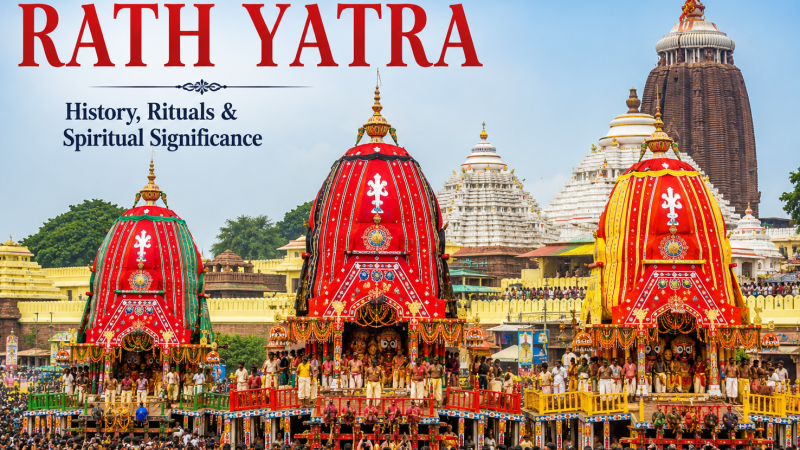
Rath Yatra vs Janmashtami: Which Festival Holds Greater Importance for Devotees Worldwide?
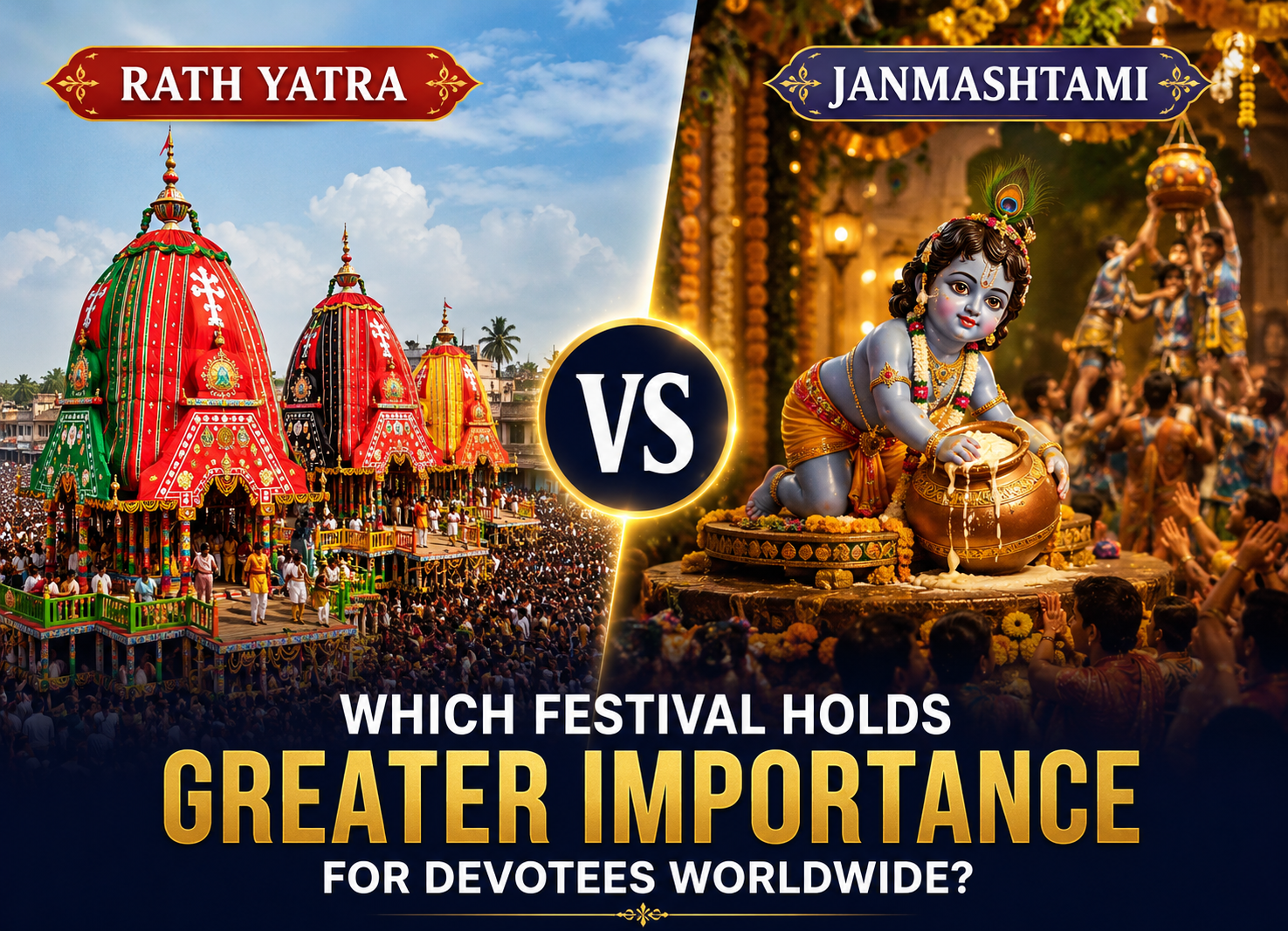
Every year, millions of devotees across the globe eagerly await two magnificent Hindu festivals—Rath Yatra and Janmashtami. Both celebrations are deeply connected to Lord Krishna and hold immense spiritual significance for followers of Sanatan Dharma. Streets become vibrant with devotional songs, temples overflow with worshippers, and social media lights up with images of faith, culture, and celebration.
Yet a common question often arises among devotees and spiritual seekers: Which is more important—Rath Yatra or Janmashtami?
The answer is not as straightforward as choosing one over the other. Both festivals celebrate different aspects of Lord Krishna’s divine presence and carry unique spiritual messages. Their importance varies based on tradition, region, and personal devotion.
In this article, we will explore the history, significance, global influence, and spiritual value of Rath Yatra and Janmashtami to understand why both festivals continue to inspire millions worldwide.
Understanding Rath Yatra
Rath Yatra, often called the “Festival of Chariots,” is one of the oldest and most spectacular religious celebrations in the world. The festival is primarily associated with Lord Jagannath, who is revered as a form of Lord Krishna.
During Rath Yatra, massive wooden chariots carrying Lord Jagannath, Lord Balabhadra, and Devi Subhadra are pulled by thousands of devotees through the streets. This grand procession symbolizes the Lord leaving His temple to bless all humanity, regardless of caste, status, or background.
Historical Roots of Rath Yatra
The origins of Rath Yatra date back centuries and are deeply connected to ancient Hindu scriptures and traditions. The festival is especially famous in Puri, Odisha, where millions gather annually to witness the sacred event.
The act of pulling the chariot is considered a highly auspicious spiritual service. Devotees believe that even touching the ropes of the chariot brings blessings and spiritual merit.
Spiritual Message of Rath Yatra
Rath Yatra represents:
- Divine accessibility to all people
- Equality among humanity
- The journey of the soul toward God
- Surrender and devotion
Many spiritual teachers explain that the chariot symbolizes the human body, while the Lord seated upon it represents the divine presence guiding life’s journey.
Understanding Janmashtami
Janmashtami celebrates the birth of Lord Krishna, one of the most beloved and revered deities in Hinduism. Observed on the eighth day of the dark fortnight in the month of Bhadrapada, Janmashtami marks the arrival of Krishna on Earth to restore righteousness and protect humanity from evil.
The festival is celebrated with fasting, prayers, devotional singing, dramatic reenactments of Krishna’s childhood, and midnight worship marking the exact moment of His birth.
Historical and Scriptural Importance
According to sacred texts, Lord Krishna was born in Mathura during a time of great oppression under the tyrannical King Kansa. Krishna’s birth symbolizes hope, divine intervention, and the triumph of good over evil.
The Bhagavad Gita, one of the most influential spiritual texts in history, records Krishna’s teachings on duty, devotion, and self-realization. As a result, Janmashtami is not merely a birthday celebration—it commemorates the arrival of a divine teacher whose wisdom continues to guide humanity.
Spiritual Message of Janmashtami
Janmashtami emphasizes:
- Divine love and compassion
- Victory of righteousness over evil
- Devotion through remembrance
- Spiritual awakening
For many devotees, Janmashtami is a deeply personal festival that strengthens their connection with Krishna’s teachings and divine personality.
Why Rath Yatra Is Considered Extremely Important
Many devotees regard Rath Yatra as one of the most spiritually powerful festivals because it symbolizes God reaching out to humanity.
Unlike many temple rituals where devotees must visit the deity, Rath Yatra reverses this tradition. The Lord comes out to meet the people.
Universal Accessibility
One of the strongest reasons for Rath Yatra’s importance is inclusivity. Everyone can participate regardless of social background.
Historically, this aspect helped make the festival a symbol of equality and divine mercy.
Public Expression of Faith
Rath Yatra transforms entire cities into centers of devotion. Large public processions allow people who may not regularly visit temples to engage with spiritual practices.
The visible and communal nature of Rath Yatra often creates a powerful sense of unity among participants.
Global Expansion
Today, Rath Yatra is celebrated in major cities across:
- United States
- United Kingdom
- Canada
- Australia
- Germany
- South Africa
- Singapore
- Bangladesh
- Nepal
These international celebrations attract not only Hindus but also people from diverse cultural backgrounds.
Why Janmashtami Is Considered Extremely Important
For countless devotees, Janmashtami holds unparalleled significance because it marks the divine appearance of Lord Krishna Himself.
Without Krishna’s birth, there would be no teachings of the Bhagavad Gita, no childhood pastimes in Vrindavan, and no spiritual legacy that has influenced billions over centuries.
Celebration of Divine Incarnation
Janmashtami commemorates the moment God descended to Earth for the welfare of humanity.
This belief makes the festival deeply sacred among Krishna devotees.
Connection to Krishna’s Life
The festival allows devotees to remember:
- Krishna’s miraculous birth
- His childhood pastimes
- His protection of devotees
- His teachings on devotion and duty
Every aspect of Krishna’s life becomes a source of inspiration during Janmashtami.
Global Devotional Participation
Temples around the world organize:
- Kirtan gatherings
- Scripture readings
- Cultural programs
- Midnight worship ceremonies
- Charity activities
Millions fast throughout the day and spend hours in prayer and meditation.
Comparing Rath Yatra and Janmashtami
Spiritual Focus
Rath Yatra
- Celebrates Krishna as Jagannath
- Focuses on divine outreach
- Encourages public devotion
- Symbolizes the soul’s journey
Janmashtami
- Celebrates Krishna’s birth
- Focuses on divine incarnation
- Encourages personal devotion
- Highlights Krishna’s teachings and life
Emotional Experience
Rath Yatra often creates feelings of excitement, unity, and collective celebration.
Janmashtami usually evokes deeper emotions of love, remembrance, gratitude, and spiritual reflection.
Participation Style
Rath Yatra is largely public and processional.
Janmashtami is often more temple-centered and family-oriented, although large public celebrations also occur.
Which Festival Attracts More Global Attention?
Both festivals enjoy enormous worldwide participation, but their visibility differs.
Rath Yatra’s Public Appeal
Because of its colorful chariots, music, dancing, and public processions, Rath Yatra often receives significant media coverage.
The visual grandeur makes it one of the most recognizable Hindu festivals globally.
Janmashtami’s Spiritual Reach
Janmashtami may have broader participation among Krishna devotees because it celebrates the central event of Krishna’s earthly appearance.
Virtually every Krishna temple worldwide observes Janmashtami, making it one of the most universally celebrated Hindu festivals.
What Do Spiritual Teachers Say?
Many respected spiritual teachers avoid ranking one festival above the other.
Instead, they explain that each festival reveals a different dimension of Krishna.
Rath Yatra teaches:
- Compassion
- Inclusiveness
- Divine mercy
Janmashtami teaches:
- Divine love
- Faith
- Spiritual wisdom
Together, they provide a complete understanding of Krishna’s relationship with humanity.
The Devotee’s Perspective
For a true devotee, the question may not be which festival is greater but what spiritual lessons each offers.
Some devotees feel a stronger connection to Janmashtami because it celebrates Krishna’s birth.
Others feel drawn to Rath Yatra because of its public expression of devotion and service.
Ultimately, devotion is personal. The depth of one’s faith matters far more than comparing festivals.
Why Both Festivals Matter Today
In a rapidly changing world, both Rath Yatra and Janmashtami continue to offer timeless lessons.
They remind people about:
- Compassion
- Unity
- Faith
- Service
- Love for God
- Respect for humanity
These values transcend religion, nationality, and culture.
As these festivals continue spreading across continents, they strengthen cultural identity while promoting universal spiritual principles.
Final Verdict: Which Is More Important?
If viewed from a theological perspective, Janmashtami may be considered foundational because it commemorates the divine birth of Lord Krishna.
If viewed from a public devotional perspective, Rath Yatra stands out as one of the most inclusive and visually powerful expressions of faith.
However, for devotees worldwide, both festivals are inseparable parts of Krishna devotion.
Janmashtami celebrates the arrival of the Lord.
Rath Yatra celebrates the Lord coming closer to His devotees.
One marks His birth.
The other symbolizes His eternal presence among humanity.
Rather than competing in importance, Rath Yatra and Janmashtami complement each other, enriching the spiritual lives of millions around the globe.
For devotees, the greatest blessing lies not in choosing between them but in participating wholeheartedly in both and deepening their connection with Lord Krishna.