Adhik Maas 2026: Complete Guide, Rules, Benefits and Spiritual Significance
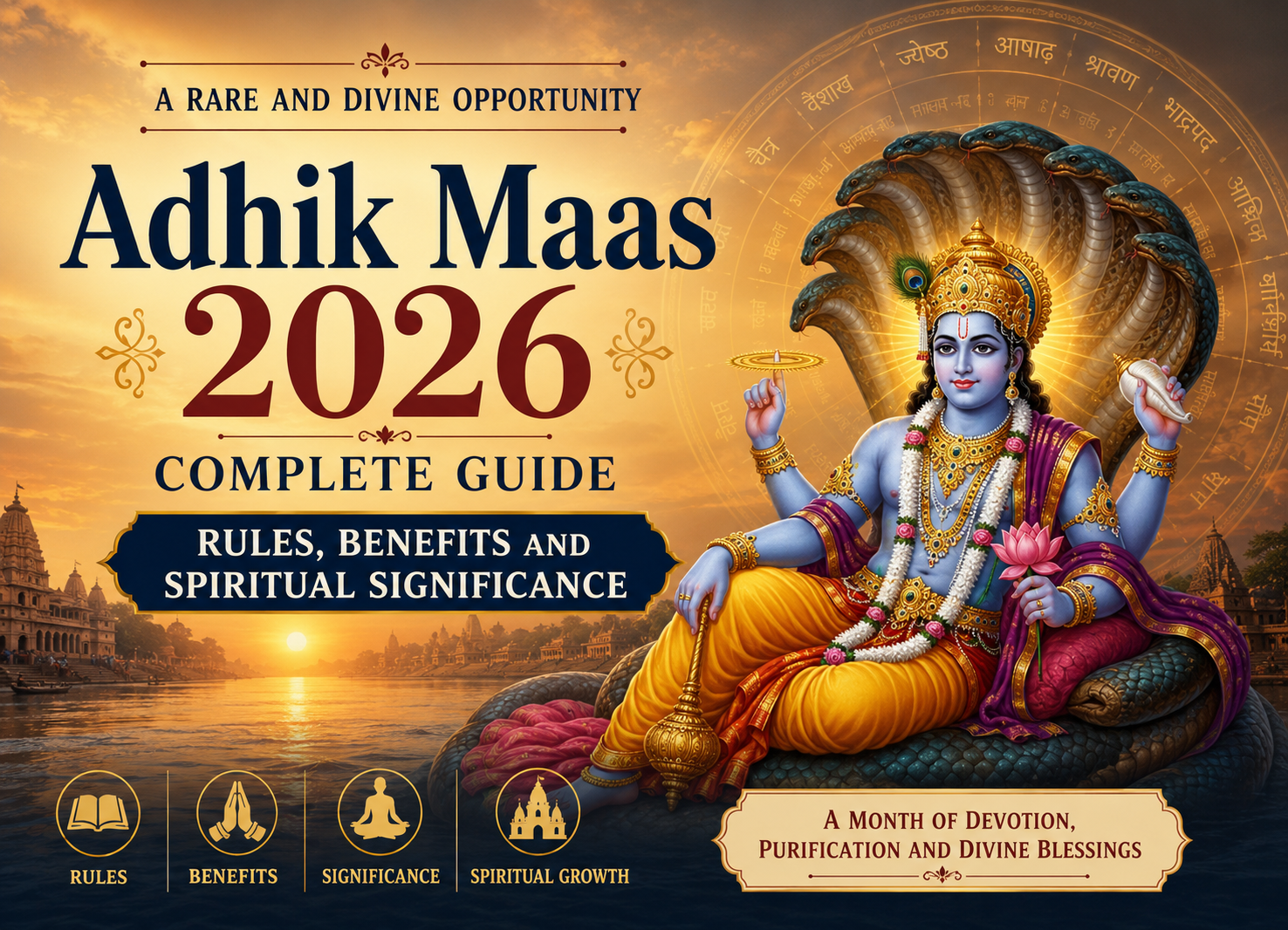
Adhik Maas, also known as Purushottam Maas or Mal Maas, is one of the most sacred and spiritually significant periods in the Hindu calendar. Occurring approximately every 32 months, 16 days, and 8 hours, this extra lunar month helps synchronize the lunar and solar calendars. While its astronomical purpose is important, Adhik Maas is revered primarily for its immense spiritual value.
In 2026, Adhik Maas presents a rare opportunity for devotees to intensify their spiritual practices, seek divine blessings, and engage in acts of charity and devotion. Dedicated especially to Lord Vishnu, this holy month is considered highly auspicious for prayer, meditation, scripture reading, fasting, and self-purification.
This comprehensive guide explores the meaning, origin, significance, rules, rituals, benefits, and spiritual lessons of Adhik Maas 2026.
What is Adhik Maas?
The Hindu calendar is primarily based on lunar cycles. A lunar year consists of approximately 354 days, while the solar year contains about 365 days. This difference of around 11 days accumulates over time.
To maintain alignment between lunar months and solar seasons, an extra month is inserted approximately every two and a half to three years. This additional month is called Adhik Maas.
The word “Adhik” means “extra” or “additional,” while “Maas” means “month.” Thus, Adhik Maas literally translates to “extra month.”
Unlike regular months associated with specific festivals and seasonal events, Adhik Maas is dedicated almost entirely to spiritual development and religious observances.
Why is Adhik Maas Called Purushottam Maas?
According to Hindu scriptures, Adhik Maas was once neglected and considered inauspicious because it lacked association with any major deity or festival.
Feeling rejected, the month approached Lord Vishnu and sought protection and recognition. Lord Vishnu compassionately accepted the month and granted it His own divine name, Purushottam, meaning “The Supreme Being.”
From that time onward, Adhik Maas became known as Purushottam Maas and was elevated to one of the most sacred periods for worship, devotion, and spiritual advancement.
Devotees believe that spiritual practices performed during this month yield multiplied benefits compared to ordinary times.
Astronomical Basis of Adhik Maas
The occurrence of Adhik Maas is based on precise astronomical calculations.
A lunar month lasts approximately 29.5 days. Twelve lunar months create a lunar year of about 354 days.
Since the solar year contains approximately 365.24 days, a difference of about 11 days arises annually.
After roughly 32 months, this accumulated difference becomes large enough to require the insertion of an extra lunar month.
Adhik Maas occurs when two lunar months fall within a single solar transit period without a Sankranti (solar transition into a new zodiac sign) occurring between them.
This elegant system ensures the Hindu calendar remains synchronized with seasonal cycles while preserving traditional lunar observances.
Spiritual Significance of Adhik Maas
Adhik Maas is often described as a month of spiritual renewal and divine grace.
The central purpose of this sacred period is to encourage individuals to focus on their inner growth rather than worldly pursuits.
Hindu scriptures emphasize several key themes during Adhik Maas:
Self-Purification
Devotees are encouraged to purify their thoughts, words, and actions. Spiritual discipline helps remove negative tendencies and cultivate virtues.
Increased Devotion
Worship, chanting, meditation, and scripture reading receive special emphasis during this month.
Detachment from Materialism
The month serves as a reminder that worldly achievements are temporary, while spiritual growth has lasting value.
Divine Mercy
Many scriptures state that Lord Vishnu bestows special blessings upon sincere devotees during Purushottam Maas.
Karmic Cleansing
Acts of devotion, charity, and repentance are believed to help reduce the burden of past karmas and promote spiritual progress.
Major Religious Practices During Adhik Maas
1. Worship of Lord Vishnu
Lord Vishnu is the principal deity associated with Adhik Maas.
Devotees commonly worship Him through:
- Vishnu Sahasranama recitation
- Bhagavad Gita reading
- Offering Tulsi leaves
- Chanting Vishnu mantras
- Temple visits
- Performing special pujas
Popular mantras include:
Om Namo Bhagavate Vasudevaya
Om Namo Narayanaya
2. Reading Sacred Scriptures
Scriptural study is highly recommended during this period.
Commonly recited texts include:
- Bhagavad Gita
- Vishnu Purana
- Srimad Bhagavatam
- Ramayana
- Mahabharata
- Purushottam Maas Mahatmya
Regular reading deepens spiritual understanding and strengthens devotion.
3. Fasting (Vrat)
Many devotees observe fasting during Adhik Maas.
Fasting practices vary according to individual capability:
- Complete fasts
- Fruit-only diets
- Single meal fasting
- Avoidance of certain foods
- Ekadashi fasting
The purpose of fasting is spiritual discipline rather than physical hardship.
4. Charity and Donations
Charitable acts are considered especially meritorious during Adhik Maas.
Common donations include:
- Food
- Clothing
- Books
- Cows (traditionally)
- Money
- Grains
- Religious materials
Helping the poor and needy is regarded as a direct expression of devotion.
5. Meditation and Prayer
Many spiritual seekers dedicate extra time to:
- Meditation
- Japa (mantra repetition)
- Silent reflection
- Yoga
- Spiritual retreats
These practices help calm the mind and strengthen one’s connection with the Divine.
Adhik Maas Rules and Observances
Although practices differ among traditions and regions, several common guidelines are followed.
Recommended Activities
- Daily worship of Lord Vishnu
- Reading sacred texts
- Chanting divine names
- Visiting temples
- Practicing charity
- Serving others
- Maintaining purity of conduct
- Meditation and prayer
Activities Traditionally Avoided
Many Hindu traditions discourage certain major worldly activities during Adhik Maas, including:
- Weddings
- Housewarming ceremonies
- Major business inaugurations
- Property purchases in some traditions
- Certain festive celebrations
The emphasis remains on spiritual activities rather than material undertakings.
However, customs vary among communities, and local traditions should be respected.
Benefits of Observing Adhik Maas
1. Spiritual Growth
The month provides an ideal opportunity for self-reflection and spiritual development.
2. Mental Peace
Prayer, meditation, and disciplined living help reduce stress and increase inner tranquility.
3. Strengthening Devotion
Regular worship deepens faith and nurtures a stronger relationship with the Divine.
4. Positive Karma
Acts of kindness and charity contribute to positive karmic accumulation.
5. Self-Discipline
Fasting and spiritual observances cultivate willpower and self-control.
6. Scriptural Knowledge
Study of sacred texts enhances understanding of Hindu philosophy and values.
7. Divine Blessings
Many devotees believe sincere observance attracts the grace and protection of Lord Vishnu.
Importance of Charity During Purushottam Maas
Charity occupies a central place in Adhik Maas observances.
Scriptures repeatedly emphasize that helping others during this sacred month brings immense spiritual merit.
Forms of charity include:
- Feeding the hungry
- Supporting educational causes
- Assisting temples
- Helping underprivileged families
- Providing medical assistance
- Donating religious literature
True charity is performed with humility and without expectation of reward.
Lessons Adhik Maas Teaches
Adhik Maas offers timeless spiritual lessons relevant to modern life.
Value of Time
The extra month reminds us that time itself is sacred and should be used wisely.
Inner Transformation
Real success comes from character development and spiritual growth.
Compassion
Acts of kindness create positive change in society.
Gratitude
The month encourages appreciation for life’s blessings.
Balance
It teaches the importance of balancing material responsibilities with spiritual aspirations.
Adhik Maas in Modern Times
In today’s fast-paced world, many people struggle to find time for spiritual practices.
Adhik Maas serves as a reminder to slow down and reconnect with deeper values.
Modern observances may include:
- Digital scripture reading
- Online satsangs
- Virtual temple darshan
- Community service projects
- Daily meditation routines
The essence remains unchanged: dedicating time to spiritual enrichment and self-improvement.
How Families Can Observe Adhik Maas Together
Families can strengthen spiritual bonds during this sacred month through:
- Daily prayer sessions
- Reading scriptures together
- Visiting temples
- Participating in charitable activities
- Teaching children about Hindu traditions
- Chanting devotional hymns
These practices help preserve cultural and spiritual heritage across generations.
Conclusion
Adhik Maas 2026, also known as Purushottam Maas, is far more than an additional month in the Hindu calendar. It is a sacred period devoted to spiritual awakening, self-purification, charity, and devotion to Lord Vishnu.
The month encourages individuals to step away from material distractions and focus on their inner journey. Through prayer, fasting, meditation, scripture study, and acts of compassion, devotees seek divine blessings and spiritual growth.
Whether one observes elaborate rituals or simply dedicates a few extra moments each day to prayer and reflection, Adhik Maas provides a unique opportunity for transformation. Its timeless message remains profoundly relevant: true fulfillment comes not from external achievements but from cultivating wisdom, devotion, compassion, and a deeper connection with the Divine.