The Complete Guide to Rath Yatra: History, Rituals & Spiritual Significance
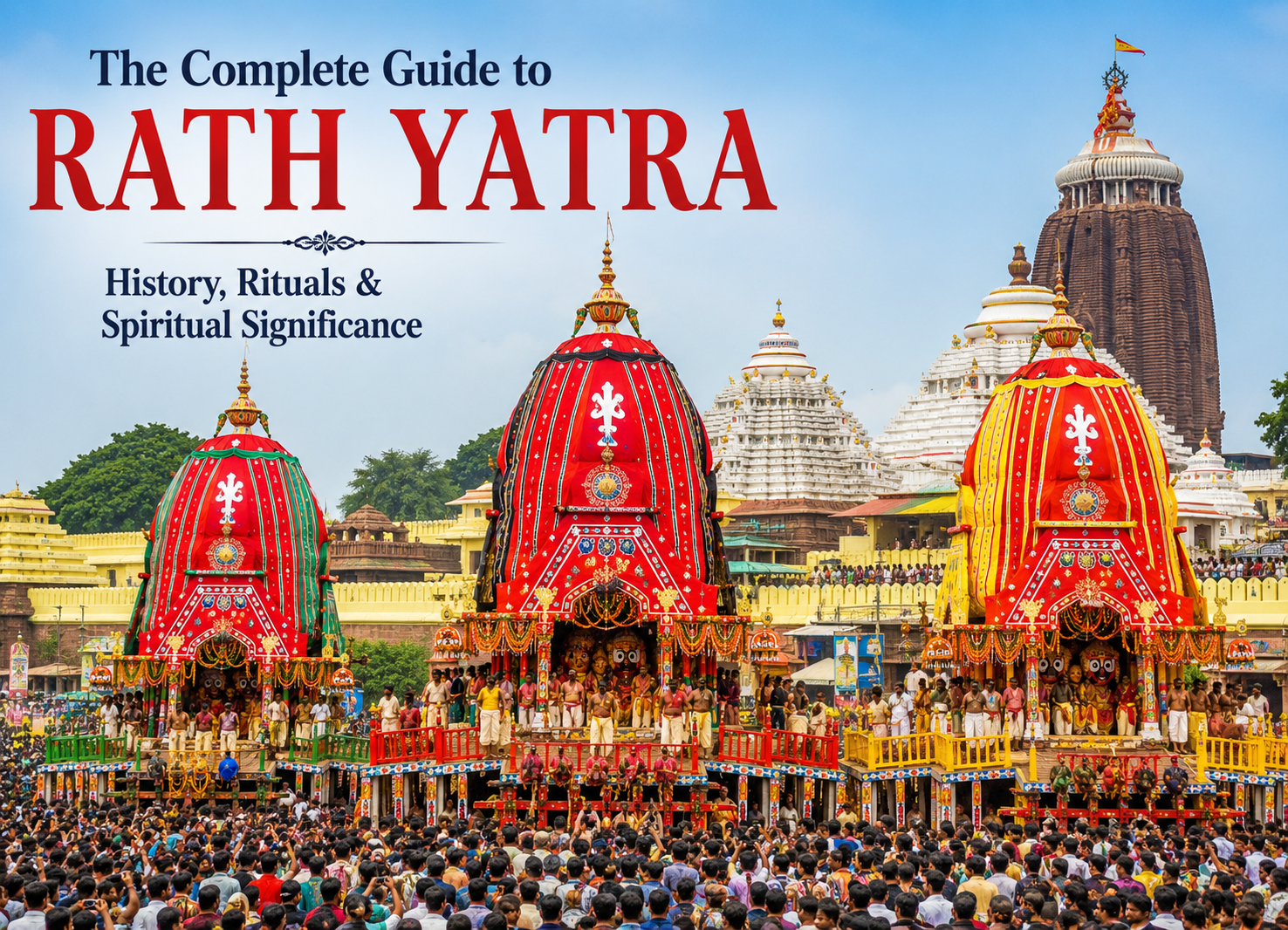
Every year, millions of devotees gather in the sacred coastal city of Puri in Odisha to witness one of the world’s most magnificent religious processions—the Rath Yatra of Lord Jagannath. The thunderous chants of “Jai Jagannath,” the colossal wooden chariots rolling through the Grand Road, and the overwhelming devotion of pilgrims create an atmosphere unlike any other spiritual gathering on Earth.
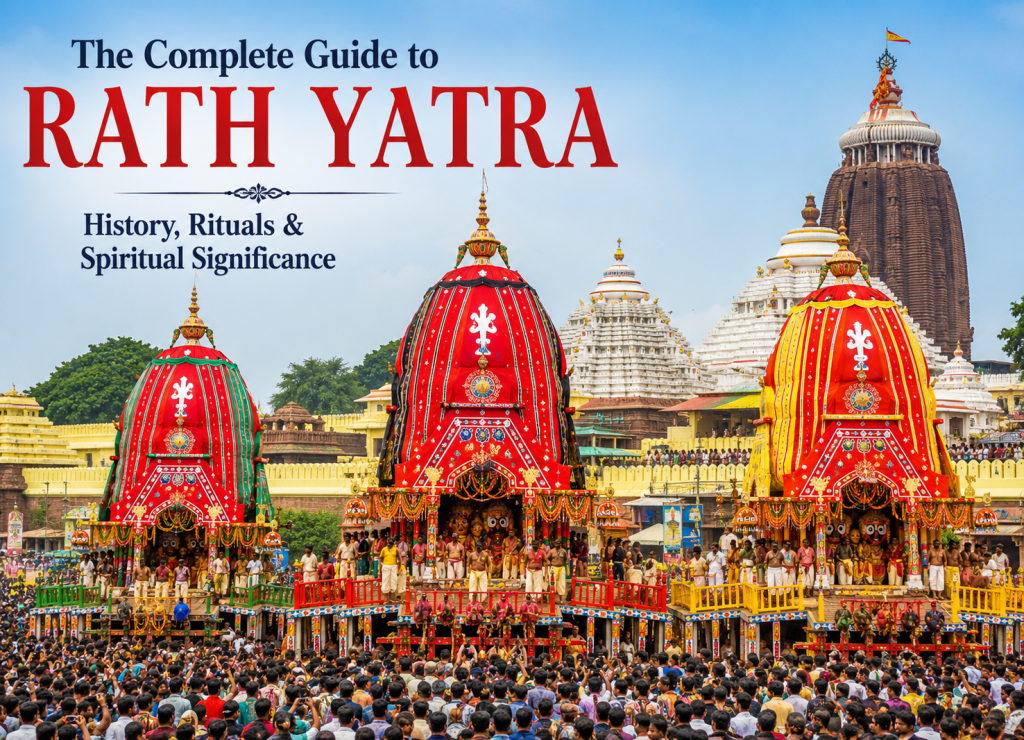
More than just a festival, Rath Yatra represents faith, equality, compassion, and the eternal bond between God and humanity. The celebration attracts devotees, tourists, historians, photographers, and spiritual seekers from every corner of the globe.
This comprehensive guide explores the history, mythology, rituals, symbolism, celebrations, travel information, fascinating facts, and spiritual significance of Rath Yatra.
What is Rath Yatra?
Rath Yatra, literally meaning “Festival of Chariots,” is the annual ceremonial journey of Lord Jagannath, accompanied by his elder brother Lord Balabhadra and sister Goddess Subhadra, from the Jagannath Temple to the Gundicha Temple in Puri.
The deities travel approximately three kilometers on enormous handcrafted wooden chariots, pulled by thousands of devotees using massive ropes.
This sacred journey symbolizes the Lord stepping out of His temple to bless all humanity, regardless of caste, religion, nationality, or social status.
Historical Origins of Rath Yatra
The origins of Rath Yatra stretch back thousands of years.
Ancient Hindu scriptures such as the Skanda Purana, Brahma Purana, Padma Purana, and Narada Purana describe the glory of Lord Jagannath and His annual procession.
Although the present Jagannath Temple was constructed during the 12th century CE by King Anantavarman Chodaganga Deva, historians believe that Jagannath worship existed long before the temple itself.
Some scholars even suggest that Jagannath worship evolved through the harmonious blending of tribal traditions, Vaishnavism, Shaivism, Shaktism, Jain influences, and Buddhist philosophy.
Today, Rath Yatra remains one of the oldest continuously celebrated religious festivals in the world.
The Mythological Story Behind Rath Yatra
Several legends explain the origin of Rath Yatra.
The most popular narrative says that Lord Jagannath, Lord Balabhadra, and Goddess Subhadra travel to visit their aunt’s house, represented by the Gundicha Temple.
Another tradition associates the journey with Lord Krishna’s longing to revisit Vrindavan.
Devotees believe that during Rath Yatra, Jagannath reveals Himself outside the sanctum so that even those who cannot enter the temple may receive His divine blessings.
This universal accessibility is one reason why Rath Yatra holds extraordinary spiritual significance.
Why is Rath Yatra Celebrated?
Rath Yatra carries profound spiritual meanings.
It symbolizes:
- God’s love for every living being.
- Equality among humanity.
- The soul’s spiritual journey toward liberation.
- Humility and devotion.
- Compassion without discrimination.
- The triumph of divine grace over ego.
Unlike many temple rituals restricted to priests, Rath Yatra allows everyone to participate by pulling the sacred chariots, making it one of Hinduism’s most inclusive festivals.
The Three Divine Chariots
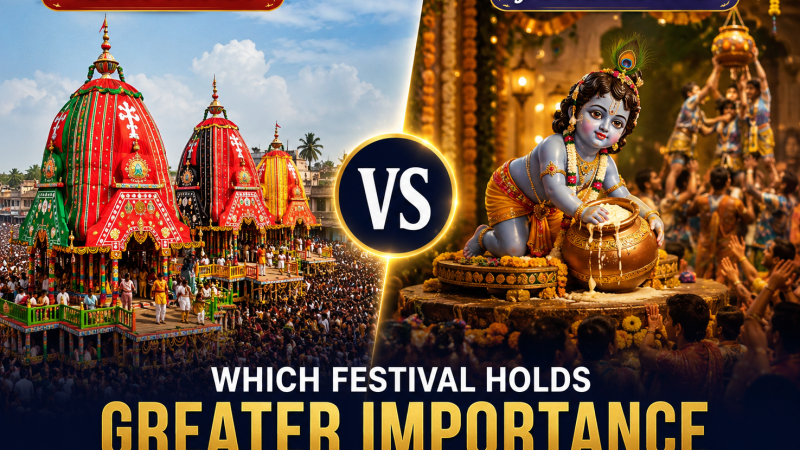
The highlight of Rath Yatra is the construction of three gigantic wooden chariots.
1. Nandighosha (Lord Jagannath)
- Height: Approximately 45 feet
- Wheels: 16
- Dominant Colors: Yellow and Red
- Charioteer: Daruka
- Flag: Trailokyamohini
2. Taladhwaja (Lord Balabhadra)
- Height: Around 44 feet
- Wheels: 14
- Colors: Green and Red
- Charioteer: Matali
3. Darpadalana (Goddess Subhadra)
- Height: Around 43 feet
- Wheels: 12
- Colors: Black and Red
- Charioteer: Arjuna
Each year, the chariots are built anew using sacred wood, following centuries-old architectural traditions without using modern design changes.
The Major Rituals of Rath Yatra
Akshaya Tritiya
Construction of the chariots begins on this auspicious day.
Snana Purnima
The deities receive a ceremonial bath with 108 pots of sacred water.
Following this ritual, they are believed to fall ill.
Anavasara
The deities remain hidden from public view while “recovering.”
Devotees eagerly await their reappearance.
Netrotsava
The divine eyes of the deities are ceremonially repainted before Rath Yatra.
Pahandi
The deities are carried from the temple to their respective chariots amid devotional singing and dancing.
Chhera Pahanra
The Gajapati King of Puri sweeps the chariots with a golden broom.
This powerful ritual symbolizes that before God, everyone—even a king—is a humble servant.
Rath Yatra
The grand procession begins as thousands pull the chariots toward Gundicha Temple.
Hera Panchami
Goddess Lakshmi symbolically visits Gundicha Temple in search of Lord Jagannath.
Bahuda Yatra
After staying several days at Gundicha Temple, the deities return to the Jagannath Temple.
Suna Besha
The deities are adorned with magnificent golden ornaments.
Thousands gather to witness this spectacular decoration.
Niladri Bije
Lord Jagannath returns to the sanctum, concluding the festival.
Spiritual Significance of Pulling the Chariot
One of the most cherished traditions is pulling the sacred ropes attached to the chariots.
According to Hindu belief, participating in this act:
- Removes accumulated sins.
- Brings divine blessings.
- Purifies the heart.
- Strengthens devotion.
- Symbolizes surrender to God.
Even touching the rope is considered spiritually rewarding.
Jagannath Mahaprasad
No guide to Rath Yatra is complete without mentioning the famous Mahaprasad.
Prepared in one of the world’s largest temple kitchens, the food is cooked in traditional earthen pots over wood-fired ovens.
Remarkably, devotees believe that the uppermost pot cooks first—a miracle associated with Lord Jagannath.
Mahaprasad is shared equally among all devotees without social discrimination, embodying unity and equality.
Rath Yatra Around the World
Although Puri hosts the most famous celebration, Rath Yatra is now celebrated globally.
Major processions are organized in:
- London
- New York
- Toronto
- Sydney
- Durban
- Moscow
- Singapore
- Kuala Lumpur
- Dhaka
- Kathmandu
The International Society for Krishna Consciousness (ISKCON) has played a major role in spreading Rath Yatra across continents.
Today, millions who cannot visit Puri still experience the festival in their own countries.
Fascinating Facts About Rath Yatra
- It is among the world’s largest religious gatherings.
- Every chariot is rebuilt from scratch annually.
- No nails are traditionally used in many structural components.
- Thousands of skilled artisans spend months constructing the chariots.
- The ropes used for pulling are enormous and specially prepared.
- The festival has been celebrated for centuries without interruption except during extraordinary historical circumstances.
- Millions watch the event live through television and online streaming.
- Rath Yatra symbolizes divine accessibility beyond temple walls.
Travel Guide for Rath Yatra Visitors
If you plan to attend Rath Yatra in Puri, proper preparation can make your pilgrimage more enjoyable.
Best Time to Visit
Arrive several days before Rath Yatra to experience the rituals and avoid last-minute travel issues.
Accommodation
Hotels become fully booked months in advance.
Reserve accommodations early.
Clothing
Wear light cotton clothes suitable for hot and humid weather.
Comfortable footwear is essential.
Safety
Carry drinking water.
Protect yourself from the sun.
Follow crowd management instructions issued by authorities.
Keep valuables secure.
Respect Local Traditions
Photography may be restricted in certain sacred areas.
Dress modestly and respect religious customs.
The Symbolism of the Chariot
The chariot itself carries deep philosophical meaning.
Many spiritual teachers explain that:
- The chariot represents the human body.
- The wheels symbolize time.
- The horses represent the senses.
- The ropes signify devotion.
- The journey represents life’s spiritual path.
- Lord Jagannath symbolizes the Divine guiding the soul toward liberation.
This symbolism makes Rath Yatra not merely a festival but a profound spiritual metaphor.
Rath Yatra in Modern Times
Today, Rath Yatra beautifully blends ancient tradition with modern technology.
Millions of devotees follow the festival through live broadcasts, social media, and online streaming.
Government agencies, volunteers, healthcare workers, security personnel, and thousands of temple servants coordinate to ensure a safe and successful celebration while preserving centuries-old traditions.
Despite modernization, the spiritual essence of Rath Yatra remains unchanged.
Lessons We Can Learn from Rath Yatra
The festival teaches timeless values:
- Humility is greater than power.
- Equality transcends social divisions.
- Service is the highest form of devotion.
- Faith can unite millions peacefully.
- God belongs to everyone.
- Compassion is the foundation of spirituality.
- Life itself is a sacred journey toward divine realization.
These teachings continue to inspire people regardless of nationality or religious background.
Conclusion
Rath Yatra is far more than a grand procession of magnificent chariots—it is a living expression of devotion, inclusiveness, and spiritual unity. The annual journey of Lord Jagannath, Lord Balabhadra, and Goddess Subhadra reminds humanity that the Divine is never confined within temple walls but reaches out to every soul with unconditional grace.
From its ancient origins and profound mythology to its elaborate rituals, handcrafted chariots, sacred traditions, and worldwide celebrations, Rath Yatra continues to captivate millions with its timeless message of love, humility, and equality. Whether you witness the festival in the holy city of Puri or join a procession elsewhere in the world, the experience offers a rare glimpse into one of Hinduism’s most vibrant and spiritually uplifting traditions.
Ultimately, Rath Yatra is not only a celebration of faith but also an invitation to embark on an inner journey—one that encourages selfless service, devotion, and the pursuit of higher consciousness. As the mighty chariots roll forward each year, they carry with them a universal message: the path to the Divine is open to all, and every heart can become a sacred destination for Lord Jagannath’s boundless compassion.