Taherpur Durga Puja: The Historic Legacy of Raja Kangsanarayan
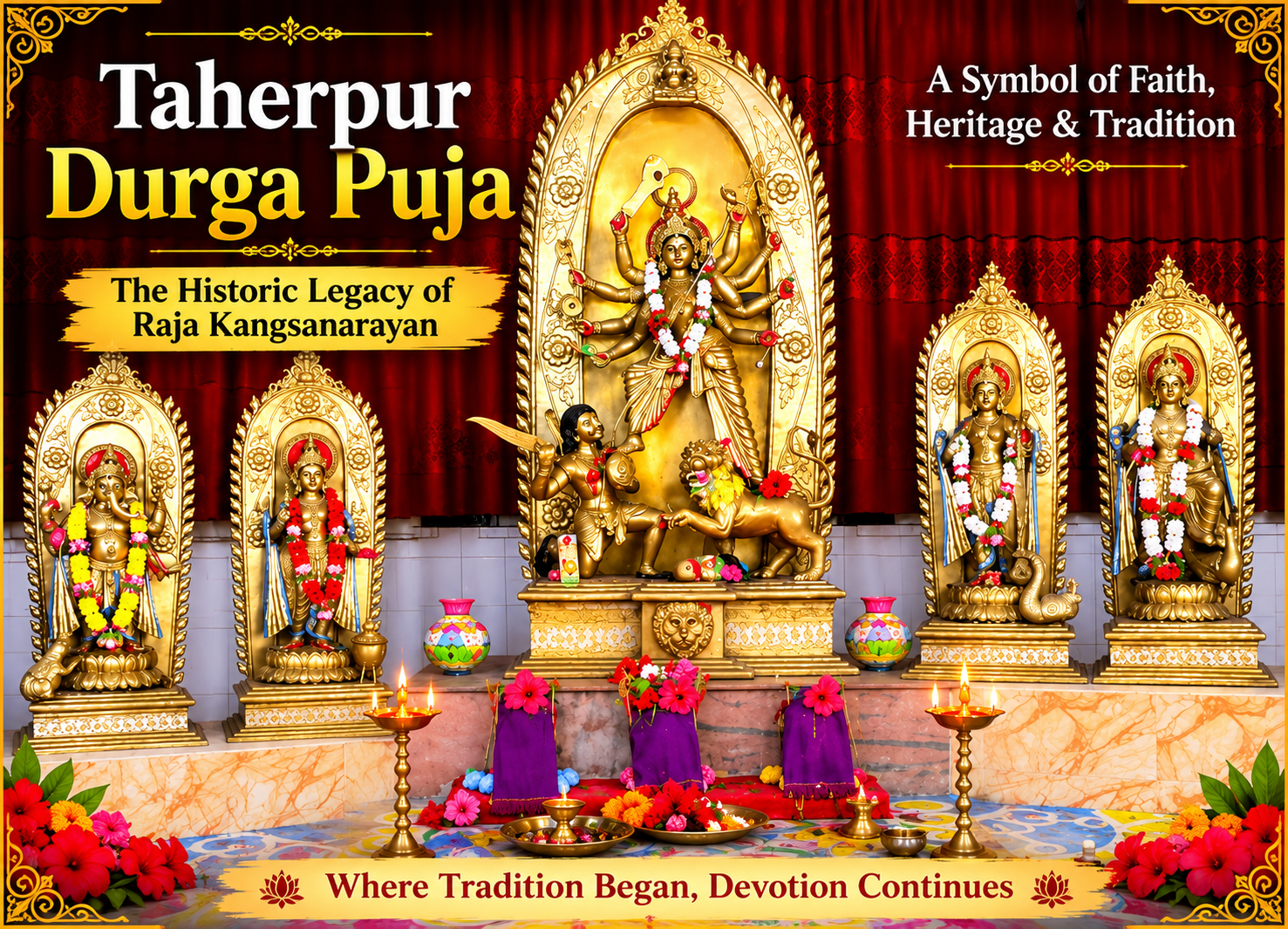
Taherpur Durga Puja occupies a special place in the cultural and religious history of Bengal. Located in present-day Bagmara Upazila of Rajshahi District, Bangladesh, Taherpur is traditionally associated with Raja Kangsanarayan Roy, who is widely credited with popularising the grand Sharadiya (autumn) Durga Puja. Although Durga worship has existed since ancient times, many historical traditions regard Raja Kangsanarayan’s celebration as a turning point that transformed the festival into the magnificent public celebration known today.
Every year, millions of devotees celebrate Durga Puja across Bangladesh, India, and many other countries. For many people, Taherpur represents an important chapter in the evolution of this beloved festival.
Mythological Origins of Durga Puja
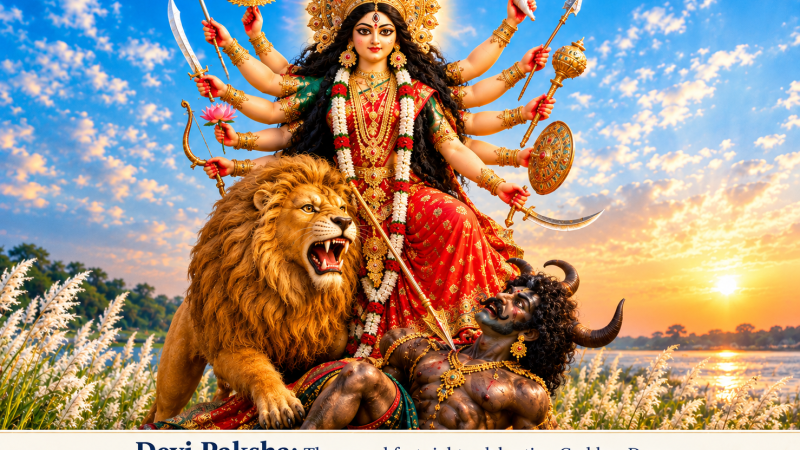
The worship of Goddess Durga has deep roots in Hindu mythology. According to the Markandeya Purana, King Suratha and the merchant Samadhi lost their wealth and kingdoms. Under the guidance of Sage Medhas, they worshipped Goddess Durga with devotion. Pleased by their prayers, the Goddess blessed them with prosperity and spiritual fulfilment. This worship is traditionally associated with Vasanti Durga Puja, celebrated during spring.
Another popular tradition comes from the Krittivasi Ramayana, where Lord Rama performed Akal Bodhan by invoking Goddess Durga before his battle against Ravana in Lanka. Since then, autumn has become the principal season for Durga Puja in Bengal.
These sacred traditions continue to inspire devotees and form the spiritual foundation of the festival.
Raja Kangsanarayan Roy: A Visionary Ruler
Raja Kangsanarayan Roy belonged to the ancient Taherpur dynasty, one of Bengal’s oldest ruling families. During the Mughal period, he held several important administrative positions and earned the title of “Raja” because of his ability and public service.
After retiring from government service, Raja Kangsanarayan devoted himself to religious and social welfare. According to historical tradition, he wished to organise a grand religious ceremony that would benefit society and preserve his legacy for future generations.
The Beginning of the Grand Sharadiya Durga Puja
Traditional accounts state that Raja Kangsanarayan consulted the renowned scholar Pandit Ramesh Shastri regarding the most appropriate religious ceremony to perform.
The scholar advised that in the Kali Yuga, a magnificent Durga Puja would be the greatest sacrifice, bringing together devotion, charity, culture, and social harmony. Following this advice, Raja Kangsanarayan organised an elaborate Sharadiya Durga Puja during the Bengali year 887.
Historical traditions describe the celebration as costing nearly nine lakh rupees, an extraordinary amount at that time. Because of its scale and grandeur, many later zamindars and royal families began organising similar festivals throughout Bengal.
While historians continue to debate whether this was the first grand autumn Durga Puja, Raja Kangsanarayan is widely recognised as one of the principal figures responsible for popularising the festival.
The Historic Durga Temple of Taherpur
The original Durga temple where Raja Kangsanarayan organised the festival was situated at Ramrama village on the eastern bank of the Barnai River.
Over time, the original structure disappeared. Later generations of the Taherpur royal family established another temple within the Rajbari complex, where Durga Puja continued for many years.
Following the abolition of the zamindari system, regular worship gradually ceased, and the historic temple lost much of its former prominence.
Revival of Taherpur Durga Puja
In recent years, efforts have been made to revive the historic festival through the cooperation of local residents, community leaders, and the Government of Bangladesh.
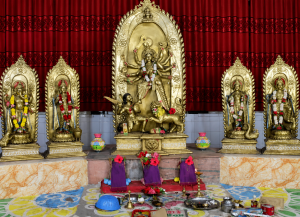
A major milestone came in 2018, when beautifully crafted metal idols of Goddess Durga and her family were installed in the temple. Since then, annual Durga Puja celebrations have resumed, attracting devotees, researchers, and visitors interested in Bengal’s religious heritage.
The revival has renewed public interest in preserving Taherpur’s historical and cultural importance.
UNESCO Recognition and Taherpur’s Heritage
In December 2021, UNESCO inscribed “Durga Puja in Kolkata” on the Representative List of the Intangible Cultural Heritage of Humanity. This recognition honours the cultural significance of Kolkata’s Durga Puja and its contribution to global heritage.
Many scholars and cultural enthusiasts believe that Taherpur also deserves wider recognition because of its historical association with Raja Kangsanarayan and the development of Sharadiya Durga Puja.
Although UNESCO has not recognised Taherpur separately, continued historical research and heritage conservation may help highlight its importance in the future.
Why Taherpur Matters Today
Taherpur is more than a historical site. It represents a significant chapter in Bengal’s religious, social, and cultural development.
For devotees, it symbolises faith and devotion. For historians, it offers valuable insights into the evolution of one of the world’s largest Hindu festivals. For Bangladesh, it showcases an important part of the country’s rich cultural heritage.
Preserving Taherpur’s legacy can also promote religious tourism, academic research, and cultural exchange.
Visiting Taherpur Durga Puja
The Durga Puja celebrations at Taherpur attract devotees from different parts of Bangladesh. Visitors can experience traditional rituals, devotional music, cultural programmes, and the spiritual atmosphere surrounding the historic Rajbari.
The festival also provides an opportunity to learn about Raja Kangsanarayan’s contribution to Bengal’s religious traditions while enjoying the warmth and hospitality of the local community.
Conclusion
Taherpur Durga Puja remains one of the most important historical traditions associated with the evolution of Sharadiya Durga Puja in Bengal. Although the exact origins of the festival continue to be discussed by historians, Raja Kangsanarayan Roy’s contribution to its popularisation is widely remembered and celebrated.
Today, the revival of the historic temple and the growing interest in preserving this heritage offer hope that future generations will continue to appreciate Taherpur’s unique place in the history of Durga Puja. As one of Bangladesh’s treasured cultural landmarks, Taherpur stands as a lasting symbol of faith, history, and the enduring spirit of Bengali Hindu tradition.
[Last Edited on 27 July, 2026]