Gopisvara Mahadev: The Divine Guardian of Krishna’s Raas Lila
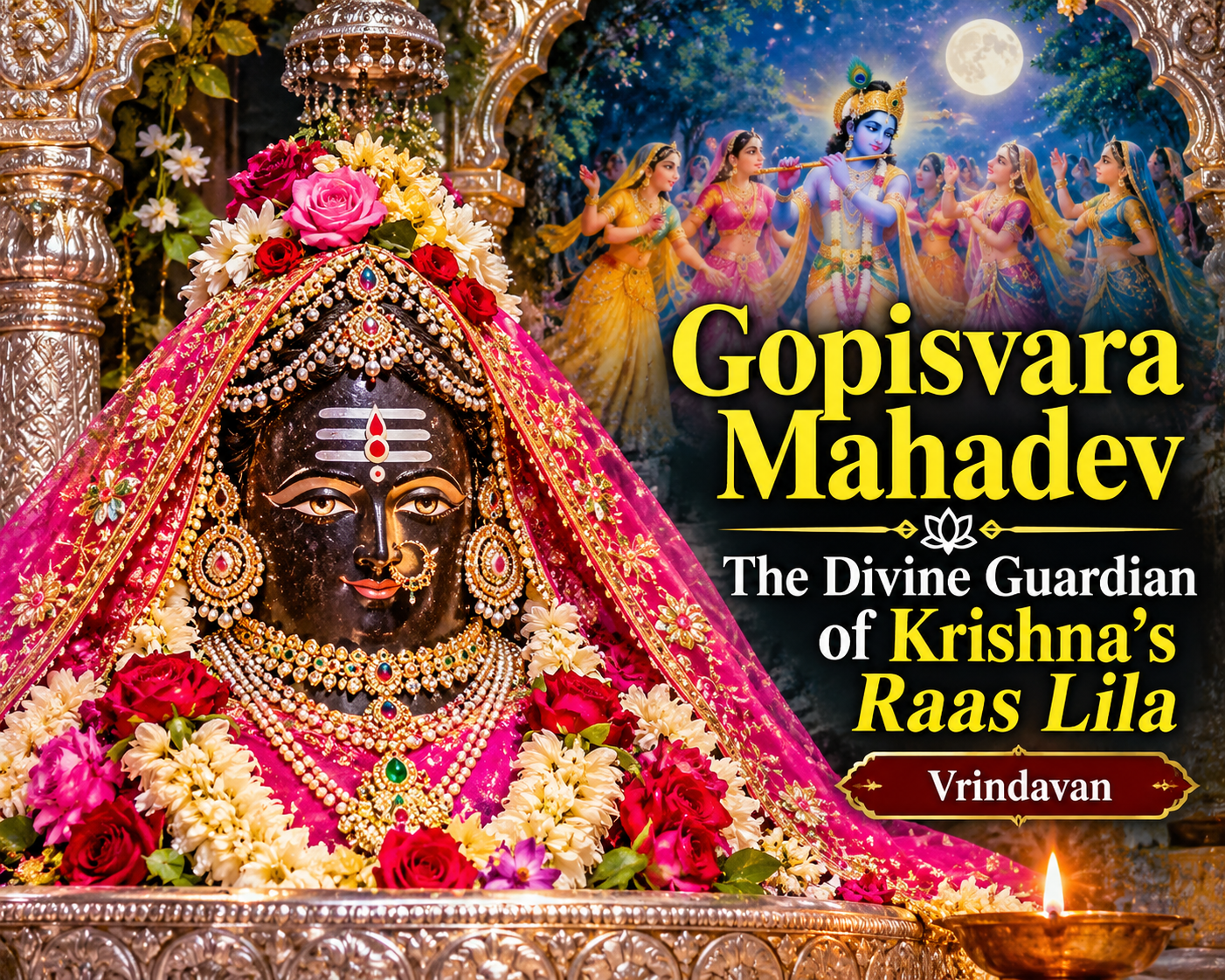
In the ancient spiritual landscape of Vrindavan, where the melodies of Lord Krishna’s flute are believed to echo eternally through the forests of Braj, stands a remarkable shrine dedicated to Lord Shiva. Known as Gopisvara Mahadev or Gopeshwar Mahadev, this sacred temple is associated with one of the most beautiful and spiritually meaningful legends of Krishna’s divine pastimes.
Unlike many other Shiva temples, Gopisvara Mahadev is particularly celebrated for a unique devotional tradition: Lord Shiva is believed to have assumed the form of a gopi, a cowherd maiden, to witness the divine Raas Lila of Sri Krishna and the gopis of Vrindavan.
The story reveals a profound aspect of Hindu spirituality. Even the great Lord Shiva, worshipped as Mahadeva and revered as the supreme yogi, approaches Krishna’s intimate divine pastime with humility and a desire for devotional service. His transformation into Gopisvara represents not weakness or loss of identity, but the extraordinary power of love, surrender and spiritual aspiration.
Situated near the sacred Vamshi Vat area of Vrindavan, the temple remains an important destination for devotees of both Lord Shiva and Lord Krishna. The shrine beautifully reflects the spiritual harmony between Shaiva and Vaishnava traditions, showing how devotion to Shiva and devotion to Krishna can exist together in deep mutual reverence. bihariji.org+1
For pilgrims visiting Vrindavan Dham, Gopisvara Mahadev is more than a temple. It is a reminder that the highest spiritual achievement is not power, prestige or knowledge alone, but the willingness to surrender oneself completely to divine love.
Who Is Gopisvara Mahadev?
Gopisvara Mahadev is a revered form of Lord Shiva worshipped in Vrindavan. The name is commonly understood through the words Gopi and Ishvara, meaning the Lord or protector of the gopis.
The name Gopeshwar is also widely used, and both Gopisvara and Gopeshwar refer to the same sacred form of Shiva in the Braj devotional tradition.
In the spiritual imagination of Vrindavan, Gopisvara Mahadev is closely connected with the Raas Lila of Krishna. He is remembered as the divine guardian of the sacred dance and as a protector of the spiritual atmosphere of Vrindavan Dham.
According to popular Braj traditions, Lord Shiva desired to witness Krishna’s Raas Lila but was initially unable to enter the sacred circle. Through the grace of the divine feminine and the blessings of Radha and Krishna, he attained the devotional mood of a gopi.
Krishna then recognised Shiva’s extraordinary devotion and bestowed upon him the name Gopisvara.
This divine episode established Gopisvara Mahadev as a guardian of the Raas Lila and an important spiritual figure for devotees seeking the blessings of Vrindavan.
The story is preserved through devotional narratives and temple traditions. Different accounts vary in their details, especially regarding the sacred water in which Shiva bathed and the divine personality who guided him. These variations are part of the rich oral and devotional heritage of Braj. ||Vrindaban Forest||+2
The Divine Raas Lila of Sri Krishna
To understand the significance of Gopisvara Mahadev, it is important to understand the spiritual meaning of Krishna’s Raas Lila.
Raas Lila is one of the most celebrated divine pastimes associated with Sri Krishna and the gopis of Vrindavan. It is traditionally connected with the beautiful autumn season, particularly the full moon night of Sharad Purnima.
In devotional literature, Krishna’s flute calls the gopis from their daily activities into the forest of Vrindavan. Leaving behind worldly concerns, they respond to the irresistible attraction of divine love.
The Raas Lila is not understood by devotees as an ordinary dance or a worldly romantic gathering. In the devotional traditions of Braj, it represents the intimate relationship between the Supreme Lord and the souls who surrender themselves completely to Him.
The gopis are regarded as the highest examples of selfless devotion. Their love is described as free from personal ambition, material desire and the wish for worldly reward.
Krishna’s dance with the gopis symbolises the divine relationship in which every soul receives the Lord’s attention and experiences spiritual bliss.
The Raas Lila is especially associated with the sacred forests and riverbanks of Vrindavan. Vamshi Vat, a revered site connected with Krishna’s flute, is traditionally linked with this divine pastime.
It is within this sacred devotional setting that the story of Gopisvara Mahadev unfolds. Timings, Legend+1
The Legend of Lord Shiva Becoming a Gopi
One of the most beloved legends of Vrindavan tells how Lord Shiva wished to witness Krishna’s extraordinary Raas Lila.
According to popular devotional accounts, when Krishna’s divine dance was taking place, Shiva arrived at the entrance of the sacred Raas Mandal. However, he was not immediately permitted to enter.
The divine attendants and gopis explained that the Raas Lila was a deeply intimate spiritual pastime. Entry required a particular devotional mood, known in some traditions as sakhi-bhava—the mood of a female companion serving Radha and Krishna.
Shiva, despite being Mahadeva and the great master of yoga, could not enter merely by virtue of his divine position.
This moment is central to the spiritual message of the legend. The Raas Lila could not be approached through power, authority or knowledge alone. It required complete humility and the desire to serve.
Shiva accepted this condition with devotion.
Different versions of the story describe different divine guides. Some accounts mention Vrinda Devi, the presiding goddess of Vrindavan; others describe Lalita Devi, a close companion of Radha, or Yogamaya, the divine power who arranges Krishna’s pastimes.
The guide instructed Shiva to bathe in sacred waters and receive the devotional mood necessary to approach the Raas Lila.
Some traditions identify these waters as the Yamuna, while others mention Manasarovar or Brahma-kunda. These variations should be understood as differences among devotional narratives rather than as a single universally agreed historical account. Hindu Blog+2
Shiva’s Transformation into a Gopi
After receiving divine guidance, Lord Shiva entered the sacred waters.
Through the grace of the divine feminine, he emerged in the beautiful form of a gopi. His transformation symbolised the complete surrender of his previous identity and the acceptance of a new devotional role.
The story does not portray Shiva as abandoning his divinity. Instead, it reveals the greatness of his devotion.
Mahadeva, who is revered as the supreme yogi and destroyer of ignorance, willingly accepted the position of a humble servant of Krishna’s divine love.
In some versions, Shiva is described as a beautiful young gopi who entered the Raas Mandal. In others, the gopis discovered his true identity through his three eyes or other distinctive features.
Although the details differ, the central theme remains consistent: Shiva’s desire to witness Krishna’s divine pastime was fulfilled through humility, grace and devotional surrender.
When Krishna recognised him, He affectionately addressed him as Gopisvara or Gopeshwar.
The name became a lasting symbol of Shiva’s extraordinary devotion to Krishna. The Gaudiya Treasures of Bengal+2
Krishna Appoints Gopisvara as the Guardian of Raas Lila
The most important part of the legend is not merely Shiva’s transformation into a gopi, but the divine responsibility he received afterward.
According to Braj devotional tradition, Krishna recognised Shiva’s sincere desire and blessed him with a special position connected with the Raas Lila.
Gopisvara Mahadev became the guardian of the sacred Raas Mandal.
He is remembered as the protector of the divine pastime and the one whose blessings help devotees approach the spiritual atmosphere of Vrindavan.
In some devotional narratives, Krishna grants Shiva the role of Raas Dwaar Pal, meaning the guardian of the entrance to the Raas Lila.
This belief explains why pilgrims traditionally offer prayers to Gopisvara Mahadev before seeking the blessings of Radha and Krishna.
The temple is therefore associated with the idea that spiritual entry into Vrindavan’s innermost devotional experience requires humility and divine grace.
Gopisvara Mahadev is not understood as a barrier intended to prevent sincere devotees from approaching Krishna. Rather, he represents the spiritual preparation necessary for approaching divine love with a pure heart.
The guardian of the Raas Lila teaches that devotion is not a matter of claiming spiritual entitlement. It is a journey of surrender, service and purification. bihariji.org+2
Gopisvara Mahadev Temple in Vrindavan
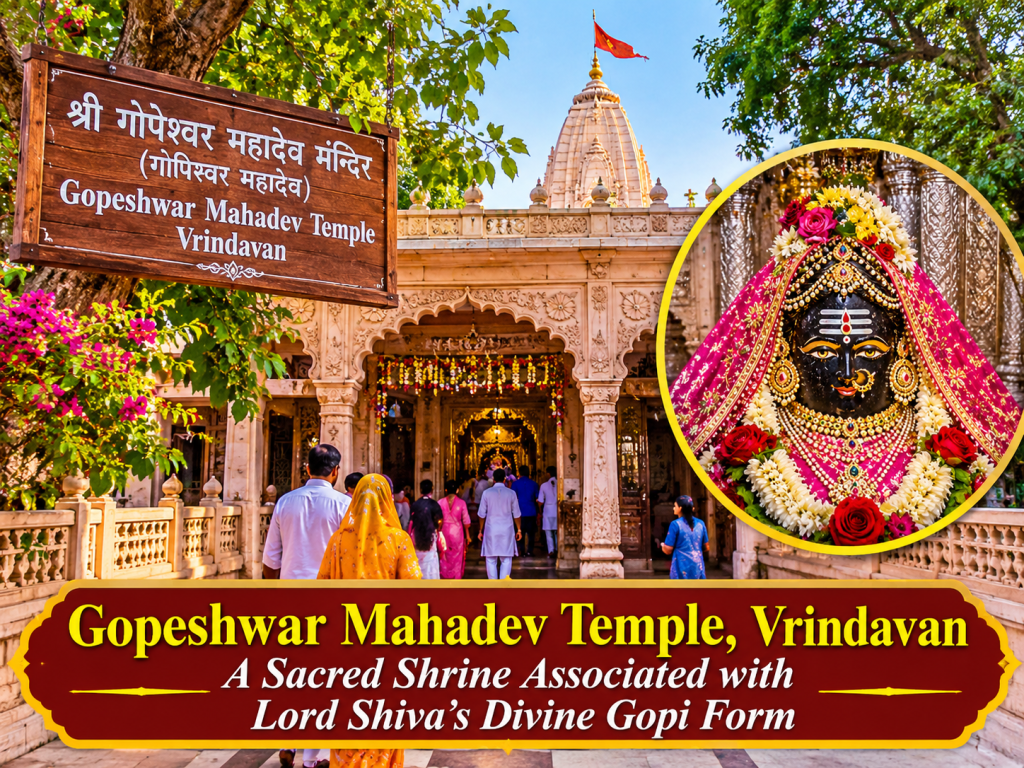
Gopeshwar Mahadev Temple, Vrindavan | Aζ South Asiagopeshwar mahadev temple vrindavan where lord shiva decorated with shringar items like gopi वृंदावन में गोपेश्वर महादेव मंदिर, जहां गोपियों की तरह बाबा का होता है सिंदूर, बिंदी, चुड़ी से शृंगार, एस्ट्रोलॉजी न्यूज़ – HindustanGopeshwar Mahadev Temple Vrindavan: गोपेश्वर महादेव मंदिर वृंदावन में छिपा है रासलीला का अद्भुत रहस्य8
The sacred Gopisvara Mahadev Temple is situated in the old spiritual quarter of Vrindavan, close to the Yamuna River and the traditionally revered Vamshi Vat area.
The temple is one of the important Shiva shrines of Braj and is especially popular among devotees who wish to understand the relationship between Lord Shiva and Sri Krishna.
The temple’s location is significant because it connects the worship of Mahadeva with the sacred geography of Krishna’s childhood and divine pastimes.
Vrindavan is filled with temples, sacred groves, riverbank sites and places associated with the lives of Krishna, Radha and the gopis. Gopisvara Mahadev occupies a special position among them because its devotional identity is directly connected with the Raas Lila.
Pilgrims often include the shrine in their Vrindavan temple visits, particularly those who are interested in the spiritual traditions of Braj.
The temple is also associated with the belief that Lord Shiva serves as a protector of Vrindavan Dham. In this understanding, Shiva is not separate from Krishna’s divine world but lovingly serves within it.
The wider Braj tradition remembers several important Mahadeva shrines as guardians of sacred places. Gopisvara Mahadev is especially associated with Vrindavan, while other forms of Shiva are worshipped in different parts of the Braj region. Blog+1
The Unique Evening Shringar of Gopisvara Mahadev
One of the most remarkable features of Gopisvara Mahadev Temple is the special devotional decoration of the Shiva lingam.
During the daytime, the deity is worshipped in the traditional form of a Shiva lingam. Devotees offer prayers, water, milk and other customary offerings according to the temple’s worship practices.
In the evening, the deity is traditionally adorned with feminine clothing, ornaments and decorative items associated with the form of a gopi.
This evening shringar is closely connected with the legend of Shiva’s transformation during Krishna’s Raas Lila.
The dressing of the deity is not merely an ornamental practice. It serves as a visual expression of the sacred story and allows devotees to remember Gopisvara’s unique devotional identity.
The evening darshan is particularly meaningful for pilgrims who wish to experience the temple’s distinctive tradition.
The deity’s decoration reflects the idea that devotion can transcend ordinary social and physical identities. Shiva’s appearance as a gopi symbolises his willingness to adopt the devotional mood required to serve Radha and Krishna.
The temple therefore offers a striking example of how a sacred legend can become part of daily worship. Devalayam+2
The Spiritual Meaning of Gopisvara’s Gopi Form
The transformation of Lord Shiva into a gopi carries several important spiritual messages.
1. Devotion Is Greater Than Position
Lord Shiva is one of the most powerful and revered deities in Hinduism. Yet in the Gopisvara legend, he does not rely upon his divine authority to enter the Raas Lila.
Instead, he accepts the guidance of the divine attendants and approaches Krishna with humility.
This teaches that spiritual progress depends not simply on status, knowledge or power, but on sincere devotion.
Even the greatest divine personality is shown accepting the position of a servant when the purpose is to experience the sweetness of divine love.
2. The Importance of Humility
The story reveals that humility is essential in devotional life.
Shiva’s willingness to transform himself demonstrates that a sincere devotee must be prepared to leave behind pride and personal expectations.
In the spiritual traditions of Braj, the desire to serve Radha and Krishna is considered more important than the desire to be recognised or honoured.
Gopisvara Mahadev therefore inspires devotees to approach the divine with a humble heart.
3. The Glory of Radha’s Grace
Many devotional accounts describe Shiva receiving the opportunity to enter the Raas Lila through the grace of Radha and her companions.
Radha is revered in the traditions of Braj as the embodiment of supreme devotion and divine love.
The story highlights the importance of her mercy in attaining the spiritual experience of Krishna’s intimate pastimes.
For devotees, Gopisvara’s transformation represents the power of divine grace to fulfil even the most extraordinary spiritual aspiration.
4. The Unity of Shaiva and Vaishnava Traditions
Gopisvara Mahadev is a beautiful example of the relationship between Shaiva and Vaishnava worship.
Shaiva traditions worship Lord Shiva as the supreme deity, while Vaishnava traditions focus on Vishnu and his incarnations, including Krishna.
The Gopisvara legend brings these devotional traditions together through the image of Shiva as Krishna’s devoted servant and guardian.
The shrine demonstrates that reverence for Shiva and devotion to Krishna can complement one another in the spiritual culture of Hinduism.
This relationship is particularly visible in the devotional traditions of Vrindavan, where Shiva is honoured as a great devotee of Krishna. bihariji.org+1
Gopisvara Mahadev and the Sacred Geography of Braj
The spiritual significance of Gopisvara Mahadev is closely connected with the sacred geography of Braj.
Braj is the region traditionally associated with the childhood and divine pastimes of Sri Krishna. It includes Vrindavan, Mathura, Govardhan, Nandgaon, Barsana and numerous other sacred places.
For devotees, the landscape of Braj is not simply a geographical area. It is a living spiritual environment where the memories of Krishna’s divine pastimes remain present.
Vrindavan is particularly associated with Radha and Krishna’s divine love. Its sacred groves, temples and riverbanks are celebrated in devotional poetry, songs and religious literature.
Gopisvara Mahadev is located within this spiritual landscape and is connected with the nearby Vamshi Vat area.
Vamshi Vat is traditionally remembered as a place associated with Krishna’s flute and the gathering of the gopis.
The proximity of Gopisvara Mahadev to this sacred area strengthens the temple’s association with the Raas Lila.
Pilgrims visiting Vrindavan often seek the blessings of Gopisvara Mahadev as part of their spiritual journey through Braj.
The temple also reminds visitors that the sacred places of Hinduism are frequently connected through stories, devotional practices and shared religious traditions. ||Vrindaban Forest||+2
Gopisvara Mahadev in the Devotional Traditions of Vrindavan
The worship of Gopisvara Mahadev is closely connected with the devotional culture of Vrindavan.
The traditions of Braj place great emphasis on bhakti, or loving devotion to the Supreme Lord. Devotees express this love through chanting, prayer, temple worship, pilgrimage and the remembrance of Krishna’s divine pastimes.
Gopisvara Mahadev is honoured as a deity who understands the spiritual sweetness of Krishna’s Raas Lila.
In many devotional traditions, Shiva is described as one of the greatest devotees of Vishnu and Krishna. His devotion is regarded as an example for those who wish to develop a deeper relationship with the divine.
The Gopisvara legend also introduces the concept of sakhi-bhava, the devotional mood of serving Radha and Krishna as a close companion.
This devotional mood is particularly important in some Gaudiya Vaishnava traditions, where the gopis are regarded as exemplary devotees whose love for Krishna is completely selfless.
Gopisvara Mahadev is therefore worshipped not only as a powerful form of Shiva but also as a spiritual guide who inspires devotees to cultivate humility, purity and loving service.
For many pilgrims, praying at the temple is a way of seeking the blessings required to approach the sacred atmosphere of Vrindavan with devotion. bihariji.org+2
Worship and Offerings at Gopisvara Mahadev Temple
Devotees visit Gopisvara Mahadev throughout the year to offer prayers and seek blessings.
As a form of Lord Shiva, the deity is worshipped through traditional Shaiva rituals. Common devotional offerings at Shiva temples include water, milk, flowers, incense and bilva leaves, although the precise offerings and procedures depend on the temple’s own customs.
The temple’s distinctive evening shringar is particularly associated with the Gopisvara form.
Devotees may also offer prayers for spiritual progress, inner peace, family well-being and freedom from obstacles.
However, the deepest significance of worship at Gopisvara Mahadev lies in remembering the divine story and developing the qualities it represents.
The temple encourages devotees to approach Krishna’s spiritual world with humility rather than pride, with love rather than personal ambition, and with a sincere desire to serve.
For those who follow the devotional traditions of Braj, the blessings of Gopisvara Mahadev are associated with spiritual purification and the cultivation of devotion to Radha and Krishna.
Gopisvara Mahadev and Sharad Purnima
Sharad Purnima holds a special place in the devotional imagination of Vrindavan.
The festival is associated with the full moon of the autumn season and is traditionally connected with Krishna’s Maha Raas Lila.
The moonlit atmosphere of Sharad Purnima is celebrated in devotional songs and literature as a setting for Krishna’s divine dance with the gopis.
Because Gopisvara Mahadev is associated with the Raas Lila, the temple’s spiritual importance is closely connected with this sacred occasion.
Devotees remember the story of Shiva’s desire to witness Krishna’s divine pastime and his transformation into Gopisvara through divine grace.
Sharad Purnima therefore provides a meaningful opportunity to reflect on the temple’s central message: the highest spiritual experience is attained through devotion, humility and the grace of the divine.
The precise festival arrangements and special worship schedules may vary from year to year, so pilgrims should confirm local temple information before planning a visit.
A Temple That Celebrates Divine Love
Gopisvara Mahadev Temple represents one of the most distinctive devotional traditions of Vrindavan.
Its story brings together Lord Shiva, Sri Krishna, Radha, the gopis and the sacred Raas Lila in a single spiritual narrative.
The temple’s unique evening decoration, its location near the sacred Vamshi Vat area and its association with Shiva’s transformation into a gopi make it an important place for devotees and visitors interested in the religious heritage of Braj.
The shrine also offers a valuable lesson about the nature of divine love.
In the story of Gopisvara, Shiva does not seek to dominate or control the Raas Lila. He seeks to witness it and serve within its sacred atmosphere.
His devotion demonstrates that the spiritual path is not defined by outward identity but by the purity of one’s heart.
The temple continues to inspire devotees to remember Krishna, honour Shiva and appreciate the profound spiritual relationship between the two divine personalities.
For pilgrims visiting Vrindavan, Gopisvara Mahadev remains a symbol of devotion, divine grace and the eternal sweetness of Krishna’s Raas Lila.
Conclusion: The Eternal Guardian of Krishna’s Raas Lila
Gopisvara Mahadev occupies a unique place in the spiritual heritage of Vrindavan.
The beloved legend of Lord Shiva becoming a gopi to witness Krishna’s Raas Lila reveals the extraordinary power of devotion and the importance of humility in spiritual life.
Through divine grace, Shiva received the name Gopisvara and became associated with the sacred responsibility of protecting the Raas Lila.
Today, the Gopisvara Mahadev Temple continues to preserve this devotional tradition through worship, pilgrimage and its distinctive evening shringar.
The shrine reminds devotees that the spiritual world of Vrindavan is approached not through pride or authority, but through sincere love and surrender.
In the presence of Gopisvara Mahadev, devotees remember the eternal relationship between Shiva and Krishna—a relationship filled with reverence, affection and divine service.
May the blessings of Gopisvara Mahadev inspire every devotee to walk the path of humility, devotion and loving remembrance of Sri Radha Krishna.
Jai Gopisvara Mahadev! Jai Sri Radha Krishna!
*Updated on 23 November, 2026