Prambanan Temple, Indonesia: The Ultimate Travel Guide to Java’s Majestic UNESCO Hindu Masterpiece (2026)
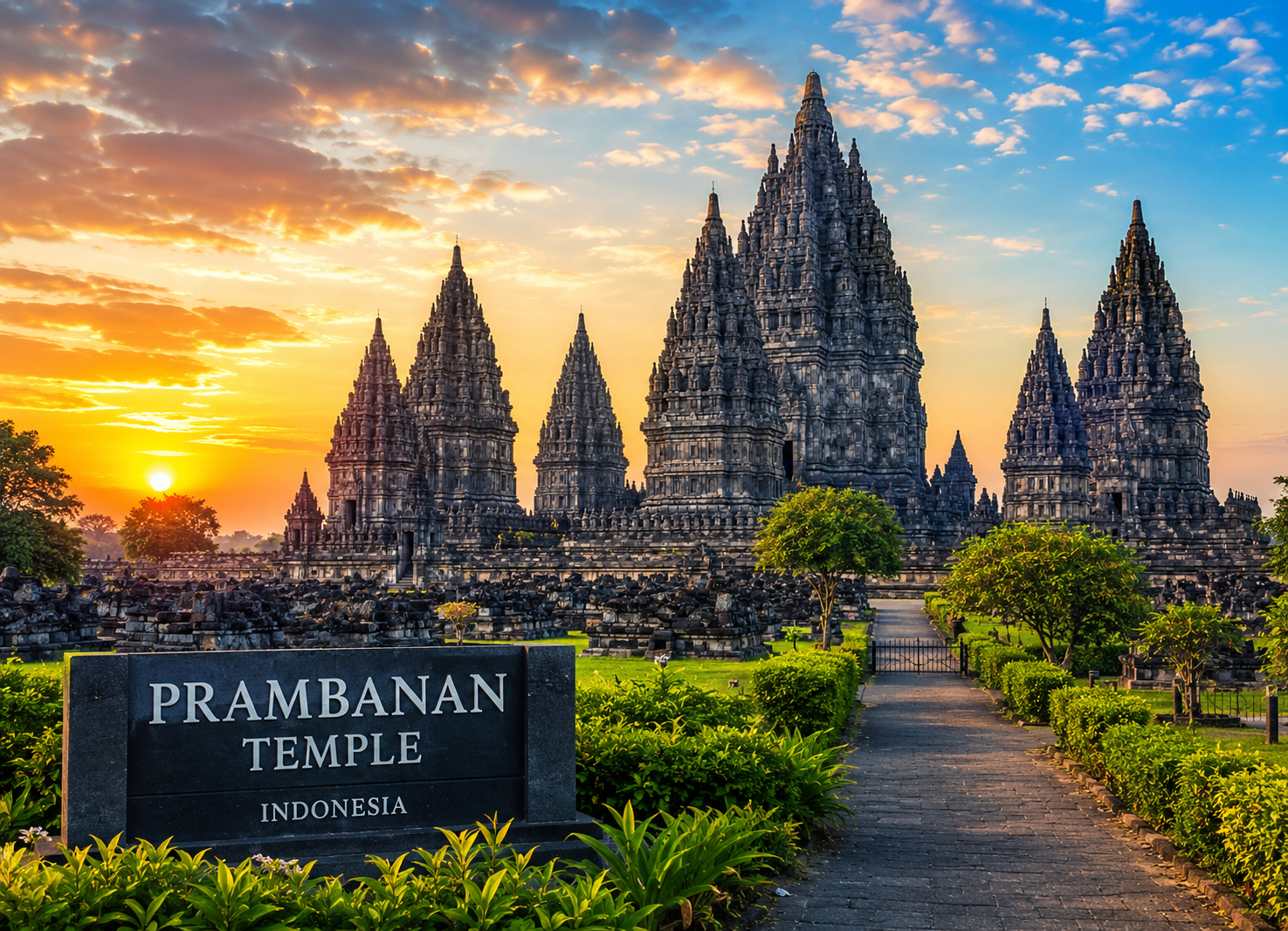
Imagine standing before towering stone spires that seem to pierce the clouds, while intricate carvings narrate stories from the ancient Ramayana. As the golden rays of sunrise illuminate centuries-old temples, the entire complex transforms into a magical kingdom where history, mythology, architecture, and spirituality blend into one unforgettable experience.
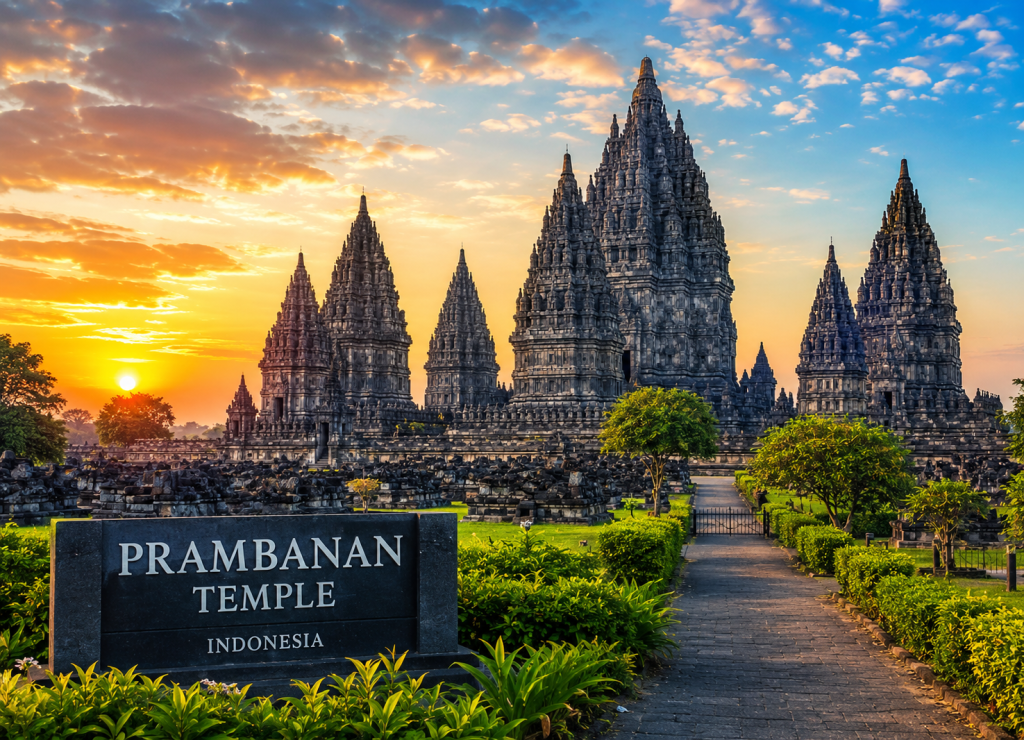
Welcome to Prambanan Temple, Indonesia’s largest Hindu temple complex and one of Southeast Asia’s greatest architectural treasures.
Located near Yogyakarta on the island of Java, Prambanan is more than just a UNESCO World Heritage Site—it’s a destination that captures the heart of every traveler, history enthusiast, photographer, pilgrim, and culture lover.
Whether you’re planning your first trip to Indonesia or searching for hidden gems beyond Bali, Prambanan deserves a top spot on your travel bucket list.
A Brief Introduction to Prambanan Temple
Prambanan, locally known as Candi Prambanan, is the largest Hindu temple complex in Indonesia.
Built during the 9th century, the temple was dedicated to the Trimurti—the three principal Hindu deities:
- Lord Shiva (The Destroyer)
- Lord Vishnu (The Preserver)
- Lord Brahma (The Creator)
The centerpiece is the magnificent Shiva Temple, standing approximately 47 meters (154 feet) high, making it one of the tallest Hindu temples in Southeast Asia.
Today, Prambanan attracts millions of visitors from across the globe who come to admire its breathtaking architecture, mythological carvings, and spiritual atmosphere.
UNESCO World Heritage Recognition
In 1991, UNESCO recognized Prambanan as a World Heritage Site because of its:
- Outstanding architecture
- Historical significance
- Exceptional stone carvings
- Preservation of ancient Hindu culture
- Universal cultural value
This recognition has helped preserve the temple while introducing it to international travelers.
The Fascinating History of Prambanan
The temple complex was constructed during the reign of the Sanjaya Dynasty, around 850 CE.
Many historians believe it was built by Rakai Pikatan as a grand tribute to Hinduism after the decline of Buddhist political influence in Central Java.
For centuries, Prambanan flourished as a religious center.
However, natural disasters—including volcanic eruptions from nearby Mount Merapi and powerful earthquakes—along with political shifts eventually led to its abandonment.
Dense forests slowly reclaimed the temples until European explorers rediscovered them during the 18th century.
Large-scale restoration efforts began in the 20th century and continue today.
The Legend of Roro Jonggrang
No visit to Prambanan is complete without hearing Indonesia’s most famous love legend.
According to local folklore, a beautiful princess named Roro Jonggrang refused the marriage proposal of Prince Bandung Bondowoso.
To avoid marrying him, she challenged the prince to build 1,000 temples in one night.
Using supernatural powers, the prince nearly completed the impossible task.
Desperate, the princess tricked villagers into creating the illusion of sunrise.
Thinking dawn had arrived, the spirits disappeared before finishing the final temple.
Enraged, the prince cursed the princess, turning her into stone.
Legend says she became the thousandth statue.
Today, many Indonesians believe the famous Durga statue inside the Shiva Temple represents Princess Roro Jonggrang herself.
This romantic legend continues to enchant visitors from around the world.
Architectural Marvel
Prambanan represents the pinnacle of classical Javanese Hindu architecture.
The complex originally contained 240 temples.
The layout reflects Hindu cosmology.
The three largest temples honor:
- Shiva
- Vishnu
- Brahma
Opposite them stand temples dedicated to:
Surrounding these are dozens of smaller shrines arranged in symmetrical squares.
Every structure demonstrates remarkable mathematical precision.
Intricate Stone Carvings
One of Prambanan’s greatest highlights is its extraordinary relief sculptures.
Walking around the Shiva Temple feels like turning the pages of an ancient stone book.
The walls beautifully illustrate:
- Ramayana
- Bhagavata Purana (Srimad Bhagavatam)
- Hindu mythology
- Divine battles
- Celestial beings
- Sacred animals
Every panel showcases incredible craftsmanship.
Photographers and history lovers can easily spend hours admiring these artistic masterpieces.
The Magnificent Shiva Temple
The Shiva Temple is the heart of Prambanan.
Inside you’ll discover statues of:
- Lord Shiva
- Durga
- Ganesha
- Sage Agastya
Each chamber possesses deep spiritual symbolism.
The towering structure dominates the skyline and offers one of the finest examples of Hindu temple architecture outside India.
Ramayana Ballet: A Magical Evening Experience
As night falls, Prambanan becomes even more enchanting.
The famous Ramayana Ballet takes place in an open-air theatre with the illuminated temple serving as a spectacular backdrop.
Professional dancers perform scenes from the Ramayana using traditional Javanese dance, elaborate costumes, and live gamelan music.
Watching the performance beneath the stars is often considered one of Indonesia’s most unforgettable cultural experiences.
Sunrise at Prambanan
Early morning transforms the temple into paradise.
Reasons photographers love sunrise include:
- Soft golden lighting
- Fewer tourists
- Cooler weather
- Misty landscapes
- Beautiful shadows on ancient stone
The peaceful atmosphere makes sunrise the perfect time for reflection and photography.
Sunset Magic
If sunrise offers tranquility, sunset provides romance.
As the sky turns shades of orange, pink, and purple, the temple silhouettes create postcard-perfect scenery.
Couples, travel vloggers, and drone photographers particularly love this magical hour.
Best Time to Visit
The ideal months are:
May to September
Advantages include:
- Dry weather
- Comfortable temperatures
- Clear blue skies
- Excellent photography conditions
Morning visits between 7:00 and 9:00 AM are highly recommended.
How to Reach Prambanan
Prambanan lies approximately 17 kilometers from Yogyakarta.
Travel options include:
By Taxi
Fast and comfortable.
By Ride-Hailing Apps
Affordable and convenient.
By Bus
Regular public buses connect Yogyakarta with Prambanan.
By Rental Scooter
Ideal for adventurous travelers exploring Central Java.
Entry Information
Visitors can purchase:
- Single-entry tickets
- Combined tickets with Borobudur
- Family packages
- Student discounts (subject to eligibility)
Booking online during peak travel seasons is recommended.
Photography Tips
Bring:
- Wide-angle lens
- Polarizing filter
- Tripod (where permitted)
- Extra batteries
- Comfortable walking shoes
Best photo locations include:
- Main Shiva Temple
- Temple courtyards
- Sunrise viewpoint
- Ramayana stage
- Outer pathways
Dress Code
Although Prambanan is a historical monument, it remains culturally significant.
Visitors should wear:
- Comfortable clothing
- Covered shoulders (recommended)
- Respectful attire
- Walking shoes
- Sun protection
Nearby Attractions
Your trip can easily include several nearby destinations.
Borobudur Temple
The world’s largest Buddhist monument.
Mount Merapi
An active volcano offering jeep adventures.
Malioboro Street
Yogyakarta’s famous shopping district.
Taman Sari Water Castle
A royal palace with fascinating architecture.
Kraton Yogyakarta
The residence of the Sultan of Yogyakarta.
Together, these attractions create an unforgettable Central Java itinerary.
Local Food You Must Try
After exploring Prambanan, sample authentic Javanese cuisine.
Popular dishes include:
- Gudeg
- Bakpia
- Sate Ayam
- Nasi Goreng
- Soto Ayam
- Tempeh
- Gado-Gado
- Es Cendol
The culinary experience is as memorable as the temples themselves.
Shopping Near Prambanan
Souvenir options include:
- Batik fabrics
- Wooden carvings
- Handmade jewelry
- Wayang puppets
- Stone sculptures
- Traditional paintings
Supporting local artisans also contributes to cultural preservation.
Travel Tips
- Arrive early.
- Stay hydrated.
- Carry cash.
- Respect sacred spaces.
- Avoid climbing restricted structures.
- Hire a local guide for deeper insights.
- Allocate at least half a day.
- Visit during weekdays if possible.
Why Every Traveler Falls in Love with Prambanan
Prambanan is not merely an archaeological site.
It is:
- A masterpiece of engineering
- A symbol of Indonesia’s multicultural heritage
- A living connection to Hindu civilization
- A paradise for photographers
- A dream destination for storytellers
- A peaceful spiritual retreat
Few places combine mythology, architecture, history, culture, and natural beauty as harmoniously.
Narendra Modi’s Visit: Renewed Global Attention
In recent years, Prambanan gained additional international attention when Indian Prime Minister Narendra Modi visited the temple during his official trip to Indonesia. His visit highlighted the centuries-old cultural and civilizational ties between India and Indonesia, emphasizing the shared heritage reflected in magnificent Hindu monuments like Prambanan. The visit sparked renewed interest among travelers, historians, and devotees eager to explore this remarkable symbol of cultural exchange.
Suggested One-Day Itinerary
7:00 AM: Arrive for sunrise photography.
8:00 AM: Explore the Shiva Temple.
9:00 AM: Walk through Vishnu and Brahma temples.
10:30 AM: Visit the museum.
12:00 PM: Enjoy authentic Javanese lunch.
2:00 PM: Explore nearby temples.
5:30 PM: Capture sunset photographs.
7:30 PM: Watch the Ramayana Ballet.
Sustainable Tourism
Help preserve Prambanan by:
- Staying on designated paths.
- Never touching fragile carvings.
- Avoiding littering.
- Supporting local businesses.
- Respecting cultural traditions.
- Using reusable water bottles.
Responsible tourism ensures this heritage survives for future generations.
Frequently Asked Questions (FAQs)
Is Prambanan worth visiting?
Absolutely. It is one of Southeast Asia’s most spectacular UNESCO World Heritage Sites and a must-visit destination in Indonesia.
How much time should I spend here?
Plan at least 4–6 hours, or a full day if including the Ramayana Ballet and nearby attractions.
Can I visit Borobudur and Prambanan in one day?
Yes. Many travelers combine both UNESCO sites in a single day, though starting early is recommended.
Is Prambanan suitable for families?
Yes. Wide pathways, open spaces, cultural performances, and educational exhibits make it enjoyable for visitors of all ages.
Is there a dress code?
Modest, respectful clothing is recommended due to the site’s religious and cultural significance.
When is the best season to visit?
The dry season from May to September offers the best weather and clearer skies.
Is the Ramayana Ballet worth watching?
Definitely. The open-air performance with Prambanan illuminated in the background is widely regarded as one of Indonesia’s finest cultural experiences.
Are guided tours available?
Yes. Local guides provide valuable historical, architectural, and mythological insights that greatly enrich the visit.
Final Thoughts
Prambanan Temple is more than an architectural marvel—it is a living testament to Indonesia’s rich cultural heritage, artistic brilliance, and spiritual legacy. Every carved stone tells a story, every towering spire reflects centuries of devotion, and every sunrise over the temple inspires awe.
Whether you’re captivated by ancient history, fascinated by Hindu mythology, passionate about photography, or simply searching for an unforgettable travel experience, Prambanan offers something extraordinary. Pair it with the vibrant culture of Yogyakarta, the nearby wonders of Borobudur and Mount Merapi, and the warmth of Javanese hospitality, and you’ll discover why Central Java remains one of Asia’s most rewarding destinations.
For travelers seeking a place where legend, architecture, and timeless beauty come together, Prambanan Temple isn’t just a stop on the itinerary—it’s a journey into the heart of Indonesia’s soul.