Badrinath Temple Travel Guide: Everything You Need to Know Before Visiting India’s Sacred Vishnu Shrine
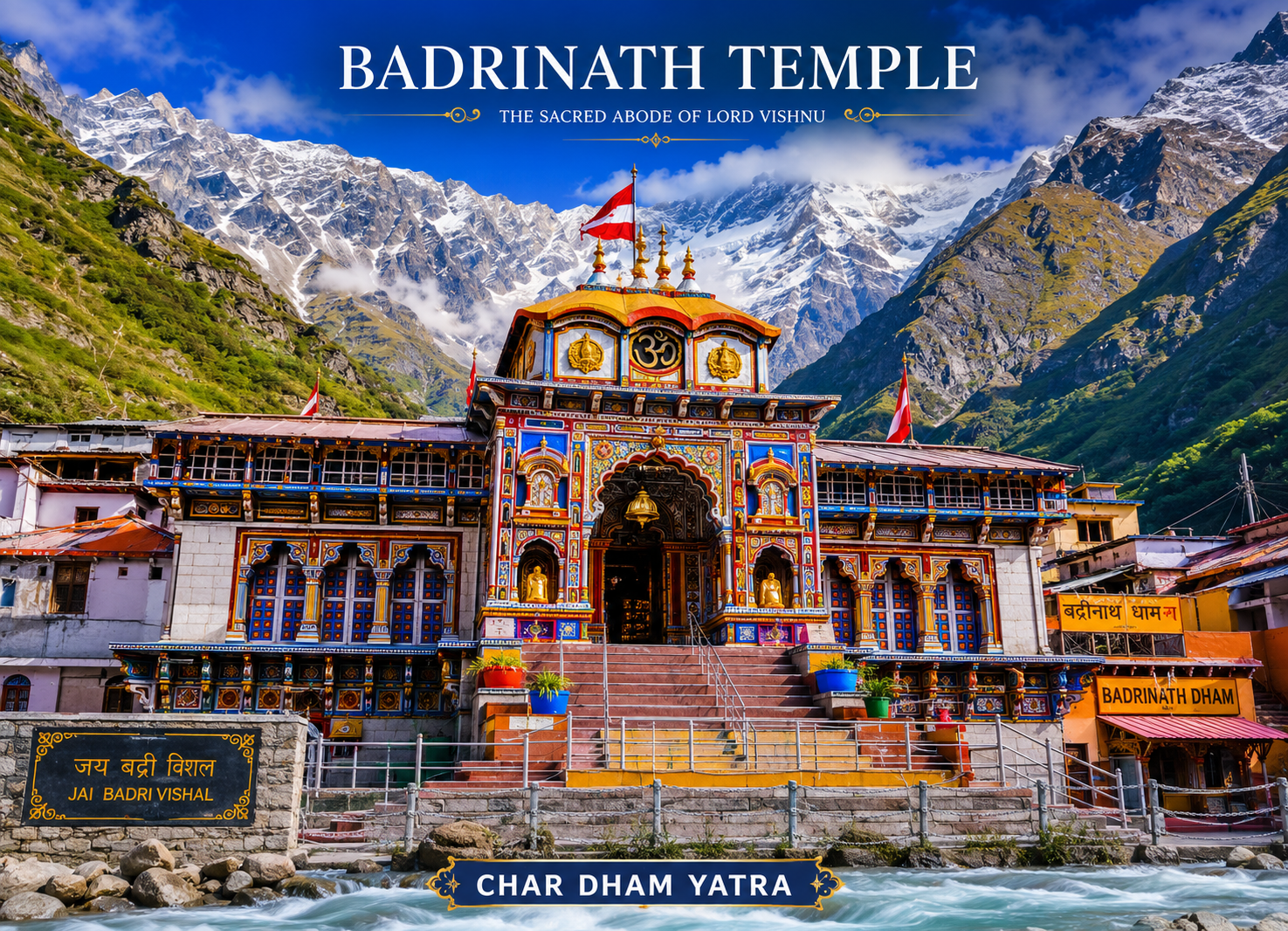
Nestled in the breathtaking Himalayas of Uttarakhand, Badrinath Temple is one of the holiest pilgrimage destinations in India. Surrounded by snow-covered mountains, flowing rivers, colorful landscapes, and spiritual serenity, this sacred shrine attracts millions of devotees and travelers every year.
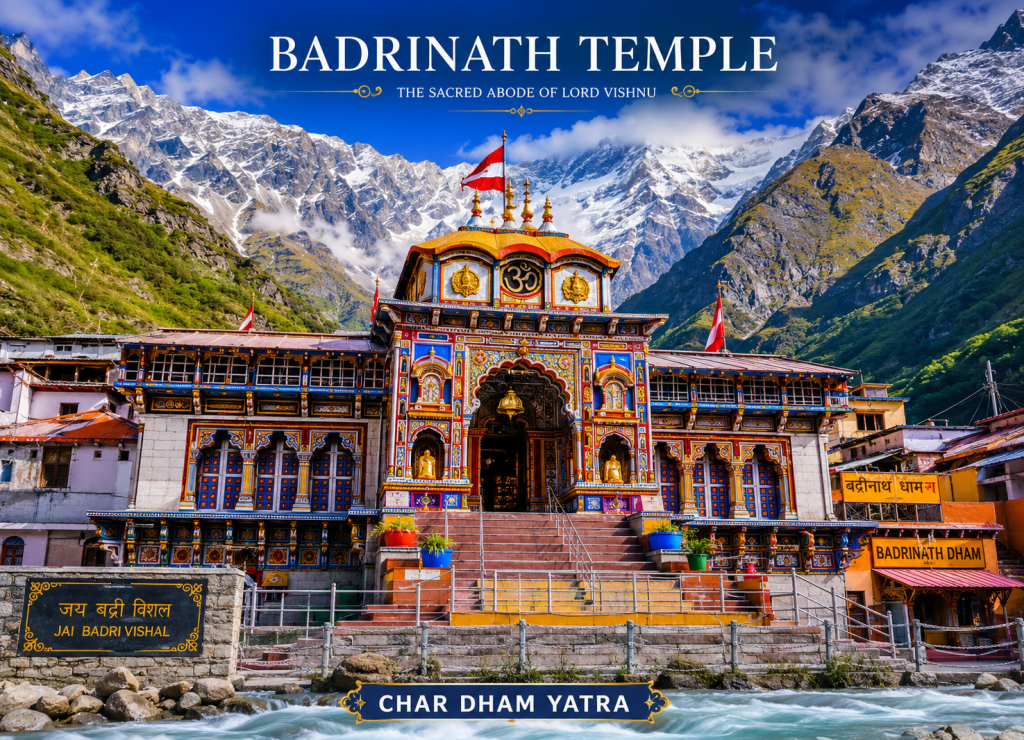
Whether you are a devotee seeking the blessings of Lord Vishnu or a traveler looking for an unforgettable Himalayan adventure, Badrinath offers an experience unlike any other. The temple is not only famous for its religious importance but also for its incredible natural beauty, ancient legends, and peaceful atmosphere.
In this comprehensive travel guide, you will discover everything about Badrinath Temple—from its fascinating history and mythology to travel routes, accommodation, food, weather, nearby attractions, travel tips, and much more.
Where is Badrinath Temple Located?
Badrinath Temple is situated in the Chamoli district of Uttarakhand at an altitude of approximately 3,133 meters (10,279 feet) above sea level.
The temple stands on the banks of the sacred Alaknanda River, with the magnificent Neelkanth Peak rising dramatically in the background. This spectacular scenery makes it one of the most beautiful temple locations in India.
Despite its remote Himalayan location, modern roads have made the temple accessible for pilgrims from across the country.
Why is Badrinath Temple So Famous?
Badrinath Temple is dedicated to Lord Vishnu, worshipped here as Badri Narayan.
Its importance comes from several reasons:
- One of the four Char Dham Yatra pilgrimage sites
- One of the 108 Divya Desams of Vaishnavism
- Believed to have been established by Adi Shankaracharya
- Mentioned in several ancient Hindu scriptures
- Surrounded by stunning Himalayan landscapes
- Gateway to many sacred Himalayan destinations
Every year, millions of pilgrims visit this holy shrine seeking spiritual peace and divine blessings.
The Fascinating Legend of Badrinath
According to Hindu mythology, Lord Vishnu came to this region for deep meditation.
As he meditated in the harsh Himalayan climate, Goddess Lakshmi transformed herself into a Badri tree (wild berry tree) to protect him from snow, rain, and intense sunlight.
Because Lakshmi became the Badri tree while Vishnu meditated beneath her, Lord Vishnu came to be known as Badri Narayan, and the region became known as Badrinath.
This beautiful legend symbolizes devotion, sacrifice, protection, and divine love.
History of Badrinath Temple
The history of Badrinath Temple stretches back thousands of years.
Ancient scriptures including the Mahabharata, Vishnu Purana, Skanda Purana, and Bhagavata Purana mention this sacred region.
Historians believe that the current temple structure has undergone several renovations due to earthquakes and avalanches.
Around the 8th century CE, the great philosopher Adi Shankaracharya rediscovered the temple and revived its worship. He found the sacred idol of Lord Vishnu in the Alaknanda River and installed it inside the temple.
Since then, Badrinath has remained one of Hinduism’s most important pilgrimage centers.
Architecture of Badrinath Temple
Unlike many North Indian temples, Badrinath Temple displays colorful Himalayan architecture.
Some unique features include:
- Brightly painted entrance
- Gold-gilded roof
- Beautiful arched windows
- Stone construction
- Small but elegant sanctum
- Garuda statue facing Lord Vishnu
Inside the sanctum is a black stone idol of Lord Badri Narayan seated in a meditative posture.
The idol is approximately one meter tall and is believed to be made of Shaligram Shila(stone).
The Spiritual Significance
Badrinath is considered the earthly abode of Lord Vishnu.
According to Hindu beliefs:
- Visiting Badrinath washes away sins.
- Pilgrims attain spiritual purification.
- The journey brings inner peace.
- Ancestors receive divine blessings.
- Devotees move closer toward moksha (liberation).
Because of these beliefs, the temple remains one of India’s greatest pilgrimage destinations.
Temple Opening and Closing Dates
Since the temple lies in a heavy snowfall region, it remains open only for part of the year.
Typically:
Opening: Late April or May
Closing: October or November
The exact dates are decided according to the Hindu calendar.
During winter, the idol is ceremonially shifted to Joshimath, where worship continues until the temple reopens.
Temple Timings
Typical timings are:
Morning:
- 4:30 AM – 1:00 PM
Evening:
- 4:00 PM – 9:00 PM
Special aartis are held every day, attracting thousands of devotees.
Best Time to Visit Badrinath Temple
May to June
This is the most popular season.
Advantages:
- Pleasant weather
- Clear mountain views
- Comfortable trekking
- Ideal for sightseeing
July to August
The monsoon season brings lush greenery but also landslides and road disruptions.
Travel requires caution.
September to October
Many experienced travelers consider this the best season.
Benefits include:
- Crystal-clear skies
- Beautiful mountain scenery
- Fewer crowds
- Excellent photography opportunities
Winter Season
Heavy snowfall forces the temple to close.
However, nearby Himalayan regions become stunning winter landscapes.
How to Reach Badrinath
By Air
The nearest airport is Jolly Grant Airport, Dehradun.
From there, taxis and buses are available.
By Train
Nearest railway stations:
- Haridwar
- Rishikesh
- Dehradun
By Road
Road travel is the most popular option.
Common route:
Haridwar → Rishikesh → Devprayag → Rudraprayag → Karnaprayag → Nandprayag → Chamoli → Joshimath → Badrinath
The journey itself is one of the most scenic road trips in India.
Char Dham Yatra
Badrinath forms part of the famous Char Dham Yatra, which includes:
- Yamunotri
- Gangotri
- Kedarnath
- Badrinath
Traditionally, pilgrims visit Badrinath after Kedarnath.
Completing the Char Dham pilgrimage is believed to grant immense spiritual merit.
Mana Village – India’s Last Village
Only about 3 km from Badrinath lies the famous Mana Village.
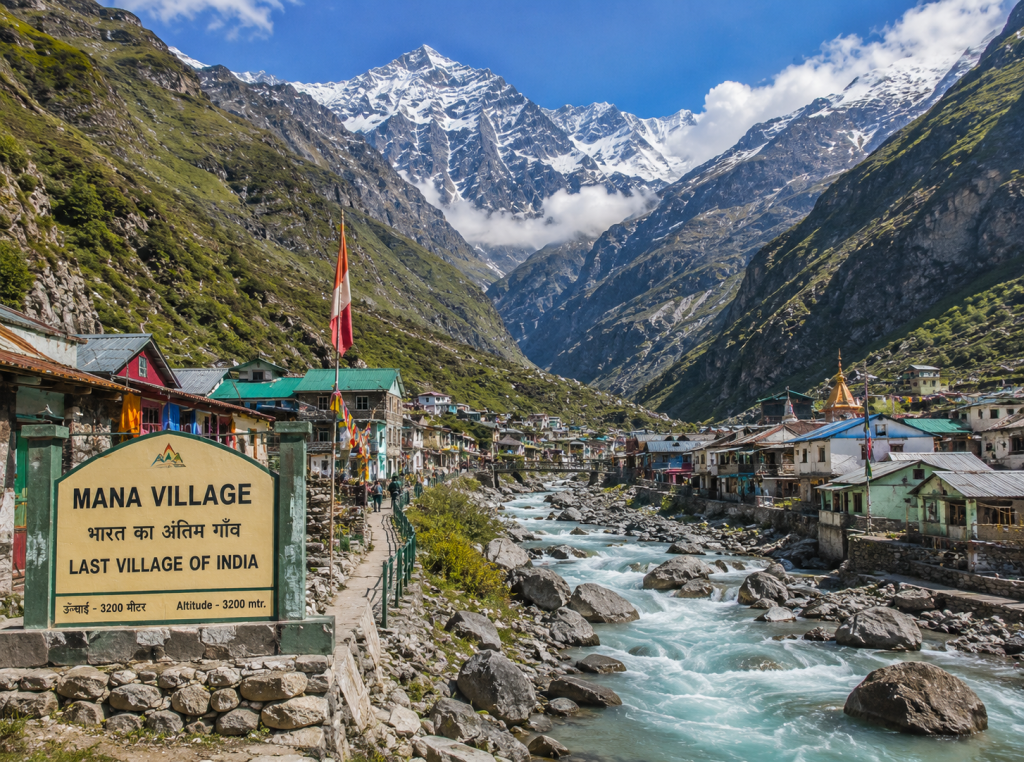
This picturesque village is known for:
- Traditional Himalayan culture
- Stone houses
- Tibetan influence
- Local handicrafts
- Friendly villagers
Many tourists consider Mana one of the highlights of their Badrinath journey.
Must-Visit Attractions Near Badrinath
Tapt Kund
A natural hot water spring where pilgrims traditionally bathe before entering the temple.
The warm mineral-rich water remains pleasantly hot even in freezing temperatures.
Brahma Kapal
A sacred place for performing rituals for ancestors.
Many families visit this site before offering prayers at the temple.
Charan Paduka
A rock believed to bear the footprints of Lord Vishnu.
The short trek rewards visitors with spectacular mountain views.
Vasudhara Falls
Located around 9 km from Badrinath, this majestic waterfall cascades from great heights amidst stunning Himalayan scenery.
Adventure lovers particularly enjoy this trek.
Vyas Cave
According to tradition, Sage Vyasa composed the Mahabharata here.
Nearby is Ganesh Cave, where Lord Ganesha is believed to have written the epic.
Bhim Pul
A massive natural stone bridge across the Saraswati River.
Legend says Bhima placed the rock so Draupadi could cross safely during the Pandavas’ final journey.
Accommodation Options
Visitors can choose from:
- Budget guesthouses
- Dharamshalas
- GMVN tourist rest houses
- Mid-range hotels
- Luxury camps (seasonal)
Booking in advance is highly recommended during peak pilgrimage months.
Local Food
Simple vegetarian food is widely available.
Popular dishes include:
- Aloo Puri
- Rajma Rice
- Khichdi
- Chapati
- Tea
- Maggi
- Garhwali cuisine
- Hot soups
Alcohol and non-vegetarian food are generally avoided around the temple area.
Weather Guide
Summer
5°C–18°C
Carry warm clothes.
Monsoon
Rainy and unpredictable.
Expect occasional landslides.
Autumn
Cold but beautiful.
Excellent visibility.
Winter
Heavy snowfall.
Temple remains closed.
Photography Tips
The surrounding Himalayan scenery is paradise for photographers.
Capture:
- Sunrise over Neelkanth Peak
- Colorful temple façade
- Alaknanda River
- Prayer ceremonies
- Himalayan valleys
- Mana Village
Photography inside the temple sanctum is generally prohibited.
Essential Travel Tips
- Start your journey early each day.
- Carry warm clothing.
- Wear comfortable walking shoes.
- Drink plenty of water.
- Keep medicines for altitude sickness.
- Carry cash, as digital payments may occasionally face network issues.
- Book hotels early during peak season.
- Respect temple customs and local traditions.
- Avoid plastic waste.
- Keep identity documents handy.
Responsible Tourism
Help preserve this sacred destination by:
- Not littering.
- Using reusable water bottles.
- Respecting local customs.
- Supporting local businesses.
- Conserving water.
- Avoiding loud music.
- Protecting the fragile Himalayan ecosystem.
A Journey Beyond Religion
Even travelers who are not religious often fall in love with Badrinath.
The majestic mountains, icy rivers, peaceful atmosphere, colorful temple, and welcoming local culture create an unforgettable experience.
Watching the morning sunlight illuminate the Neelkanth Peak while temple bells echo across the valley is a memory that remains with visitors forever.
Whether you seek adventure, photography, spirituality, or simply a peaceful escape into nature, Badrinath offers something truly special.
Frequently Asked Questions
Is Badrinath suitable for family trips?
Yes. Families of all ages visit the temple every year, though elderly visitors should prepare for high-altitude conditions.
How many days are enough?
A 2–3 day stay allows enough time for darshan and nearby sightseeing.
Is online registration required?
Depending on the season and government regulations, registration may be required for the Char Dham Yatra.
Can foreigners visit?
Yes. Visitors of all nationalities are welcome, provided they follow temple rules.
Is there snowfall in Badrinath?
Yes. Heavy snowfall occurs during winter, which is why the temple closes for several months each year.
Final Thoughts
Badrinath Temple is far more than a pilgrimage site—it is a destination where spirituality, history, mythology, and the grandeur of the Himalayas come together. Every bend in the mountain road, every prayer echoing through the valley, and every glimpse of the snow-clad Neelkanth Peak adds to the magic of this sacred journey.
Whether you are embarking on the Char Dham Yatra, exploring Uttarakhand’s breathtaking landscapes, or simply seeking peace in the lap of nature, Badrinath promises an experience that touches both the heart and the soul. Plan your visit during the open season, travel responsibly, and allow this timeless Himalayan shrine to leave you with memories that will last a lifetime.