Angkor Wat Temple Tour: The Ultimate Travel Guide to Cambodia’s Greatest Wonder

Few places on Earth inspire travelers as much as Angkor Wat. Rising above the forests of Cambodia, this magnificent temple is one of the world’s greatest architectural masterpieces and the largest religious monument ever built. Every year, millions of visitors travel to witness its breathtaking sunrise, intricate carvings, and timeless beauty.
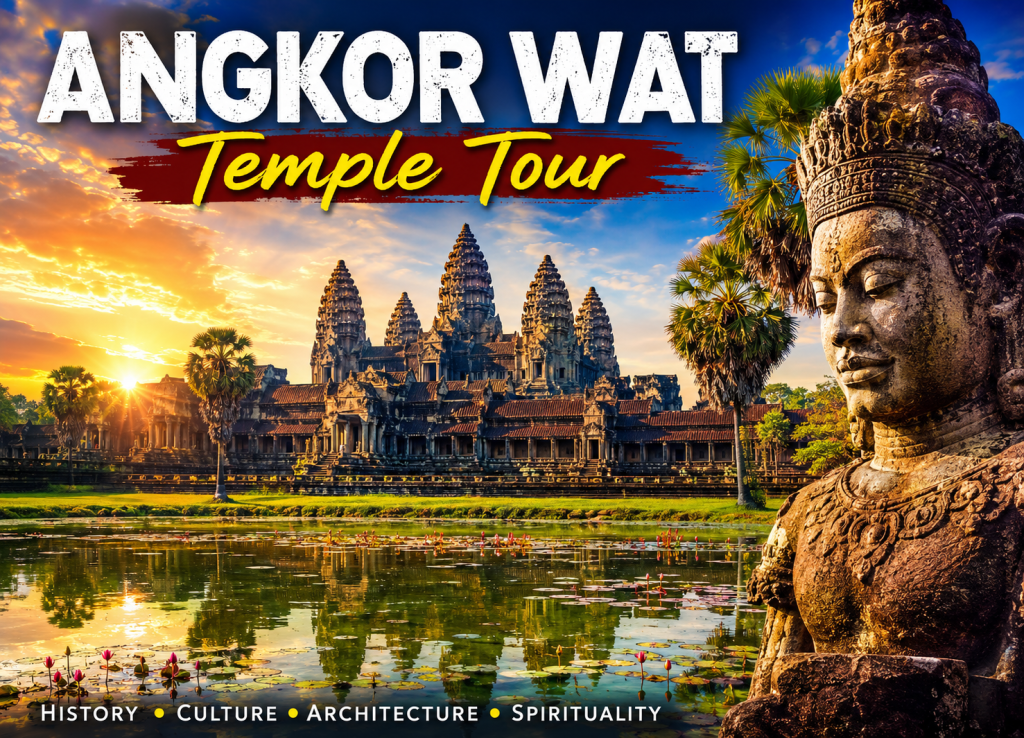
An Angkor Wat Temple Tour is much more than a sightseeing trip. It is a journey into the glorious Khmer Empire, where history, spirituality, art, and nature come together in unforgettable harmony. Whether you are a history enthusiast, photographer, spiritual traveler, or adventure seeker, Angkor Wat promises memories that will last a lifetime.
This comprehensive guide covers everything you need to know before planning your trip—from history and tickets to transportation, photography, nearby attractions, travel tips, and sample itineraries.
Where is Angkor Wat?
Angkor Wat is located approximately 6 kilometers north of Siem Reap, Cambodia’s most popular tourist city.
The temple lies within the vast Angkor Archaeological Park, covering over 400 square kilometers and containing hundreds of ancient temples.
The location makes Siem Reap the perfect base for exploring the ancient Khmer civilization.
Why is Angkor Wat Famous?
Angkor Wat is famous for several remarkable reasons:
- Largest religious monument in the world
- UNESCO World Heritage Site
- Masterpiece of Khmer architecture
- Incredible stone carvings
- Spectacular sunrise views
- Rich Hindu and Buddhist heritage
- Symbol of Cambodia featured on the national flag
Unlike many ancient monuments, Angkor Wat remains an active place of worship while welcoming millions of visitors annually.
History of Angkor Wat
Angkor Wat was constructed during the early 12th century by King Suryavarman II.
Originally dedicated to Lord Vishnu, the temple reflected the king’s devotion to Hinduism.
Later, as Buddhism spread throughout Cambodia, Angkor Wat gradually transformed into a Buddhist temple while preserving much of its Hindu symbolism.
Remarkably, the temple survived wars, political changes, jungle overgrowth, and centuries of neglect.
Today it stands as one of humanity’s greatest surviving architectural achievements.
The Meaning Behind the Architecture
Angkor Wat is far more than an impressive building.
Every element has symbolic meaning.
The five central towers represent Mount Meru, the sacred mountain in Hindu cosmology.
The surrounding moat symbolizes the cosmic ocean.
Long galleries depict stories from Hindu epics such as:
- Ramayana
- Mahabharata
- Samudra Manthan (Churning of the Ocean)
- Battles between gods and demons
- Heavenly realms
The temple perfectly combines religion, astronomy, geometry, and engineering.
The Magnificent Sunrise Experience
For many travelers, the highlight of the entire trip is watching sunrise over Angkor Wat.
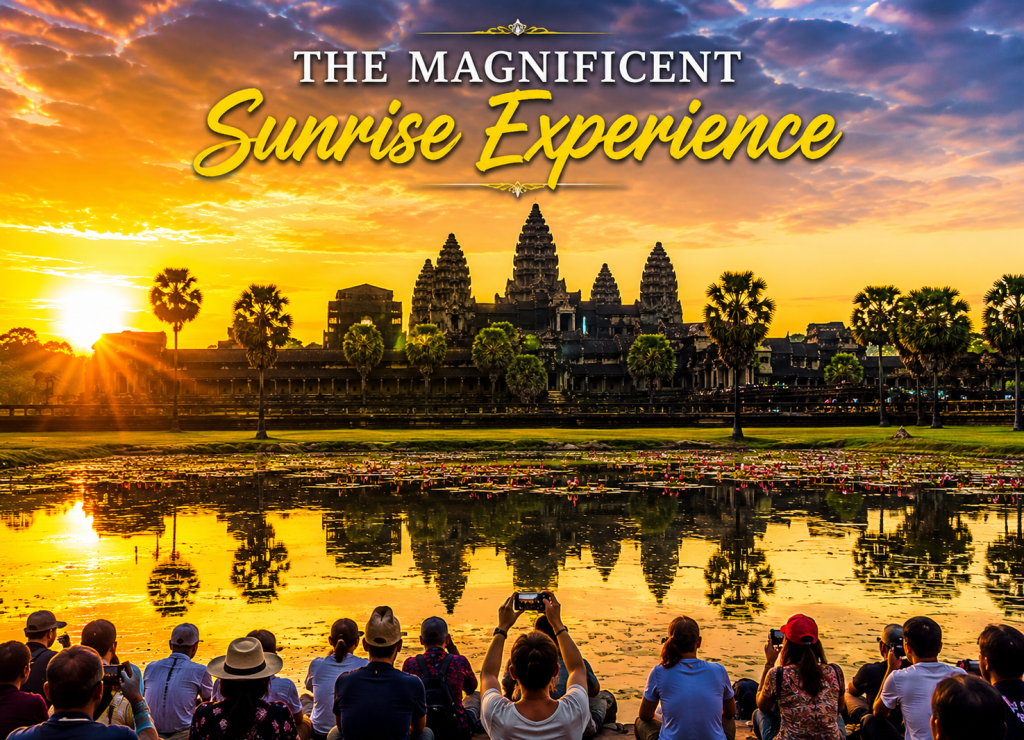
Before dawn, thousands gather near the reflecting ponds.
As the sky slowly changes from deep blue to orange and gold, the iconic towers emerge in silhouette.
The reflection in the water creates one of the world’s most photographed scenes.
Sunrise Tips
- Arrive before 5:00 AM.
- Carry a flashlight.
- Wear comfortable shoes.
- Bring mosquito repellent.
- Keep your camera ready.
- Be patient for changing light.
Best Time to Visit Angkor Wat
November to February
This is the best season.
Advantages:
- Pleasant temperatures
- Blue skies
- Comfortable walking weather
- Excellent photography
March to May
Hot but manageable if you start early.
Advantages:
- Smaller crowds
- Beautiful sunrises
June to October
Rainy season.
Advantages:
- Lush green landscapes
- Fewer tourists
- Dramatic clouds
- Better reflections
Many photographers actually prefer the rainy season.
How to Reach Angkor Wat
By Air
The nearest airport is Siem Reap–Angkor International Airport.
International flights connect from:
- Bangkok
- Singapore
- Kuala Lumpur
- Ho Chi Minh City
- Hanoi
- Seoul
From Siem Reap
Travel options include:
- Tuk-tuk
- Taxi
- Bicycle
- Scooter
- Guided tour
- Private car
Most visitors choose tuk-tuks because they are affordable and flexible.
Angkor Wat Entrance Tickets
Visitors need an Angkor Pass.
Common options include:
One-Day Pass
Ideal for short visits.
Three-Day Pass
Perfect for exploring major temples.
Seven-Day Pass
Best for photographers and history lovers.
Tickets include access to numerous temples throughout Angkor Archaeological Park.
Dress Code
As Angkor Wat remains a sacred religious site, respectful clothing is required.
Wear:
- Covered shoulders
- Long pants or skirts
- Comfortable walking shoes
- Hat
- Sunglasses
Avoid:
- Short shorts
- Revealing clothing
- Loud behavior
Top Attractions Inside Angkor Archaeological Park
1. Angkor Wat
The park’s crown jewel.
Highlights include:
- Lotus towers
- Bas-reliefs
- Reflecting pools
- Central sanctuary
2. Angkor Thom
The last capital of the Khmer Empire.
Major attractions:
- South Gate
- Elephant Terrace
- Royal Palace ruins
3. Bayon Temple
Known for its mysterious smiling stone faces.
Over 200 gigantic faces watch visitors from every direction.
4. Ta Prohm
Popularly called the “Tomb Raider Temple.”
Massive tree roots embrace ancient walls, creating magical scenery.
5. Banteay Srei
Known for:
- Pink sandstone
- Extremely detailed carvings
- Smaller but incredibly beautiful architecture
6. Preah Khan
One of the largest temple complexes.
Often less crowded than Angkor Wat.
7. Neak Pean
A peaceful island temple surrounded by water.
8. Phnom Bakheng
A famous sunset viewpoint.
Arrive early because visitor numbers are limited.
Best Photography Spots
Photography lovers should not miss:
- Sunrise reflection pools
- Main entrance bridge
- Library buildings
- Central towers
- Bayon smiling faces
- Ta Prohm tree roots
- Phnom Bakheng sunset
- Ancient corridors
- Temple windows
- Stone carvings
Morning light usually provides the best photographs.
Wildlife Around Angkor
Besides temples, the archaeological park contains:
- Monkeys
- Butterflies
- Birds
- Lizards
- Tropical trees
- Lotus ponds
Always avoid feeding wildlife.
Local Food to Try
After exploring temples, enjoy Cambodian cuisine.
Popular dishes include:
- Fish Amok
- Khmer Curry
- Beef Lok Lak
- Nom Banh Chok
- Fried Rice
- Fresh tropical fruits
- Coconut desserts
Night markets in Siem Reap offer excellent local food.
Shopping in Siem Reap
Popular souvenirs include:
- Stone carvings
- Silk scarves
- Khmer artwork
- Wooden Buddha statues
- Palm sugar
- Cambodian spices
- Handmade jewelry
Support local artisans whenever possible.
Cultural Etiquette
Respect local customs by:
- Speaking softly
- Asking permission before photographing monks
- Removing hats inside sacred areas
- Avoiding touching religious statues
- Keeping the temple clean
Responsible tourism helps preserve Angkor for future generations.
Suggested One-Day Angkor Wat Tour
5:00 AM
Leave hotel.
5:30 AM
Watch sunrise.
7:00 AM
Explore Angkor Wat.
9:30 AM
Visit Angkor Thom.
11:00 AM
Bayon Temple.
12:30 PM
Lunch.
2:00 PM
Ta Prohm.
4:30 PM
Bakheng Hill sunset.
Suggested Three-Day Itinerary
Day One
- Sunrise at Angkor Wat
- Main temple
- Bayon
- Angkor Thom
Day Two
- Ta Prohm
- Preah Khan
- Neak Pean
- Sunset
Day Three
- Banteay Srei
- Local villages
- Markets
- Museums
Travel Tips
- Start early.
- Carry water.
- Wear sunscreen.
- Hire a knowledgeable guide.
- Bring cash.
- Charge camera batteries.
- Download offline maps.
- Stay hydrated.
- Respect temple rules.
- Avoid touching carvings.
Where to Stay
Most visitors stay in Siem Reap.
Accommodation options include:
Budget
Guesthouses and hostels.
Mid-range
Boutique hotels with pools.
Luxury
Five-star resorts featuring spas and fine dining.
Many hotels also arrange temple tours.
Why Every Traveler Should Visit Angkor Wat
Few destinations combine history, architecture, spirituality, and natural beauty as perfectly as Angkor Wat.
Whether watching sunrise over the lotus-shaped towers, walking through thousand-year-old corridors, or admiring intricate carvings from the Hindu epics, every moment feels unforgettable.
The temple demonstrates the extraordinary achievements of the Khmer civilization and remains one of the greatest cultural treasures ever created.
Sustainable Tourism
Help preserve Angkor by:
- Never climbing restricted structures.
- Avoid littering.
- Stay on marked paths.
- Support local businesses.
- Respect monks and worshippers.
- Follow photography rules.
- Reduce plastic waste.
- Use refillable water bottles.
Small actions protect this remarkable heritage for future generations.
Frequently Asked Questions
Is Angkor Wat worth visiting?
Absolutely. It is one of the world’s most spectacular historical and architectural sites.
How many days are enough?
Three days provide enough time to experience the major temples without rushing.
Can I visit without a guide?
Yes. However, hiring a knowledgeable guide greatly enriches your understanding of the temples’ history and symbolism.
What should I wear?
Modest clothing covering shoulders and knees, along with comfortable walking shoes.
Is sunrise really worth it?
Yes. Watching the first rays of sunlight illuminate Angkor Wat’s iconic towers is one of Southeast Asia’s most memorable travel experiences.
Final Thoughts
An Angkor Wat Temple Tour is more than a vacation—it is a journey into one of the greatest civilizations in human history. From the awe-inspiring sunrise over the temple’s soaring towers to the intricate bas-reliefs depicting ancient epics, every corner of Angkor reveals a story waiting to be discovered. Combined with the vibrant culture of Siem Reap, delicious Khmer cuisine, and the warmth of Cambodian hospitality, this destination offers an unforgettable experience for travelers of every interest.
Whether you spend one day marveling at the main temple or several days exploring hidden ruins throughout the Angkor Archaeological Park, Angkor Wat will leave you with a profound appreciation for the artistry, devotion, and engineering brilliance of the Khmer Empire. Add it to your travel bucket list, plan your itinerary carefully, and prepare to experience one of the most extraordinary cultural wonders the world has to offer.