Vrindavan Temple Tour: A Complete Journey into the Land of Lord Krishna
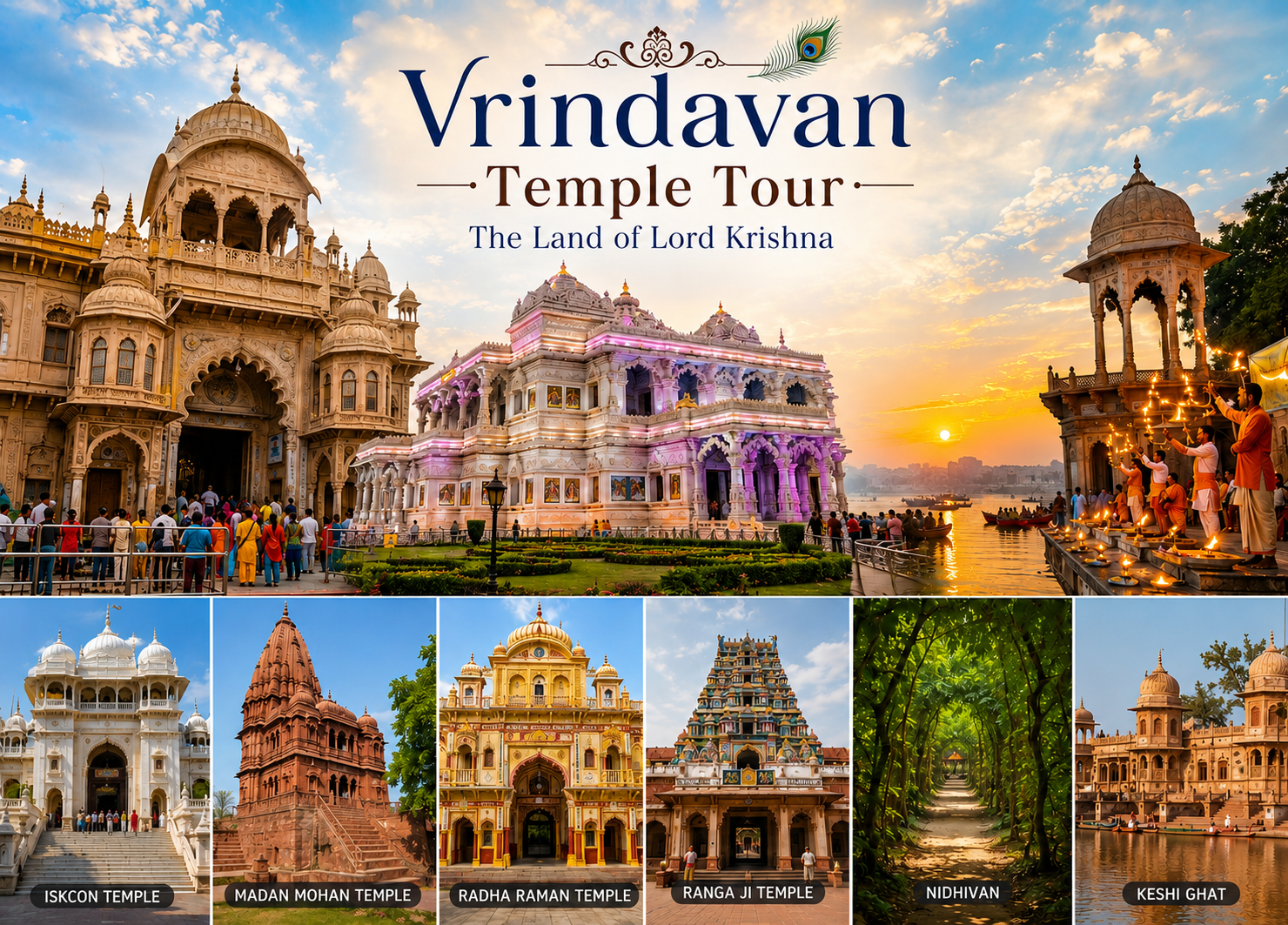
Imagine walking through ancient lanes where every corner echoes the divine name of Lord Krishna. The sweet sound of temple bells, the fragrance of incense, melodious kirtans, and the sight of thousands of devotees create an atmosphere unlike anywhere else in the world. Welcome to Vrindavan, one of Hinduism’s holiest pilgrimage destinations and the eternal playground of Lord Krishna.
Located in the Mathura district of Uttar Pradesh, Vrindavan is believed to be the place where Lord Krishna spent his childhood and performed many of His divine pastimes with Radha and the Gopis. Every temple, grove, and ghat tells a timeless story of love, devotion, and spirituality. Millions of pilgrims and tourists visit this sacred town every year to experience its divine charm.
Whether you are a spiritual seeker, a history enthusiast, or a traveler looking for peace, a Vrindavan Temple Tour promises unforgettable memories and profound spiritual experiences.
Why Visit Vrindavan?
Vrindavan is much more than a tourist destination. It is a sacred land where devotees believe Lord Krishna’s divine presence can still be felt.
Here are some reasons why Vrindavan should be on your travel bucket list:
- Visit some of India’s most famous Krishna temples.
- Experience centuries-old devotional traditions.
- Witness enchanting evening aartis and bhajans.
- Explore sacred forests associated with Krishna’s pastimes.
- Enjoy beautiful temple architecture.
- Attend colorful festivals like Holi and Janmashtami.
- Experience authentic Braj culture.
- Find peace through meditation and spiritual practices.
Many devotees say that a visit to Vrindavan changes one’s perspective on life. The atmosphere naturally inspires devotion, compassion, and inner peace.
The Sacred History of Vrindavan
The name Vrindavan comes from “Vrinda” (Holy Tulsi) and “Van” (forest), meaning The Forest of Sacred Tulsi.
According to Hindu scriptures including the Bhagavata Purana(Srimad Bhagavatam), Vishnu Purana, and various Vaishnava texts, Vrindavan was once a lush forest on the banks of the sacred Yamuna River. This is where Lord Krishna spent His childhood after moving from Gokul.
It was here that Krishna:
- Played with His friends.
- Grazed cows.
- Defeated numerous demons.
- Played the divine flute.
- Performed the famous Maha Rasa with Radha and the Gopis.
- Blessed sages and devotees.
During the medieval period, great saints such as Chaitanya Mahaprabhu rediscovered many of these sacred sites. Inspired by His devotion, several magnificent temples were later built by Rajput kings and wealthy devotees.
Today, Vrindavan is one of the most visited pilgrimage destinations in India and remains the spiritual heart of the Braj region.
Best Time to Visit Vrindavan
Vrindavan welcomes pilgrims throughout the year, but certain seasons offer a more pleasant experience.
October to March (Best Season)
Winter is considered the ideal time to visit.
Temperature ranges between 10°C and 25°C, making temple visits comfortable throughout the day.
Advantages:
- Pleasant weather
- Comfortable sightseeing
- Beautiful evenings
- Ideal for photography
- Festival season
February–March
If you wish to witness the world-famous Braj Holi, this is the perfect time.
The celebrations include:
- Flower Holi
- Color Holi
- Temple processions
- Devotional singing
- Cultural performances
Thousands of international visitors attend these celebrations every year.
August–September
Janmashtami, the birth anniversary of Lord Krishna, transforms Vrindavan into a divine celebration.
Temples are beautifully decorated with flowers and lights. Special prayers continue throughout the night.
Summer (April–June)
Temperatures can exceed 42°C.
If traveling during summer:
- Visit temples early morning.
- Stay hydrated.
- Avoid afternoon sightseeing.
Monsoon (July–September)
The rainy season adds greenery and beauty to the Yamuna River and surrounding areas.
Although occasional heavy rainfall may interrupt sightseeing, the spiritual atmosphere becomes even more enchanting.
How to Reach Vrindavan
Vrindavan is well connected by road, rail, and air.
By Air
The nearest airport is Agra Airport, about 75 km away. However, most travelers prefer flying to Indira Gandhi International Airport, New Delhi, approximately 160 km from Vrindavan, due to better connectivity.
From the airport, taxis, buses, and private cabs are readily available.
By Train
The nearest railway station is Mathura Junction, one of North India’s major railway hubs.
From Mathura:
- Taxi
- Auto-rickshaw
- Shared e-rickshaw
- Local buses
Travel time is around 20–30 minutes.
By Road
Vrindavan enjoys excellent road connectivity.
Approximate distances:
- Delhi – 160 km
- Agra – 75 km
- Jaipur – 235 km
- Lucknow – 400 km
The Yamuna Expressway offers a smooth and scenic drive from Delhi.
Local Transportation
Getting around Vrindavan is easy.
Popular options include:
- E-rickshaws
- Auto-rickshaws
- Cycle rickshaws
- Walking
- Private taxis
Walking is often the best way to experience the narrow lanes and vibrant atmosphere surrounding the temples.
Top Places to Visit During Your Vrindavan Temple Tour
1. Banke Bihari Temple
The Banke Bihari Temple is undoubtedly the most famous temple in Vrindavan.
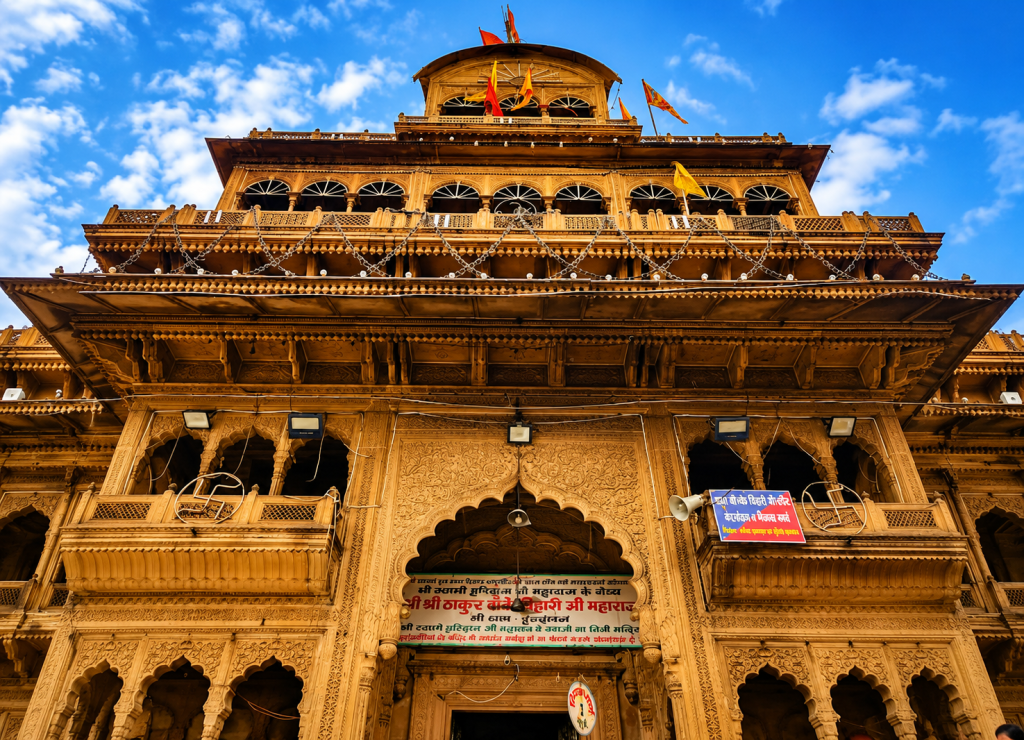
Dedicated to Lord Krishna in His charming Banke Bihari form, the temple attracts millions of devotees every year.
The idol was manifested by the great saint Swami Haridas, the spiritual guru of legendary musician Tansen.
Highlights
- One of India’s most visited Krishna temples
- Mesmerizing darshan
- Continuous devotional singing
- Vibrant festival celebrations
- Unique tradition where the curtain before the deity opens and closes every few moments, allowing devotees brief glimpses of the Lord.
Visitor Tips
- Visit early morning.
- Expect large crowds.
- Remove footwear outside.
- Keep personal belongings secure.
2. Prem Mandir
One of the newest and most magnificent temples in Vrindavan, Prem Mandir is a masterpiece of white Italian marble built by Jagadguru Kripalu Maharaj.
The temple beautifully depicts the divine pastimes of Radha and Krishna through intricate carvings and lifelike sculptures.
Architectural Beauty
Every inch of the temple showcases:
- Marble carvings
- Floral patterns
- Divine sculptures
- Krishna Leelas
- Illuminated gardens
- Musical fountains
During the evening, colorful lights transform the temple into a breathtaking spectacle.
Must Experience
- Evening light show
- Musical fountain
- Peaceful gardens
- Night photography
- Krishna Leela sculptures
Prem Mandir is especially popular among families, photographers, and international visitors.
3. ISKCON Sri Krishna-Balaram Temple
Built in 1975 by A.C. Bhaktivedanta Swami Prabhupada, founder of the International Society for Krishna Consciousness (ISKCON), this temple has become a global center of Krishna devotion.
Devotees from more than 100 countries visit this temple throughout the year.
The temple is dedicated to:
- Sri Krishna
- Lord Balaram
- Sri Radha-Shyamasundar
- Sri Gaura-Nitai
Daily Activities
Visitors can participate in:
- Mangala Aarti
- Bhagavad Gita classes
- Kirtan
- Meditation
- Prasadam distribution
The atmosphere is exceptionally peaceful and welcoming, making it an ideal place for meditation and spiritual reflection.
Highlights
- Beautiful white marble architecture
- International devotional community
- Continuous chanting of the Hare Krishna Mahamantra
- Well-maintained gardens
- Spiritual bookstore
- Govinda’s restaurant serving pure vegetarian prasadam
For many international pilgrims, this temple serves as their gateway to experiencing the spiritual essence of Vrindavan.
4. Radha Raman Temple
Among the oldest and most revered temples in Vrindavan, the Radha Raman Temple holds a special place in the hearts of devotees. It was established in 1542 by the great Vaishnava saint Gopal Bhatta Goswami, one of the Six Goswamis of Vrindavan.
The temple is famous for its self-manifested (Swayambhu) deity of Lord Krishna, known as Radha Raman, which is believed to have appeared miraculously from a sacred Shaligram Shila.
Unlike many other temples, there is no separate idol of Radha. Instead, Her divine presence is represented by a beautifully decorated silver crown placed beside Lord Krishna.
Highlights
- Self-manifested deity of Lord Krishna
- Ancient Gaudiya Vaishnava temple
- Beautiful daily flower decorations
- Traditional devotional rituals
- Peaceful spiritual atmosphere
Visitors often describe the temple as one of the most spiritually uplifting places in Vrindavan.
5. Radha Damodar Temple
The Radha Damodar Temple was founded by Jiva Goswami, another of the renowned Six Goswamis.
This temple is particularly significant because it houses sacred samadhis (memorial shrines) of many great Vaishnava saints.
One of its greatest treasures is the Giriraj Shila, a sacred stone from Govardhan Hill bearing what devotees believe are the footprints of Lord Krishna.
It is believed that circumambulating this sacred stone offers the same spiritual merit as performing the entire Govardhan Parikrama.
Highlights
- Sacred Giriraj Shila
- Historic Gaudiya monastery
- Samadhis of great saints
- Peaceful meditation environment
- Beautiful temple courtyard
6. Madan Mohan Temple
Perched on a small hill overlooking the Yamuna River, the Madan Mohan Temple is one of the oldest surviving temples in Vrindavan.
Originally established by Sanatana Goswami, the temple was later expanded by the wealthy merchant Kapur Ram Das during the Mughal era.
Its striking red sandstone architecture stands as a symbol of Vrindavan’s glorious spiritual heritage.
Although the original deity was moved to Karauli in Rajasthan during times of invasion, devotees continue to worship a replica at the temple.
Why Visit?
- One of Vrindavan’s oldest temples
- Panoramic views of the town
- Historic architecture
- Peaceful surroundings
- Rich devotional history
7. Govind Dev Ji Temple
The magnificent Govind Dev Ji Temple is one of the architectural wonders of North India.
Constructed in 1590 by Raja Man Singh of Amber, the temple originally had seven stories. It is said that Emperor Aurangzeb ordered the destruction of its upper floors, leaving only three levels standing today.
Even in its present form, the temple remains an awe-inspiring monument showcasing a unique blend of Hindu and Mughal architectural styles.
Highlights
- Massive red sandstone structure
- Historic significance
- Magnificent arches
- Beautiful carvings
- Rich Vaishnava heritage
History lovers should not miss this remarkable temple.
8. Sri Ranganath (Rangaji) Temple
Unlike most temples in Vrindavan, the Rangaji Temple reflects the grandeur of South Indian temple architecture.
Dedicated to Lord Ranganatha, a reclining form of Lord Vishnu, this temple combines Dravidian, Rajput, and Mughal architectural elements.
Its towering entrance gateway (Gopuram) is among the tallest in North India.
Highlights
- South Indian architecture
- Giant golden pillar (Dhwaja Stambha)
- Beautiful temple tanks
- Annual Brahmotsavam festival
- Peaceful gardens
The temple offers a unique cultural experience, showcasing the diversity of Hindu traditions.
9. Shahji Temple
The elegant Shahji Temple, built in the nineteenth century by wealthy merchants from Lucknow, is famous for its artistic beauty.
The temple is dedicated to Lord Radha Raman.
Its marble pillars, Belgian glass chandeliers, and richly decorated interiors create a royal atmosphere.
Highlights
- White marble architecture
- Spiral marble columns
- Belgian chandeliers
- Artistic paintings
- Beautiful gardens
Photography enthusiasts particularly admire the temple’s intricate craftsmanship.
10. Katyayani Temple
Dedicated to Goddess Katyayani, this temple is deeply connected with the Bhagavata Purana.
According to tradition, the Gopis worshipped Goddess Katyayani here, praying to receive Lord Krishna as their eternal beloved.
Even today, unmarried girls visit the temple to seek blessings for a happy and prosperous married life.
Highlights
- Ancient spiritual significance
- Peaceful atmosphere
- Daily worship ceremonies
- Connection with Krishna’s divine pastimes
11. Nidhivan
Among the most mysterious places in India, Nidhivan is believed to be the sacred grove where Lord Krishna performs the divine Rasa Lila with Radha every night.
According to local belief, no human or animal remains inside Nidhivan after sunset.
Priests close the gates before evening, and devotees believe the divine pastimes continue unseen.
Many visitors consider this one of the holiest places in Vrindavan.
Highlights
- Sacred forest
- Ancient Tulsi trees
- Mystical traditions
- Spiritual serenity
- Deep connection with Krishna’s Leelas
Visitors are requested to maintain silence and respect local customs.
12. Seva Kunj
Located near Nidhivan, Seva Kunj is another sacred grove associated with the eternal love of Radha and Krishna.
According to tradition, Lord Krishna lovingly adorned Radha here after the divine Rasa dance.
The peaceful gardens, flowering plants, and devotional atmosphere make it a favorite place for meditation.
Highlights
- Sacred gardens
- Krishna-Radha legends
- Beautiful temple
- Quiet meditation spots
- Rich spiritual history
13. Keshi Ghat
Situated on the banks of the sacred Yamuna River, Keshi Ghat is one of the most picturesque locations in Vrindavan.
It is believed that Lord Krishna defeated the horse demon Keshi here.
The beautiful sandstone steps leading to the river attract pilgrims, photographers, and spiritual seekers alike.
Things to Do
- Boat ride on Yamuna
- Sunset photography
- Evening prayers
- Holy bath
- Riverfront meditation
The sunrise and sunset views from Keshi Ghat are truly unforgettable.
Yamuna Aarti
One of the most divine experiences during your Vrindavan Temple Tour is attending the Yamuna Aarti at Keshi Ghat.
As priests perform the sacred ritual with large brass lamps, devotional songs fill the air, creating an atmosphere of profound peace and devotion. Hundreds of floating lamps illuminate the waters of the Yamuna, making it a mesmerizing sight.
Tips for Visitors
- Arrive at least 30–45 minutes early for a good view.
- Dress modestly and respectfully.
- Keep your surroundings clean and avoid littering.
- Carry cash if you wish to make donations.
- Follow temple and local guidelines, especially in crowded areas.
Festivals That Bring Vrindavan to Life
Vrindavan is a town of celebrations, where festivals are observed with unmatched devotion and enthusiasm. If you wish to experience the true spiritual spirit of Braj, plan your visit during one of these festivals.
Holi – The Festival of Divine Colors
Vrindavan’s Holi is famous throughout the world. Unlike ordinary Holi celebrations, the Braj Holi lasts for several days and includes unique traditions.
Highlights include:
- Phoolon Ki Holi (Flower Holi)
- Widow Holi
- Lathmar Holi (nearby Barsana and Nandgaon)
- Temple kirtans
- Cultural performances
- Grand processions
During Holi, temples such as Banke Bihari Temple and Prem Mandir become the center of colorful celebrations that attract thousands of devotees and tourists from around the world.
Krishna Janmashtami
Janmashtami marks the birth of Lord Krishna and is one of the grandest festivals in Vrindavan.
Temples are beautifully decorated with flowers, lights, and colorful rangolis. Devotees observe fasting, sing bhajans, perform kirtans, and participate in midnight celebrations when Lord Krishna’s birth is commemorated.
The atmosphere is filled with joy, devotion, and spiritual energy.
Radhashtami
Radhashtami celebrates the appearance day of Srimati Radharani.
The temples are adorned with fragrant flowers, and special prayers, kirtans, and processions are organized throughout the town. Radha Raman Temple, Radha Damodar Temple, and Barsana witness particularly vibrant celebrations.
Jhulan Yatra
Held during the monsoon season, Jhulan Yatra commemorates the divine swing festival of Radha and Krishna.
Beautifully decorated swings are installed inside temples, where the deities are gently swung while devotees sing devotional songs.
Kartik Month
The holy month of Kartik is considered one of the most auspicious times to visit Vrindavan.
Every evening, thousands of earthen lamps illuminate temples and ghats, creating a magical atmosphere. Many devotees perform Govardhan Parikrama and attend daily kirtans during this sacred month.
Best Local Food in Vrindavan
No trip to Vrindavan is complete without tasting its delicious vegetarian cuisine. The town offers simple yet flavorful dishes that reflect the traditions of Braj.
Must-try foods include:
- Kachori with spicy potato curry
- Aloo Puri
- Bedai
- Lassi
- Jalebi
- Rabri
- Peda (especially Mathura Peda)
- Malpua
- Samosa
- Fresh sugarcane juice
Many temples also distribute prasadam, which is considered a divine blessing and should not be missed.
Shopping in Vrindavan
Vrindavan’s bustling markets are perfect for purchasing devotional items and souvenirs.
Popular shopping items include:
- Tulsi malas
- Radha-Krishna idols
- Brass and marble statues
- Incense sticks
- Spiritual books
- Bhagavad Gita
- Handcrafted paintings
- Wooden handicrafts
- Temple bells
- Traditional clothing
- Flutes
- Prayer beads
The markets near Banke Bihari Temple and ISKCON Temple are among the most popular shopping destinations.
Where to Stay in Vrindavan
Vrindavan offers accommodations to suit every budget.
Budget Hotels
Ideal for pilgrims and backpackers, these hotels provide clean rooms and essential facilities at affordable prices.
Mid-Range Hotels
These properties offer modern amenities, family-friendly rooms, and convenient access to major temples.
Luxury Hotels
Several luxury hotels and resorts provide spacious accommodations, fine dining, and premium services for travelers seeking comfort.
Many ashrams and guest houses also offer peaceful stays for devotees looking for a spiritual environment.
Suggested 2-Day Vrindavan Temple Tour Itinerary
Day 1
- Early morning darshan at Banke Bihari Temple
- Visit Radha Raman Temple
- Explore Radha Damodar Temple
- Lunch at a pure vegetarian restaurant
- Visit Prem Mandir
- Attend the evening light and fountain show
- Night stay in Vrindavan
Day 2
- Mangala Aarti at ISKCON Temple
- Visit Madan Mohan Temple
- Explore Govind Dev Ji Temple
- Visit Rangaji Temple
- Spend time at Seva Kunj and Nidhivan
- Attend Yamuna Aarti at Keshi Ghat
- Return with unforgettable spiritual memories
Essential Travel Tips
To make your Vrindavan Temple Tour smooth and enjoyable, keep these practical tips in mind:
- Dress modestly while visiting temples.
- Remove footwear before entering temple premises.
- Carry drinking water, especially during summer.
- Beware of monkeys, as they may snatch glasses, mobile phones, or food.
- Keep your valuables secure in crowded areas.
- Respect temple customs and photography restrictions.
- Avoid littering and help maintain the cleanliness of sacred places.
- Visit popular temples early in the morning to avoid long queues.
- Carry cash for donations and small purchases, although many places now accept digital payments.
- Use comfortable footwear, as you may need to walk considerable distances.
Frequently Asked Questions (FAQs)
Is Vrindavan safe for tourists?
Yes. Vrindavan is generally safe for pilgrims and tourists. As with any crowded destination, remain mindful of your belongings and follow local guidelines.
How many days are enough for a Vrindavan Temple Tour?
A two- to three-day trip is ideal to explore the major temples, sacred ghats, and nearby attractions at a relaxed pace.
What is the best time to visit Vrindavan?
The most pleasant months are October to March, while Janmashtami and Holi offer the most vibrant spiritual experiences.
Can Vrindavan be visited with Mathura?
Absolutely. Since Mathura is only about 15 km away, most travelers combine both destinations in a single pilgrimage.
Are there dress restrictions?
While there is no strict dress code at most temples, modest and respectful clothing is recommended.
Is photography allowed inside temples?
Photography is permitted in some temple premises but restricted inside many sanctums. Always follow the temple’s rules.
Final Thoughts
A Vrindavan Temple Tour is far more than a sightseeing journey—it is a pilgrimage into the heart of devotion, where every street, temple, and sacred grove echoes the timeless love of Radha and Krishna. From the vibrant darshan at Banke Bihari Temple to the serene beauty of Prem Mandir, from the spiritual atmosphere of ISKCON Sri Krishna-Balaram Temple to the mystical charm of Nidhivan and Seva Kunj, every moment offers a deeper connection with India’s rich spiritual heritage.
Whether you seek peace, history, architecture, or divine inspiration, Vrindavan welcomes every traveler with open arms. The melodies of bhajans, the fragrance of flowers, the gentle flow of the Yamuna, and the warmth of the local devotees create memories that stay with you long after your journey ends.
If you are planning a pilgrimage to the sacred land of Lord Krishna, let Vrindavan be at the top of your travel list. It is a destination that nourishes the soul, strengthens faith, and leaves every visitor with a profound sense of joy and devotion.