Kailash Mansarovar Yatra 🕉️ | The Sacred Journey to Shiva’s Abode

There are journeys people undertake to reach a destination—and then there are journeys that seem to transform the traveler along the way.
The Kailash Mansarovar Yatra belongs to the second category.
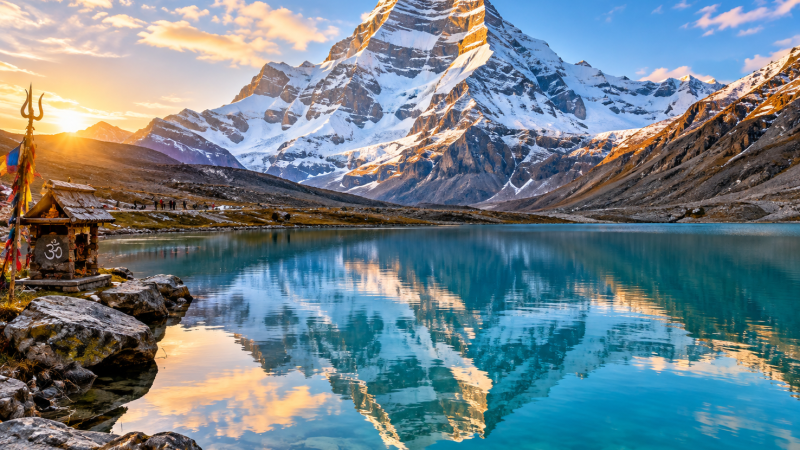
High in the remote Himalayas, beyond ordinary roads and surrounded by some of the planet’s most dramatic landscapes, stand two names that have inspired generations of pilgrims: Mount Kailash and Lake Manasarovar.
Mount Kailash is revered by Hindus as the divine abode of Lord Shiva and Goddess Parvati. The mountain is also sacred to Buddhists, Jains and followers of the ancient Tibetan Bon tradition. Nearby, Lake Manasarovar is regarded as one of the holiest lakes in the Himalayan world.
For a devotee, reaching Kailash is not simply tourism. It is an act of faith, endurance, surrender and spiritual aspiration.
The journey can involve high-altitude terrain, cold temperatures, long road journeys, difficult walking conditions and rapidly changing weather. Yet every year, pilgrims are drawn toward the mountain because of what Kailash represents.
And in 2026, the pilgrimage has acquired another, painful dimension.
A devastating flash flood and glacial-collapse disaster struck the Nepal–Tibet border region in late August, severely damaging infrastructure and affecting pilgrims travelling toward or from Kailash Mansarovar. The catastrophe has reminded the world that this sacred landscape is also an extremely fragile and hazardous high-mountain environment.
The Kailash journey, therefore, is not only a story of spirituality. It is also a story of nature, human endurance, Himalayan geography and the responsibility to travel with caution.
Why Is Kailash So Sacred?
For millions of Hindus, Mount Kailash is associated with Lord Shiva—the supreme yogi, ascetic and cosmic consciousness.
According to Hindu tradition, Shiva resides on Mount Kailash with Goddess Parvati. The mountain therefore occupies a special position in Shaivite spirituality.
Kailash is not merely considered a beautiful mountain. It represents a spiritual center—a place associated with meditation, divine presence, detachment and liberation.
The symbolism becomes even more powerful when Kailash is viewed against the enormous Himalayan landscape.
The mountain rises dramatically from the surrounding Tibetan plateau. Its distinctive, almost symmetrical appearance has fascinated pilgrims, explorers and photographers alike.
But there is something unusual about the relationship between the mountain and the people who visit it.
The objective is generally not to climb Mount Kailash.
Instead, pilgrims perform a sacred circumambulation known as the Kailash Parikrama, also called Kora in Tibetan Buddhist tradition.
The act of walking around the sacred mountain is itself the pilgrimage.
For believers, every step can become a prayer.
The Sacred Lake of Manasarovar
The Kailash pilgrimage is inseparable from Lake Manasarovar.
The lake occupies a special place in Hindu sacred geography and is traditionally associated with purity and spiritual cleansing.
The name Manasarovar is commonly connected with the Sanskrit words manas, meaning mind, and sarovara, meaning lake.
In Hindu tradition, the lake is associated with the divine mind of Brahma and is regarded as a place of exceptional spiritual purity.
Its location makes the landscape even more extraordinary. The clear waters of the lake, the vast Tibetan plateau and the snow-covered Himalayan peaks create a scene that appears almost otherworldly.
Nearby lies another famous lake, Rakshastal, traditionally associated with Ravana in Hindu mythology.
The contrast between the sacred Manasarovar and Rakshastal adds another layer to the spiritual symbolism of the region.
For pilgrims, visiting Manasarovar can therefore be an emotional high point of the entire Yatra.
Why Do Four Major Traditions Revere Kailash?
One of the most fascinating aspects of Kailash is that its spiritual importance extends beyond Hinduism.
Hinduism
For Hindus, Kailash is the abode of Lord Shiva and Goddess Parvati. It is deeply connected with Shaivite traditions, meditation and liberation.
Buddhism
Tibetan Buddhists know Mount Kailash as Kang Rinpoche, meaning “Precious Snow Mountain.” The mountain is associated with powerful Buddhist spiritual traditions and is regarded as an important sacred center.
Jainism
Jain tradition connects the region with Rishabhadeva, the first Tirthankara. Mount Kailash and the surrounding region consequently hold significance within Jain sacred geography.
Bon
The ancient Tibetan Bon tradition also regards the mountain as a sacred spiritual center.
Thus, Kailash stands at a remarkable crossroads of Asian religious traditions.
Different communities may interpret its spiritual meaning differently, but the mountain remains a powerful symbol of sacredness.
What Is the Kailash Mansarovar Yatra?
The Kailash Mansarovar Yatra is a pilgrimage undertaken to visit Mount Kailash and Lake Manasarovar and, for many pilgrims, to complete the sacred circumambulation of Kailash.
For Indian citizens, the Government of India’s Ministry of External Affairs organizes the official Kailash Mansarovar Yatra through two routes: Lipulekh Pass in Uttarakhand and Nathu La Pass in Sikkim. The official 2026 information states that the Lipulekh route takes about 22 days, while the Nathu La route takes about 21 days.
The official 2026 figures list approximately:
- Lipulekh Pass route: about 22 days; estimated cost ₹2.09 lakh per person.
- Nathu La Pass route: about 21 days; estimated cost ₹3.31 lakh per person.
These figures are official 2026 estimates and can change in future years.
The official pilgrimage is not an ordinary holiday package. It involves selection procedures, medical and physical requirements, passports, permits, high-altitude travel and strict logistical arrangements.
Applicants are also required to provide an ordinary Indian passport valid for at least six months as of September 1 of the relevant year under the 2026 application conditions.
The Two Official Indian Routes
1. Lipulekh Pass Route
The Lipulekh route begins in Uttarakhand and crosses through the high Himalayan region toward Tibet.
It is associated with rugged terrain, high passes and physically demanding trekking.
The route is especially famous among pilgrims because of its traditional Himalayan character.
The high altitude makes acclimatization extremely important.
2. Nathu La Pass Route
The Nathu La route begins through Sikkim.
Compared with the Lipulekh route, it has different logistical characteristics and relies more extensively on road travel, although high altitude remains a major concern.
The official 2026 program lists approximately 10 batches for each route.
Both routes ultimately lead pilgrims toward the sacred landscape of Kailash and Manasarovar.
What Makes the Journey So Difficult?
The spiritual destination is extraordinary—but reaching it requires physical and mental preparation.
Altitude is one of the biggest challenges.
Mount Kailash rises to roughly 6,638 metres above sea level. At such elevations, the amount of available oxygen is significantly lower than at sea level.
This can cause problems even for otherwise healthy travelers.
Possible symptoms of altitude-related illness include headache, nausea, dizziness, unusual tiredness and shortness of breath.
Severe altitude illness can become life-threatening.
That is why the Kailash Yatra should never be treated as an ordinary sightseeing tour.
A pilgrim needs patience.
The body needs time to adapt.
The mind needs to accept that the journey may proceed more slowly than expected.
The Famous Kailash Parikrama
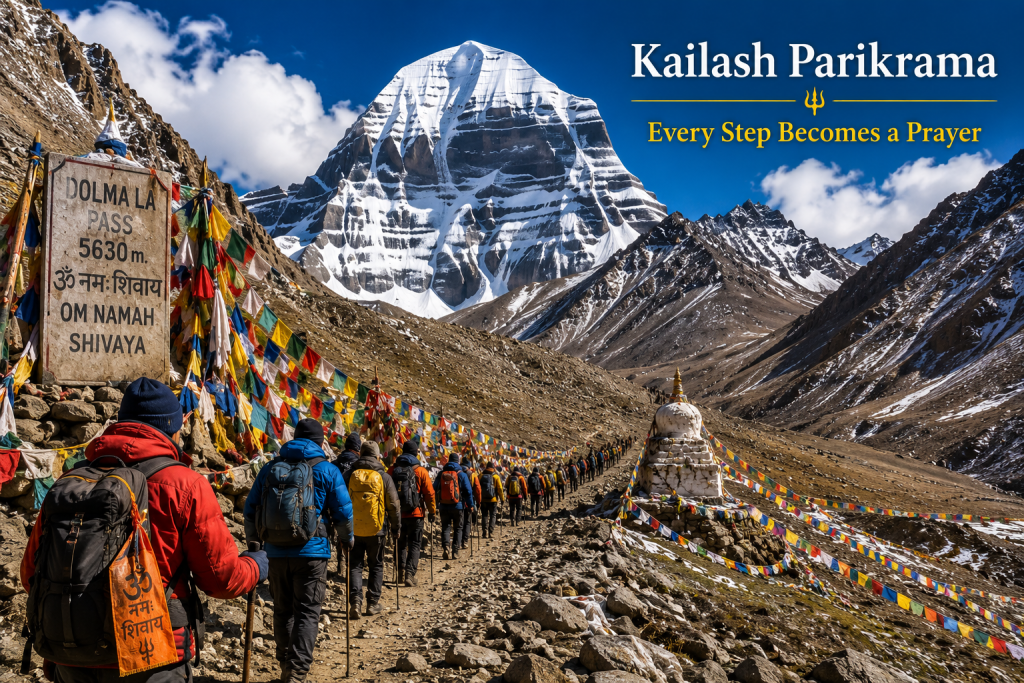
For many devotees, the emotional centerpiece of the pilgrimage is the Kailash Parikrama.
The circumambulation route takes pilgrims around the sacred mountain.
The full circuit is traditionally described as roughly 52 kilometres, although the exact distance can vary depending on the route and measurement method.
One of the most demanding sections is Dolma La Pass, a high-altitude pass encountered during the Parikrama.
The climb toward Dolma La is physically demanding, and the altitude makes even relatively short distances feel exhausting.
This is where the spiritual nature of the pilgrimage becomes especially clear.
A person may be tired, cold and short of breath, yet continue walking because every step has personal meaning.
Some pilgrims chant.
Some pray silently.
Some repeat the name of Shiva.
Others simply walk in contemplation.
The mountain does not require speed.
It demands humility.
Kailash Is a Journey of the Mind as Much as the Body
Perhaps the most beautiful way to understand the Kailash pilgrimage is to see it as an inner journey.
Modern life often revolves around speed.
We hurry to work, rush through meals, constantly check phones and measure success through productivity.
Kailash offers the opposite experience.
The mountain forces the traveler to slow down.
A steep trail cannot be conquered by impatience.
Thin air cannot be defeated by ambition.
Cold weather cannot be negotiated with money.
The Himalayan environment teaches an ancient lesson: human beings remain small in the presence of nature.
This is one reason the pilgrimage can be so powerful.
The physical difficulty becomes part of the spiritual experience.
The 2026 Nepal Flash Flood: A Tragic Reminder of Himalayan Power
The 2026 Kailash pilgrimage season has been dramatically affected by a catastrophic natural disaster in the Nepal–Tibet border region.
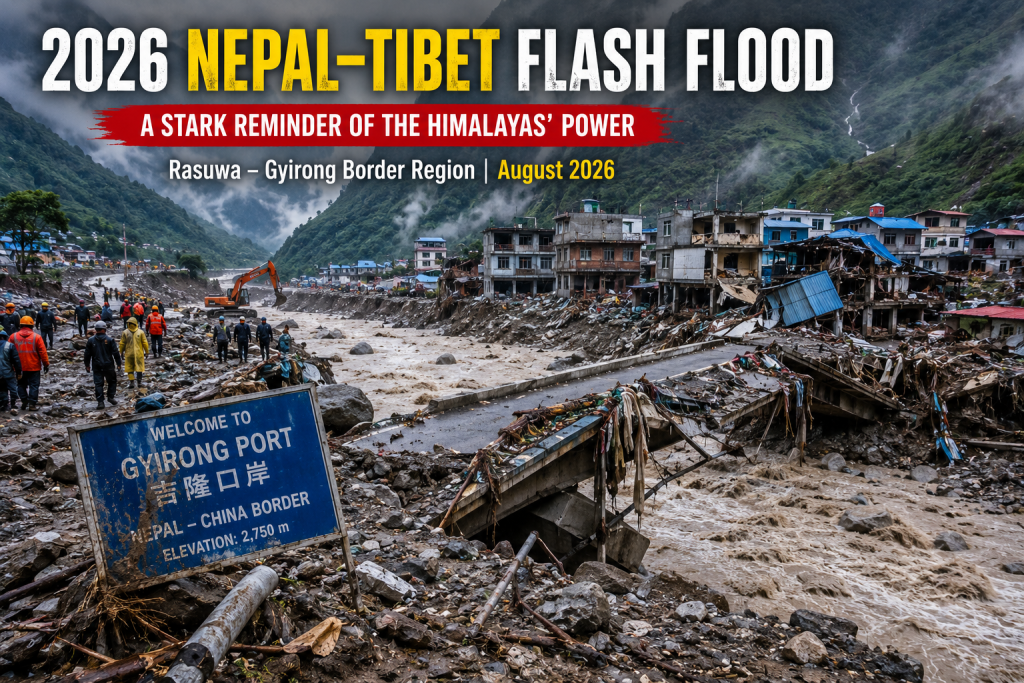
In late August 2026, a devastating flash flood struck the Himalayan border area after an ice-and-rock/glacial collapse sent enormous amounts of water and debris into river systems.
Reuters reported that the disaster destroyed roads, bridges, homes and major infrastructure, while rescue teams faced enormous challenges in reaching affected areas.
The disaster was particularly relevant to Kailash pilgrims because the affected region includes routes and border infrastructure used by people travelling toward the pilgrimage area.
The Gyirong border area between Nepal and Tibet was severely damaged.
As of September 1, the situation remained fluid. Reuters reported that more than 900 people had died in Nepal and 4,247 were missing, while China reported deaths and hundreds missing in Tibet’s Gyirong County. The figures were still evolving as rescue operations continued.
The disaster also directly affected foreign visitors and pilgrims.
The Associated Press reported that hundreds of people were missing in the wider disaster zone, including international pilgrims travelling to Mount Kailash.
This tragedy deserves to be discussed with sensitivity.
The flood was not simply a disruption to a travel itinerary. Families lost loved ones, communities lost homes and infrastructure, and rescue workers faced extremely dangerous conditions.
For those planning a Kailash Yatra, the event offers an important lesson: faith should never be separated from safety.
Why the Nepal Flood Matters to Future Kailash Pilgrims
The recent disaster highlights several realities about Himalayan pilgrimage travel.
First, roads and bridges in mountain regions can be vulnerable to sudden natural disasters.
Second, a route that appears safe at the beginning of a journey can become dangerous within minutes.
Third, high-altitude weather and geological conditions are difficult to predict.
Fourth, border infrastructure can be essential to the entire pilgrimage chain.
And fifth, emergency evacuation in remote Himalayan terrain is inherently complicated.
The 2026 flood was associated with a glacial collapse and massive debris flow rather than being a normal seasonal river flood. Experts and authorities have also highlighted the increasing concern surrounding high-mountain instability and climate-related risks.
For pilgrims, the practical message is simple:
Check conditions immediately before departure, follow official instructions, use reputable operators and never attempt to force a journey through a dangerous route.
Nepal Route vs Official Indian Yatra
Many people searching online for “Kailash Mansarovar Yatra” encounter travel packages departing from Kathmandu and using routes through Nepal.
This is different from the official Government of India-organized Yatra.
Private pilgrimage and travel operators may use routes through Nepal, including the Rasuwa/Gyirong corridor.
This route became especially important during the recent flood because the affected border area is part of the broader travel network serving Kailash pilgrims.
Reports indicate that many international pilgrims use Nepal-based arrangements rather than India’s limited official route.
Therefore, prospective travelers should carefully distinguish between:
Government-organized Kailash Mansarovar Yatra
and
Private Kailash Mansarovar pilgrimage packages operating through Nepal.
The rules, permits, logistics, costs, border arrangements, medical requirements and emergency support can differ.
Best Time for Kailash Mansarovar Yatra
The traditional pilgrimage season generally falls during the warmer months when routes become more accessible.
The official Indian Yatra is organized during approximately June through August/September.
However, “summer” in the Himalayas does not mean comfortable weather.
Even during the pilgrimage season, travelers may encounter:
- freezing temperatures
- snow
- strong winds
- rain
- landslides
- sudden weather changes
- high-altitude exposure
- road closures
- altitude-related illness
The 2026 disaster demonstrates another important reality: even a normally popular pilgrimage season cannot guarantee safe travel conditions.
How Should a Pilgrim Prepare?
Preparation should begin well before the journey.
Physical preparation
Walking regularly, strengthening the legs and improving cardiovascular fitness can help.
Long-distance walking practice is useful because the Parikrama can be physically demanding.
But fitness alone does not eliminate altitude risk.
Medical preparation
Pilgrims should follow the medical screening and advice required by their route or operator.
Anyone with concerns about high-altitude travel should consult an appropriately qualified medical professional before committing to the journey.
Mental preparation
A Kailash pilgrimage may involve delays, discomfort and uncertainty.
Patience is essential.
A person expecting luxury travel may struggle.
A person expecting a spiritual adventure is more likely to embrace the experience.
Packing
Essential items may include appropriate layered clothing, waterproof outerwear, sturdy footwear, gloves, sunglasses, sun protection, personal medicines, hydration equipment and other items specified by the official authorities or tour operator.
Packing should prioritize function over fashion.
Respect the Sacred Landscape
Kailash is not merely a photographic backdrop.
It is a living sacred landscape for multiple traditions.
Pilgrims should therefore behave respectfully.
Avoid littering.
Avoid unnecessary noise.
Follow local regulations.
Respect monasteries, shrines and religious practices.
Do not disturb wildlife.
Do not attempt dangerous shortcuts.
And, most importantly, do not treat sacred places as social-media props.
A photograph can preserve a memory, but respectful behavior preserves the dignity of the place.
The Mystery and Beauty of Kailash
Mount Kailash has generated countless legends.
Its striking shape, remote location and religious importance have inspired stories about divine beings, hidden spiritual realms and supernatural events.
Some internet stories claim extraordinary phenomena surrounding the mountain.
However, such claims should be separated from established religious traditions and scientific evidence.
The genuine wonder of Kailash does not require exaggerated stories.
The mountain itself is extraordinary.
Its altitude, geology, location, cultural significance and relationship with several major Asian religions make it one of the most remarkable sacred landscapes on Earth.
Its mystery comes not from sensational claims but from the way nature and spirituality converge there.
Kailash and the Great Rivers of Asia
The Kailash–Manasarovar region is also important geographically.
The wider Tibetan plateau contains the headwaters or source regions associated with several major Asian river systems.
This adds another dimension to the sacred status of the landscape.
For ancient civilizations, rivers were life itself.
They provided drinking water, agriculture, transportation and fertile land.
To discover that enormous rivers begin in the same broader Himalayan world that contains sacred mountains and lakes naturally contributed to the spiritual imagination of the region.
Thus, Kailash is simultaneously a religious symbol and part of one of Asia’s most important environmental landscapes.
Why Millions Dream of Visiting Kailash
A person does not need to be an expert mountaineer to understand why Kailash attracts pilgrims.
The mountain represents something deeply human.
For some, it is Shiva.
For others, it is liberation.
For others, it is meditation.
For some, it is ancestral tradition.
And for others, it is simply the desire to stand before a landscape that has inspired humanity for centuries.
The journey can become a personal milestone.
People may travel after years of planning and saving.
Some come with family.
Some come in memory of loved ones.
Some come seeking spiritual renewal.
Some arrive with very specific religious intentions.
And some discover that the journey changes them in ways they never expected.
The 2026 Flood Changes the Meaning of the Journey
The recent Nepal disaster adds a difficult but important chapter to the story of Kailash Mansarovar.
The mountains provide breathtaking beauty—but they also possess enormous power.
A glacier can collapse.
A river can rise suddenly.
A road can disappear.
A bridge can be destroyed.
A border crossing can become inaccessible.
A journey that normally takes hours can become an emergency lasting days.
The August 2026 catastrophe showed this in the most painful way.
Reports described massive destruction around the Nepal–Tibet border and serious difficulties for rescue teams trying to reach affected people.
For the pilgrimage community, the correct response is neither fear nor blind optimism.
It is respect for nature, careful preparation and compassion for those affected.
Before beginning any future Kailash journey, pilgrims should check current government advisories, border conditions, weather forecasts, road status and operator updates.
Is Kailash Mansarovar Yatra Worth It?
For a person who feels a genuine spiritual connection to the pilgrimage, the answer can be deeply personal.
The journey is expensive.
It can be physically demanding.
It can involve discomfort.
It requires time.
It can test patience.
And after the events of 2026, it is impossible to ignore the environmental and logistical risks.
Yet for devotees, the value of Kailash is not measured in convenience.
It is measured in faith.
A pilgrimage is not supposed to be the easiest journey.
The effort is part of its meaning.
Standing before the mountain after days of travel can create an emotional experience that is difficult to describe.
The sight of snow-covered peaks.
The silence of the Tibetan plateau.
The blue waters of Manasarovar.
The sound of prayers.
The feeling of walking beneath an immense Himalayan sky.
For many pilgrims, these moments become memories that last a lifetime.
Kailash Mansarovar: A Journey Beyond Travel
The greatest lesson of Kailash may be that some destinations cannot be understood merely by reaching them.
Kailash is a destination—but it is also an idea.
It represents faith, discipline, humility and the search for something beyond everyday life.
The journey teaches that the Himalayas cannot be conquered.
They can only be approached with respect.
The 2026 Nepal flash flood has made that lesson painfully clear.
As the affected communities continue recovery and rescue efforts, pilgrims around the world are reminded that sacred travel must always include responsibility toward people, nature and the fragile environment through which the journey passes.
Kailash will continue to inspire.
Manasarovar will continue to shine beneath the Himalayan sky.
And devotees will continue to dream of standing before the sacred mountain.
But the future of pilgrimage should be shaped not only by devotion, but also by preparation, environmental awareness, responsible tourism and respect for the unpredictable power of the Himalayas.
For the faithful, perhaps that is the deepest meaning of the journey:
You do not go to Kailash simply to see a mountain.
You go to meet something within yourself.
And sometimes, the hardest part of the pilgrimage is understanding that the mountain itself decides when you may arrive.
Final Thoughts
The Kailash Mansarovar Yatra remains one of the world’s most extraordinary spiritual journeys.
It connects Hindu devotion with the sacred traditions of Buddhism, Jainism and Bon. It brings pilgrims to the extraordinary landscapes of Mount Kailash and Lake Manasarovar. It challenges the body through altitude and demanding terrain while inviting the mind toward silence and reflection.
But the tragic 2026 Nepal–Tibet flash flood has also reminded us that this sacred region is environmentally fragile and potentially dangerous.
Those planning the journey should therefore combine faith with preparation, devotion with discipline, and adventure with caution.
The dream of Kailash should never become more important than human life.
A true pilgrimage begins with reverence—and reverence includes respecting the mountain, its people, its environment and the forces of nature.
Om Namah Shivaya. 🕉️