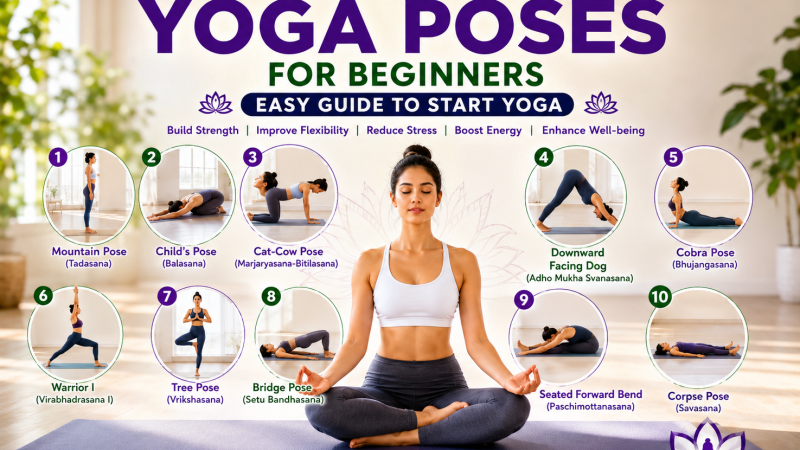
Top 10 Yoga Poses for Women: A Complete Guide to Better Health, Flexibility, and Inner Peace
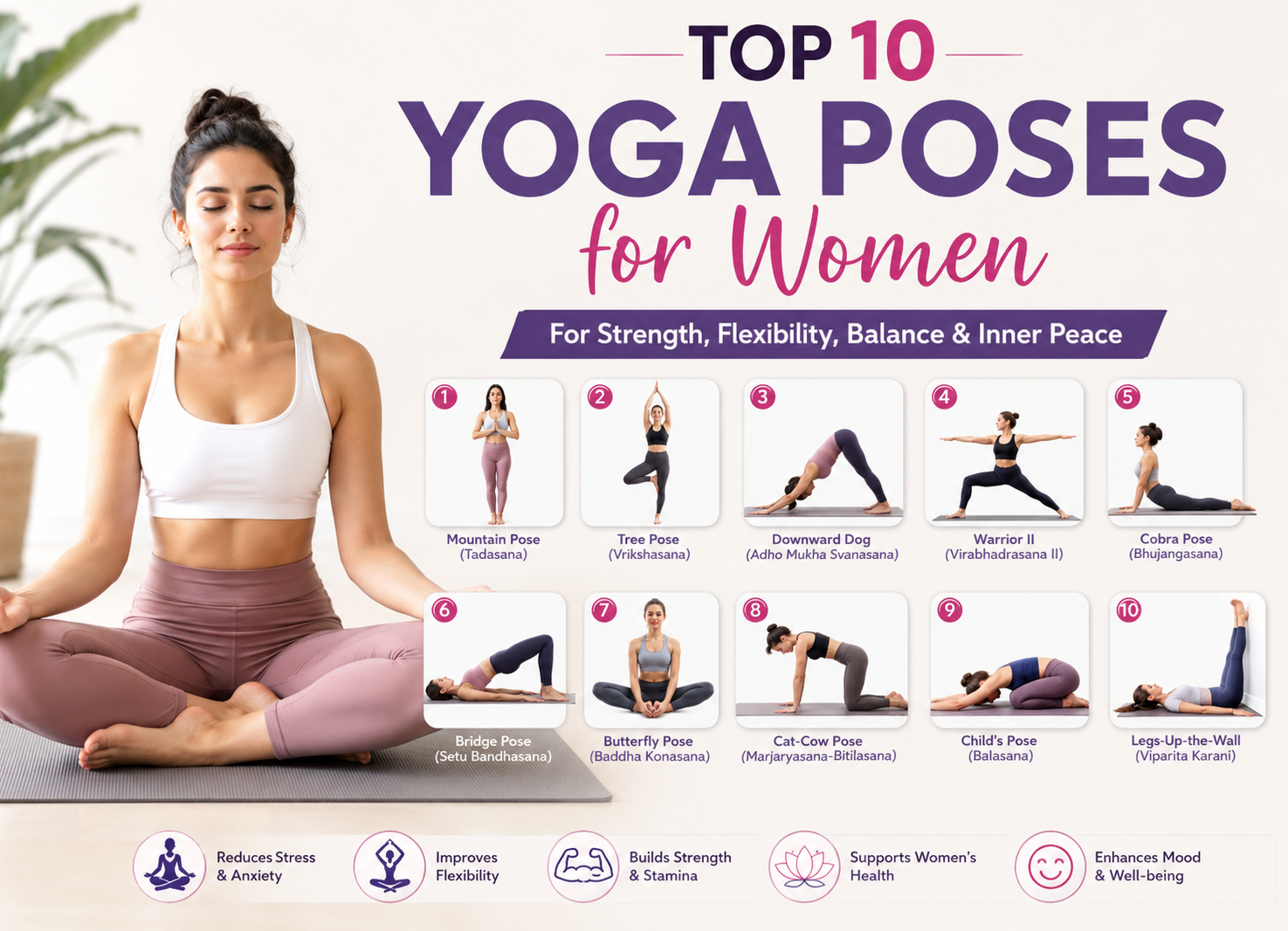
Yoga is much more than a form of exercise. It is a holistic practice that nurtures the body, calms the mind, and improves overall well-being. For women of all ages, yoga offers a natural way to build strength, improve flexibility, reduce stress, and maintain good physical and mental health.
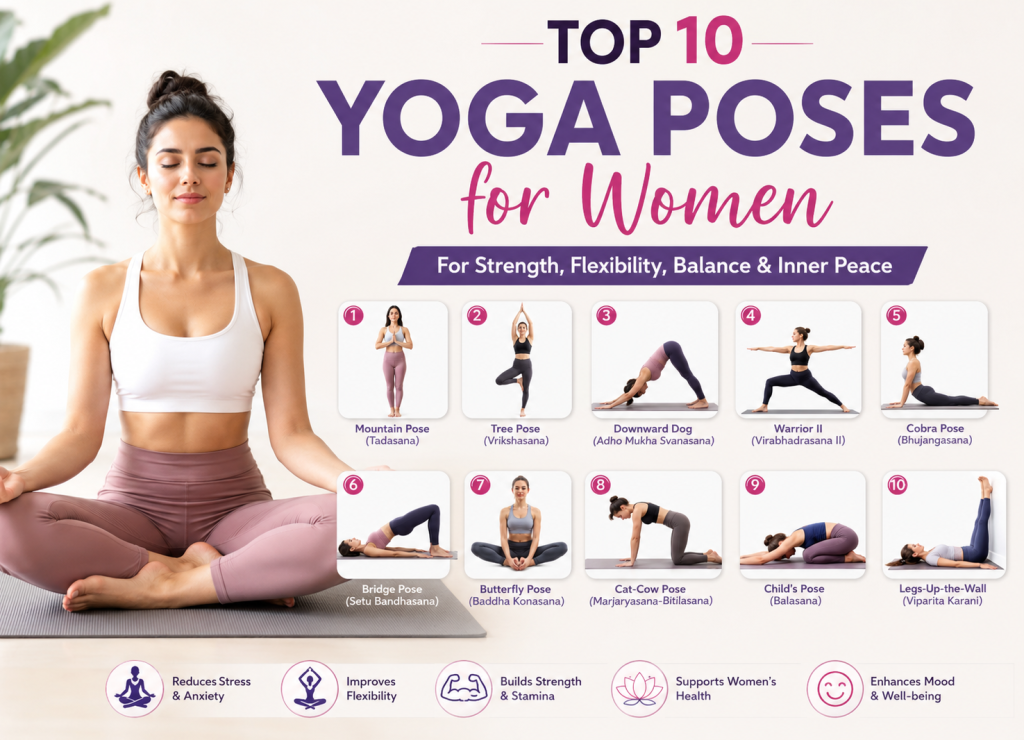
Whether you are a college student, a working professional, a homemaker, or a senior looking to stay active, yoga provides benefits that fit every stage of life. Unlike high-impact workouts that may put stress on the joints, yoga focuses on gentle yet effective movements combined with mindful breathing. This makes it suitable for beginners as well as experienced practitioners.
Modern lifestyles often involve long hours of sitting, increased screen time, irregular sleep, and daily stress. These habits can lead to poor posture, back pain, reduced flexibility, anxiety, and fatigue. A regular yoga practice helps counter these issues by improving posture, increasing blood circulation, strengthening muscles, and promoting mental relaxation.
Scientific studies have also shown that practicing yoga regularly may help reduce stress hormones, improve sleep quality, enhance mood, support heart health, and increase overall fitness. For women, yoga may also contribute to better hormonal balance, improved pelvic health, and increased body awareness.
In this comprehensive guide, you will discover the top 10 yoga poses for women, their benefits, step-by-step instructions, common mistakes to avoid, and practical tips to help you build a safe and effective daily yoga routine.
Why Every Woman Should Practice Yoga
Yoga offers a unique combination of physical movement, controlled breathing, and mindfulness. This combination provides benefits that go beyond simply improving flexibility.
1. Improves Flexibility
One of the first benefits people notice is increased flexibility. Tight muscles become more relaxed, making everyday movements easier and reducing the risk of injuries.
2. Builds Strength Naturally
Many yoga poses use your own body weight to strengthen muscles in the legs, arms, back, abdomen, and hips without requiring gym equipment.
3. Supports Mental Health
Stress has become a common part of modern life. Yoga encourages deep breathing and mindfulness, helping reduce anxiety, improve concentration, and promote emotional balance.
4. Improves Posture
Poor posture caused by prolonged sitting can lead to neck pain, shoulder tension, and lower back discomfort. Yoga strengthens the muscles that support healthy spinal alignment.
5. Boosts Energy Levels
Unlike intense workouts that may leave you exhausted, yoga often leaves you feeling refreshed and energized.
6. Promotes Better Sleep
Gentle evening yoga can calm the nervous system and help improve sleep quality.
7. Enhances Balance and Coordination
Many yoga poses strengthen stabilizing muscles, reducing the risk of falls and improving body awareness.
Before You Begin
Follow these simple guidelines before practicing yoga:
- Practice on a yoga mat.
- Wear comfortable clothing.
- Avoid heavy meals for 2–3 hours beforehand.
- Stay hydrated.
- Never force a stretch.
- Breathe slowly throughout each pose.
- Stop immediately if you feel sharp pain.
Top 10 Yoga Poses for Women
1. Mountain Pose (Tadasana)
Mountain Pose looks simple but forms the foundation of many standing yoga poses. It teaches proper posture, improves balance, and creates awareness of body alignment.
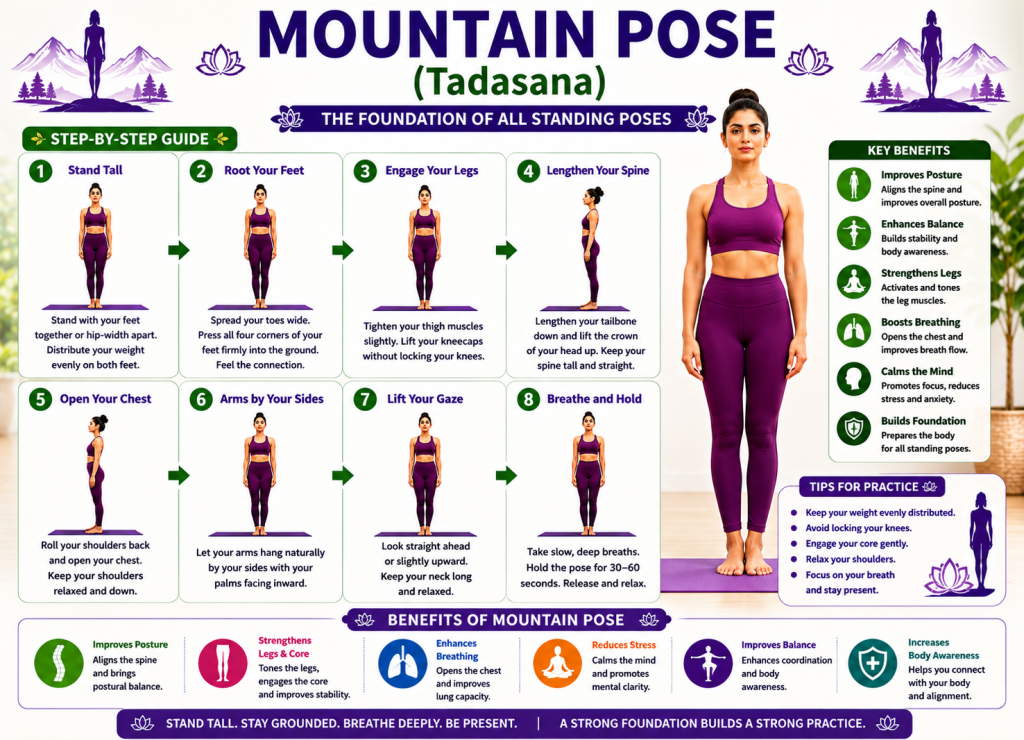
Benefits
- Improves posture
- Strengthens legs
- Activates the core
- Enhances body awareness
- Improves breathing
How to Practice
- Stand with your feet together or hip-width apart.
- Distribute your weight evenly.
- Keep your spine long.
- Relax your shoulders.
- Keep your chin parallel to the floor.
- Let your arms rest naturally.
- Take slow, deep breaths.
- Hold for one minute.
Common Mistakes
- Locking the knees
- Hunching the shoulders
- Looking downward
- Holding the breath
Beginner Tip
Practice in front of a mirror to improve your posture.
2. Tree Pose (Vrikshasana)
Tree Pose is one of the best yoga poses for improving concentration and balance.
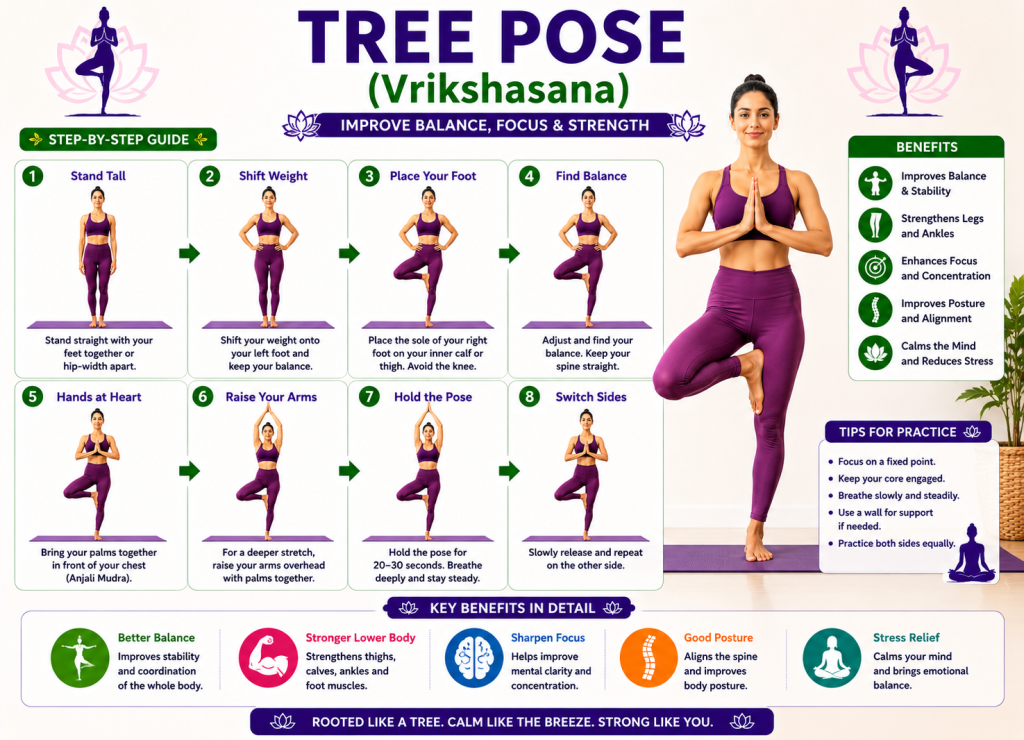
Benefits
- Improves stability
- Strengthens thighs
- Develops focus
- Improves posture
- Builds ankle strength
How to Practice
- Stand tall.
- Shift weight onto one foot.
- Place the opposite foot on the inner thigh or calf.
- Avoid placing it directly on the knee.
- Bring your palms together.
- Look at one fixed point.
- Hold for 30 seconds.
- Repeat on the opposite side.
Common Mistakes
- Looking around
- Placing the foot on the knee
- Leaning the body sideways
Beginner Tip
Use a wall for support until your balance improves.
3. Downward-Facing Dog (Adho Mukha Svanasana)
This classic yoga pose stretches almost every major muscle group while strengthening the upper body.
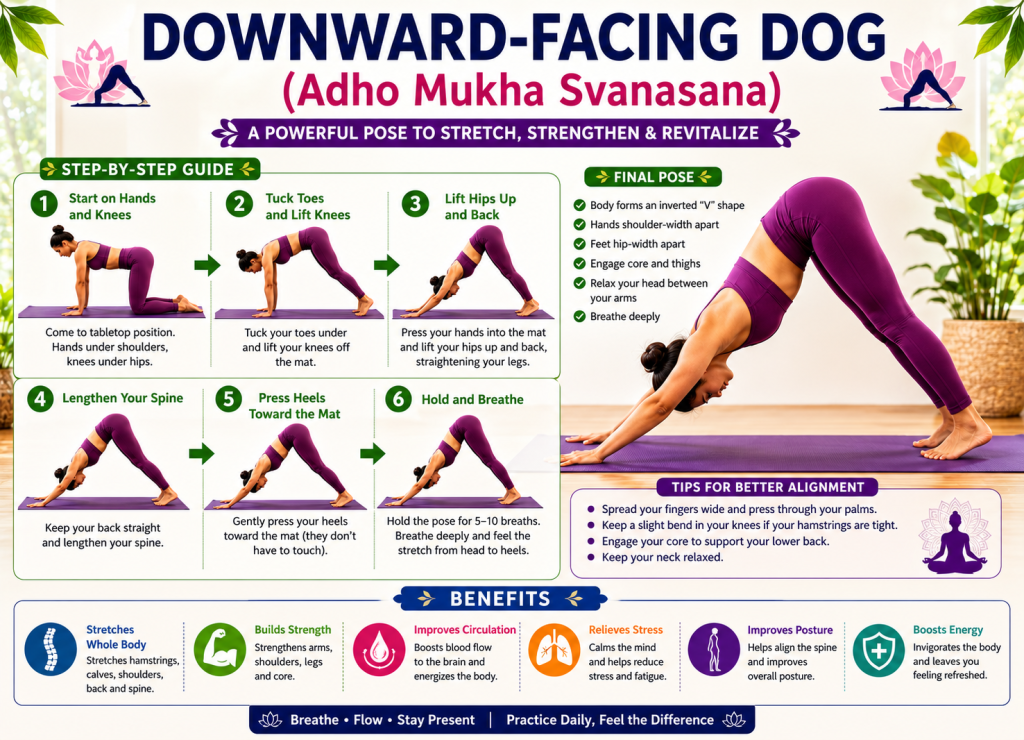
Benefits
- Stretches hamstrings
- Strengthens shoulders
- Improves circulation
- Relieves back stiffness
- Builds endurance
How to Practice
- Begin on hands and knees.
- Spread your fingers.
- Lift your hips upward.
- Straighten your legs as much as comfortable.
- Press your heels toward the floor.
- Keep your neck relaxed.
- Hold for 30–60 seconds.
Common Mistakes
- Rounding the back
- Locking the elbows
- Holding the breath
Beginner Tip
Bend your knees slightly if your hamstrings feel tight.
4. Warrior II (Virabhadrasana II)
Warrior II develops strength, endurance, and confidence while improving lower-body stability.
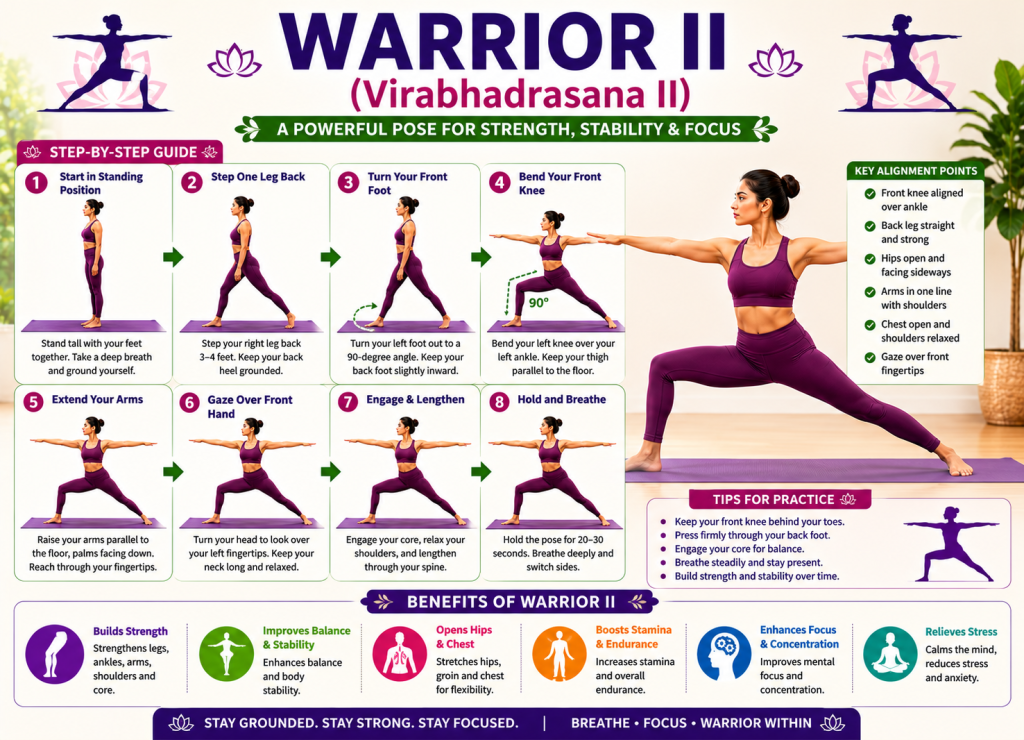
Benefits
- Strengthens legs
- Builds stamina
- Improves balance
- Opens hips
- Strengthens shoulders
How to Practice
- Stand with your feet wide apart.
- Turn the front foot outward.
- Bend the front knee.
- Keep the back leg straight.
- Extend both arms parallel to the floor.
- Look over your front hand.
- Hold for 30–45 seconds.
- Repeat on the opposite side.
Common Mistakes
- Leaning forward
- Knee extending beyond the ankle
- Dropping the arms
Beginner Tip
Start with shorter holds and gradually increase the duration.
5. Cobra Pose (Bhujangasana)
Cobra Pose is one of the most effective yoga poses for improving spinal flexibility and strengthening the back.
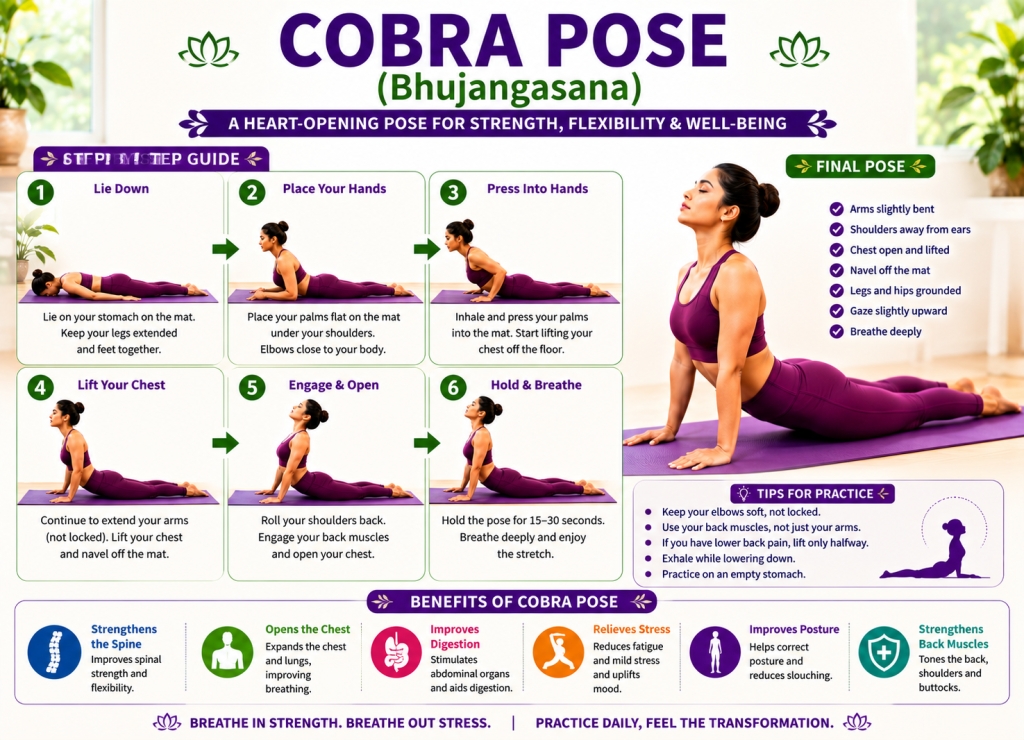
Benefits
- Strengthens the back
- Improves posture
- Opens the chest
- Increases spinal flexibility
- Reduces mild back stiffness
How to Practice
- Lie face down.
- Place your palms beneath your shoulders.
- Keep your elbows close to your body.
- Inhale and slowly lift your chest.
- Keep your pelvis on the floor.
- Relax your shoulders.
- Hold for 20–30 seconds.
- Lower slowly while exhaling.
Common Mistakes
- Overarching the back
- Raising the shoulders toward the ears
- Locking the elbows
- Looking too far upward
Beginner Tip
Lift only as high as feels comfortable. Focus on lengthening the spine rather than pushing for maximum height.
6. Bridge Pose (Setu Bandhasana)
Bridge Pose is a gentle backbend that strengthens the posterior muscles while opening the chest and improving spinal mobility. It is especially beneficial for women who spend long hours sitting at a desk.
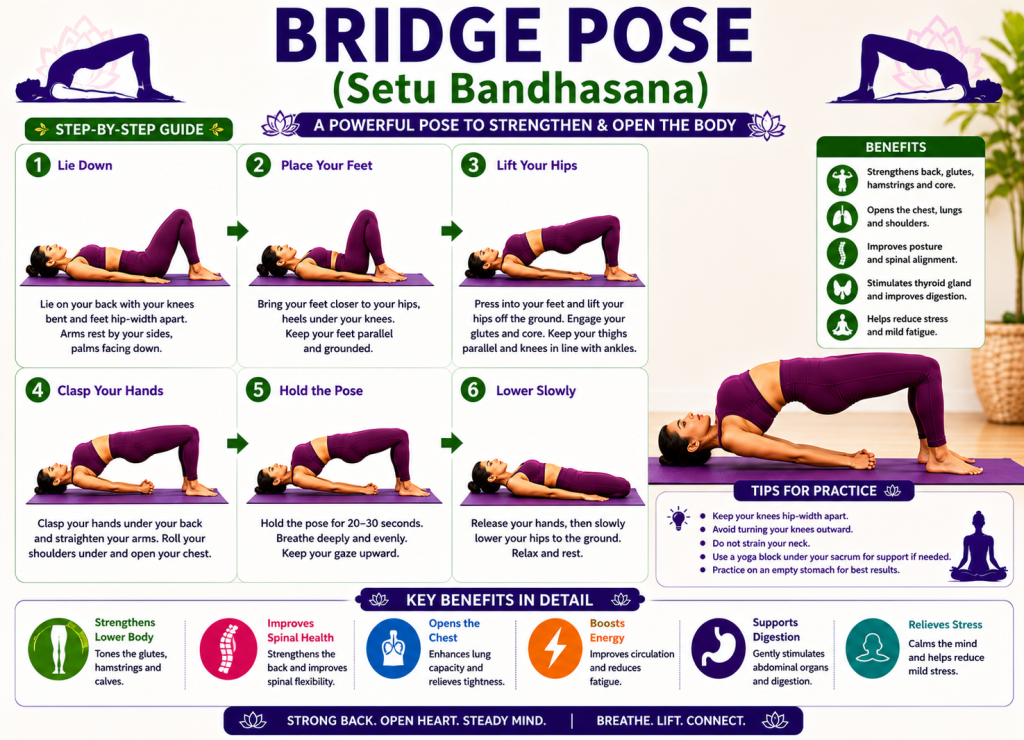
Benefits
- Strengthens the glutes and hamstrings
- Improves spinal flexibility
- Opens the chest and shoulders
- Supports better posture
- May help relieve mild lower back discomfort
- Improves circulation
How to Practice
- Lie flat on your back.
- Bend both knees and place your feet hip-width apart.
- Keep your arms beside your body.
- Press your feet firmly into the floor.
- Inhale and slowly lift your hips.
- Keep your thighs parallel.
- Hold for 20–30 seconds.
- Exhale and gently lower your hips.
Common Mistakes
- Turning the knees outward
- Lifting too high and compressing the lower back
- Holding the breath
- Placing the feet too far from the hips
Beginner Tip
Place a yoga block or folded blanket under your hips for support if holding the pose feels difficult.
7. Butterfly Pose (Baddha Konasana)
Butterfly Pose is one of the best yoga poses for improving flexibility in the hips and inner thighs. It also promotes relaxation and helps release tension accumulated from prolonged sitting.
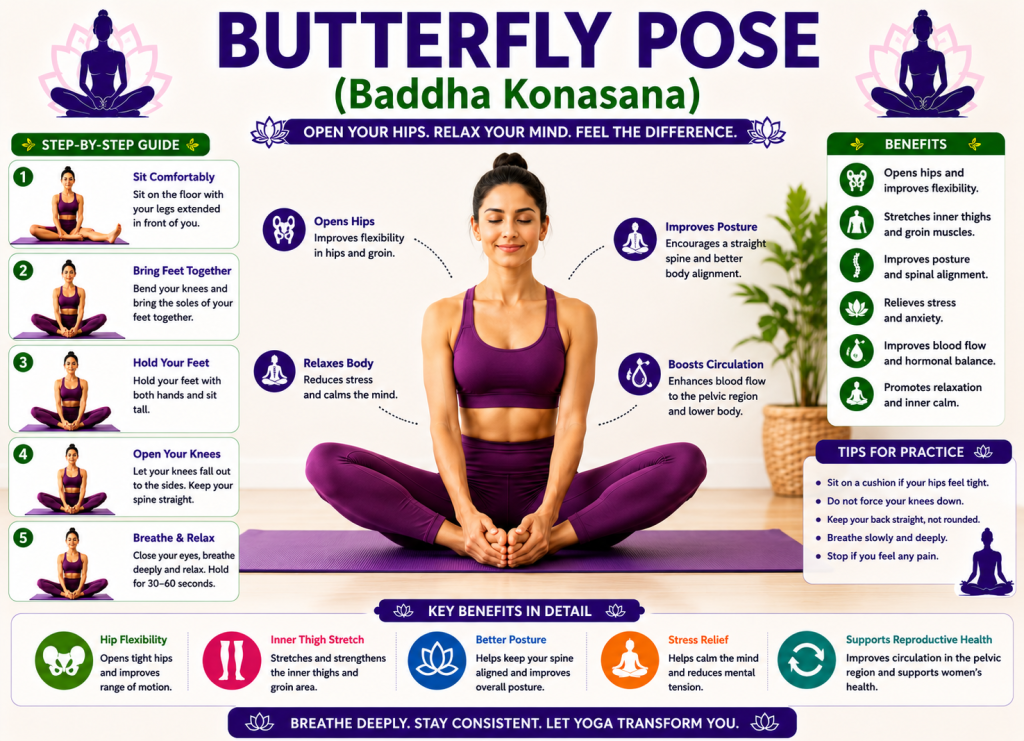
Benefits
- Opens the hips
- Improves groin flexibility
- Stretches the inner thighs
- Encourages better posture
- Promotes relaxation
How to Practice
- Sit with your legs extended.
- Bring the soles of your feet together.
- Hold your feet with both hands.
- Sit tall and lengthen your spine.
- Let your knees move gently toward the floor.
- Breathe slowly.
- Hold for one minute.
Common Mistakes
- Rounding the back
- Pulling the feet too close if uncomfortable
- Pressing the knees forcefully downward
Beginner Tip
Sit on a folded blanket if your hips feel tight.
8. Cat-Cow Pose (Marjaryasana-Bitilasana)
Cat-Cow is an excellent warm-up exercise that gently mobilizes the spine and improves coordination between breathing and movement.
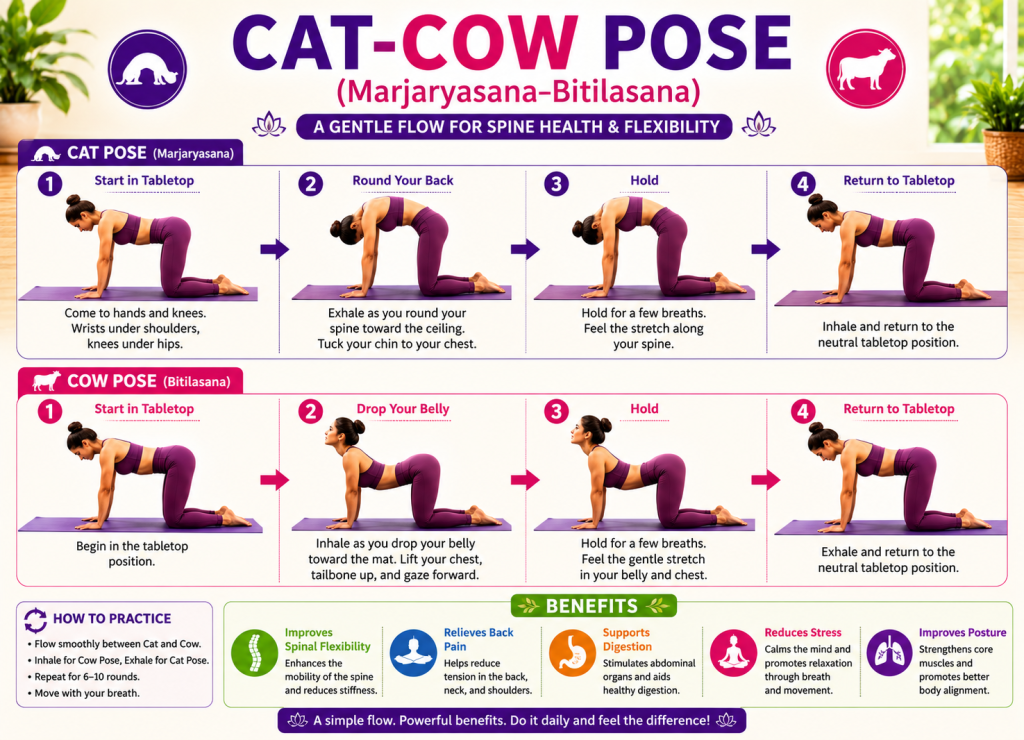
Benefits
- Improves spinal mobility
- Relieves back stiffness
- Enhances posture
- Improves flexibility
- Reduces neck tension
How to Practice
- Begin on hands and knees.
- Keep wrists beneath shoulders.
- Knees remain below hips.
- Inhale while arching your back (Cow Pose).
- Lift your chest.
- Exhale while rounding your spine (Cat Pose).
- Tuck your chin gently.
- Repeat for 8–10 slow breaths.
Common Mistakes
- Moving too quickly
- Forgetting to breathe
- Overarching the lower back
Beginner Tip
Coordinate every movement with your breath rather than rushing through repetitions.
9. Child’s Pose (Balasana)
Child’s Pose is one of the most relaxing yoga positions and is often used between challenging poses to restore energy.
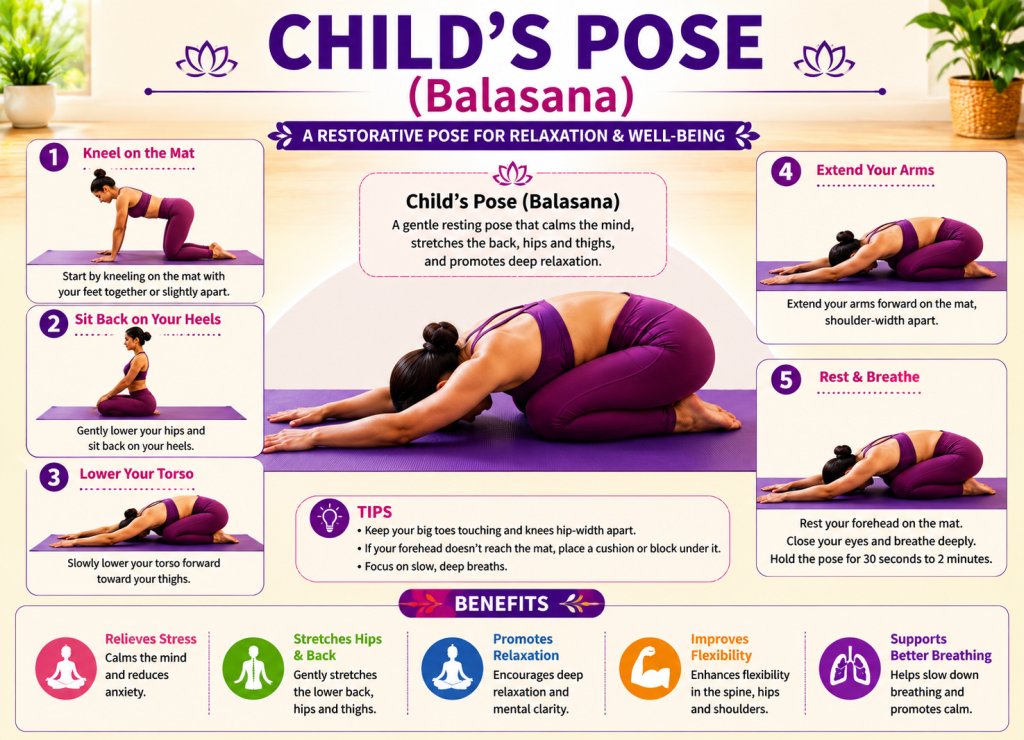
Benefits
- Relaxes the entire body
- Gently stretches the hips
- Lengthens the spine
- Reduces stress
- Promotes mindfulness
How to Practice
- Kneel on your yoga mat.
- Sit back on your heels.
- Fold your torso forward.
- Stretch your arms ahead.
- Rest your forehead on the mat.
- Breathe deeply.
- Hold for one to three minutes.
Common Mistakes
- Raising the shoulders
- Holding the breath
- Forcing the hips downward
Beginner Tip
Place a cushion beneath your forehead for additional comfort.
10. Legs-Up-the-Wall Pose (Viparita Karani)
This restorative pose is ideal after a busy day. It helps reduce leg fatigue while promoting relaxation and recovery.
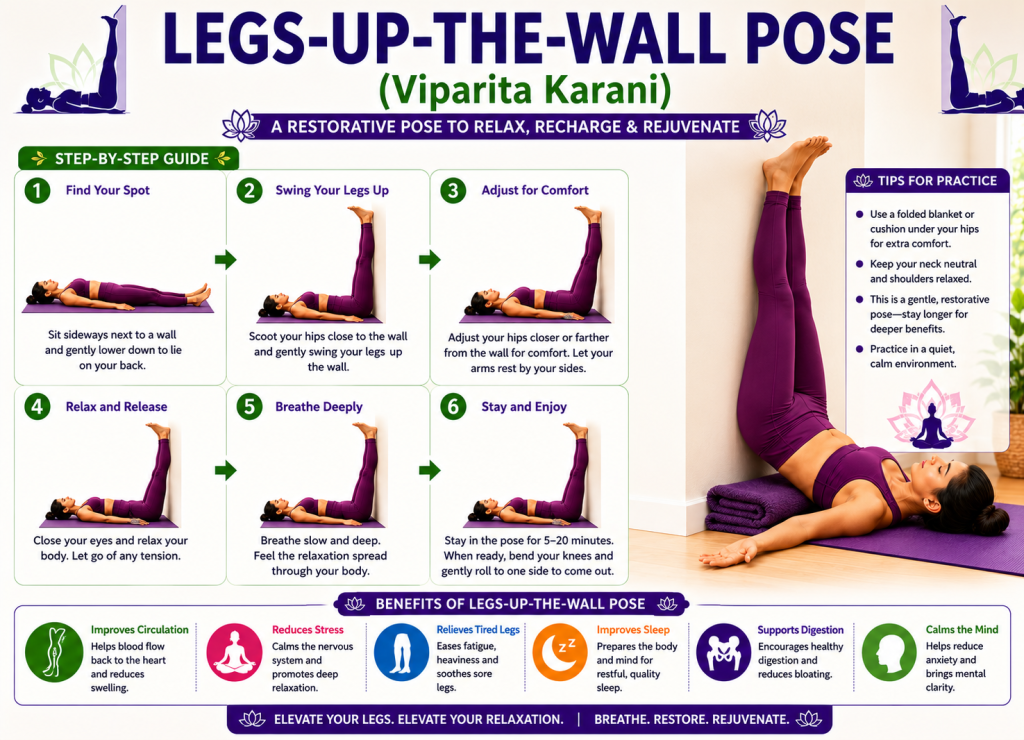
Benefits
- Relieves tired legs
- Improves blood circulation
- Reduces swelling
- Encourages relaxation
- Supports recovery after exercise
How to Practice
- Sit beside a wall.
- Swing your legs upward against the wall.
- Lie comfortably on your back.
- Keep your arms relaxed.
- Close your eyes.
- Breathe naturally.
- Hold for 5–10 minutes.
Common Mistakes
- Sitting too far from the wall
- Tensing the shoulders
- Holding the neck awkwardly
Beginner Tip
Place a folded blanket beneath your hips if needed for additional comfort.
A 20-Minute Daily Yoga Routine for Women
If you’re just starting your yoga journey, consistency is more important than duration. The following routine is suitable for most women and can be practiced at home without special equipment.
| Pose | Duration |
|---|---|
| Mountain Pose | 1 minute |
| Cat-Cow Pose | 2 minutes |
| Downward-Facing Dog | 1 minute |
| Warrior II | 2 minutes |
| Tree Pose | 2 minutes |
| Cobra Pose | 1 minute |
| Bridge Pose | 2 minutes |
| Butterfly Pose | 2 minutes |
| Child’s Pose | 2 minutes |
| Legs-Up-the-Wall | 5 minutes |
Yoga for Women at Different Stages of Life
Teenagers
Yoga improves posture, flexibility, confidence, concentration, and body awareness. It can also help manage academic stress.
Working Women
Long hours at a desk often lead to neck pain, shoulder stiffness, and lower back discomfort. Regular yoga can reduce muscle tension, improve posture, and promote mental relaxation.
Mothers
After medical clearance following childbirth, gentle yoga may help improve core strength, posture, flexibility, and overall well-being. Always consult a healthcare professional before resuming exercise postpartum.
Women Over 40
As we age, maintaining strength, flexibility, and balance becomes increasingly important. Yoga supports healthy joints, bone health, mobility, and overall quality of life.
Senior Women
Gentle yoga can improve balance, coordination, flexibility, and confidence in daily movement. Chair yoga or modified poses may be appropriate for those with limited mobility.
Can Yoga Help with Weight Management?
Yoga is not a high-calorie-burning exercise like running or high-intensity interval training (HIIT). However, it can support healthy weight management by:
- Increasing physical activity
- Building lean muscle
- Reducing stress-related eating
- Improving sleep quality
- Encouraging mindful eating habits
- Supporting long-term healthy lifestyle changes
For best results, combine yoga with regular walking or strength training and a balanced diet.
Mental Health Benefits of Yoga
One of yoga’s greatest strengths is its positive impact on mental well-being.
Regular practice may help:
- Reduce stress
- Improve mood
- Increase focus
- Lower anxiety levels
- Enhance emotional resilience
- Promote better sleep
- Improve mindfulness
The breathing techniques practiced during yoga activate the body’s relaxation response, helping many people feel calmer and more centered.
Safety Tips
Practice safely by following these recommendations:
- Warm up before deeper stretches.
- Never force your body into a position.
- Breathe continuously.
- Stop if you feel sharp pain.
- Use yoga blocks or cushions when necessary.
- Practice on a non-slip yoga mat.
- Stay hydrated.
- Consult a healthcare provider if you have chronic medical conditions, recent injuries, or are pregnant.
Frequently Asked Questions (FAQs)
1. Can beginners practice these yoga poses?
Yes. All ten poses are beginner-friendly and can be modified according to your flexibility and fitness level.
2. How often should women practice yoga?
Practicing three to five times per week is a great starting point. Even 15–20 minutes a day can provide noticeable benefits over time.
3. Is yoga enough for overall fitness?
Yoga improves flexibility, balance, strength, and mental well-being. For comprehensive fitness, consider combining yoga with activities such as walking, cycling, swimming, or resistance training.
4. Which yoga pose is best for stress relief?
Child’s Pose, Butterfly Pose, and Legs-Up-the-Wall Pose are excellent choices for relaxation and stress reduction.
5. Can yoga improve posture?
Yes. Many yoga poses strengthen the muscles that support the spine and encourage proper body alignment.
Common Mistakes Beginners Should Avoid
- Skipping the warm-up
- Comparing yourself with others
- Holding your breath
- Practicing inconsistently
- Ignoring pain signals
- Moving too quickly between poses
- Focusing only on flexibility instead of proper alignment
Remember that yoga is a personal journey. Progress comes through patience and regular practice.
Final Thoughts
Yoga is one of the most accessible and rewarding forms of exercise for women of all ages. It requires very little equipment, can be practiced almost anywhere, and offers a unique combination of physical movement, breath control, and mindfulness.
The ten poses covered in this guide provide a strong foundation for developing flexibility, strength, balance, and relaxation. Whether your goal is to improve posture, reduce stress, increase mobility, or simply feel healthier, a consistent yoga practice can make a meaningful difference.
Start with just a few minutes each day, focus on proper technique rather than perfection, and listen to your body’s needs. Over time, you’ll likely notice improvements not only in your physical fitness but also in your energy levels, confidence, and overall sense of well-being.
The most important step is simply to begin. Roll out your yoga mat, take a deep breath, and enjoy the journey toward a healthier, stronger, and more balanced life.