Top 10 Yoga Poses for Beginners: Easy Guide to Start Yoga
Yoga is one of the oldest and most effective practices for improving physical health, mental well-being, and spiritual balance. Originating in ancient India thousands of years ago, yoga combines physical postures (asanas), breathing techniques (pranayama), and meditation to create harmony between the body and mind.
Many people hesitate to begin yoga because they think they are not flexible enough or worry that yoga poses are difficult. The truth is exactly the opposite. Yoga is designed for everyone. You do not need to be flexible before starting yoga. Regular practice gradually improves flexibility, strength, posture, and confidence.
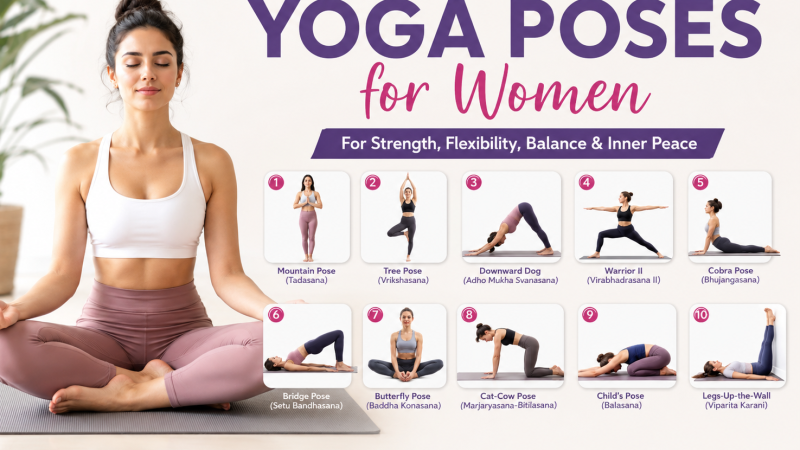
If you are completely new to yoga, learning a few simple poses is the best way to begin. These foundational poses, most of which are also included in the Top 10 Yoga Poses for Women, teach proper body alignment, improve balance, strengthen muscles, and prepare you for more advanced asanas in the future.
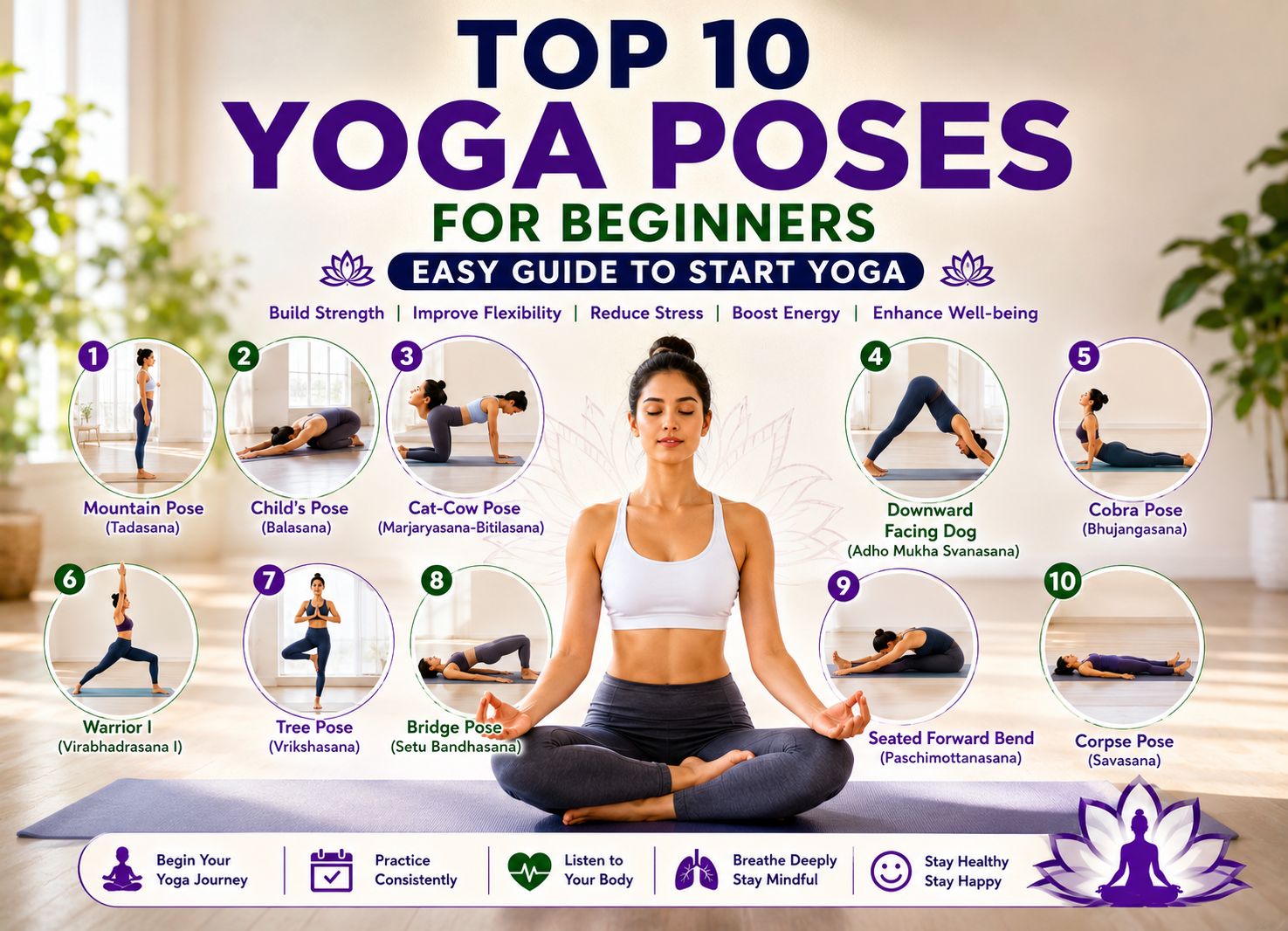
In this comprehensive guide, you’ll discover the top 10 yoga poses for beginners, learn their benefits, understand how to perform them correctly, and avoid common mistakes. Whether your goal is better fitness, stress relief, weight management, or inner peace, these poses provide an excellent starting point.
Why Beginners Should Practice Yoga
A consistent yoga routine offers numerous health benefits.
- Improves flexibility
- Builds muscle strength
- Corrects body posture
- Reduces stress and anxiety
- Increases energy levels
- Improves sleep quality
- Enhances breathing capacity
- Boosts concentration
- Supports healthy weight management
- Promotes overall well-being
Even practicing for just 20–30 minutes a day can produce noticeable improvements within a few weeks.
Tips Before You Start Yoga
Before beginning your practice, keep these simple guidelines in mind.
- Wear comfortable clothing.
- Use a yoga mat for stability.
- Practice on an empty stomach or wait at least two hours after eating.
- Move slowly and avoid forcing any stretch.
- Focus on smooth, deep breathing.
- Stop immediately if you experience pain.
- Practice consistently rather than intensely.
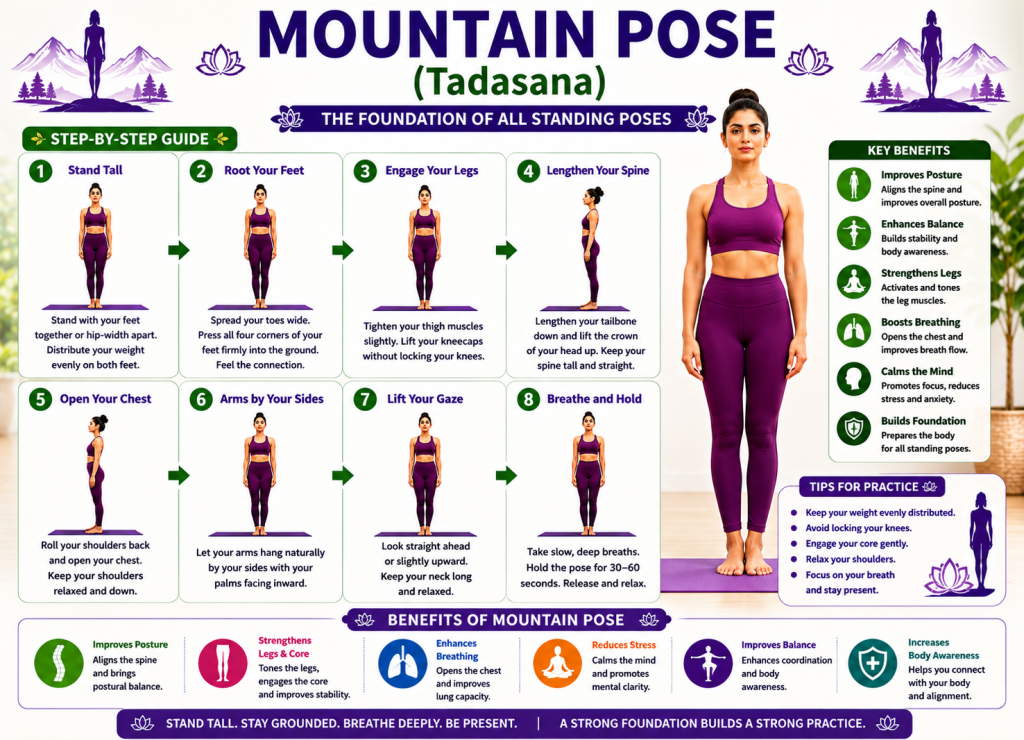
1. Mountain Pose (Tadasana)
Mountain Pose is the foundation of nearly every standing yoga posture. Although it appears simple, it teaches proper body alignment and balance.
How to Do It
- Stand with your feet together or hip-width apart.
- Keep your spine straight.
- Relax your shoulders.
- Let your arms rest beside your body.
- Distribute your weight evenly.
- Breathe slowly for 30–60 seconds.
Benefits
- Improves posture
- Builds body awareness
- Strengthens legs
- Improves balance
- Creates mental focus
Common Mistake
Do not lock your knees or hunch your shoulders.
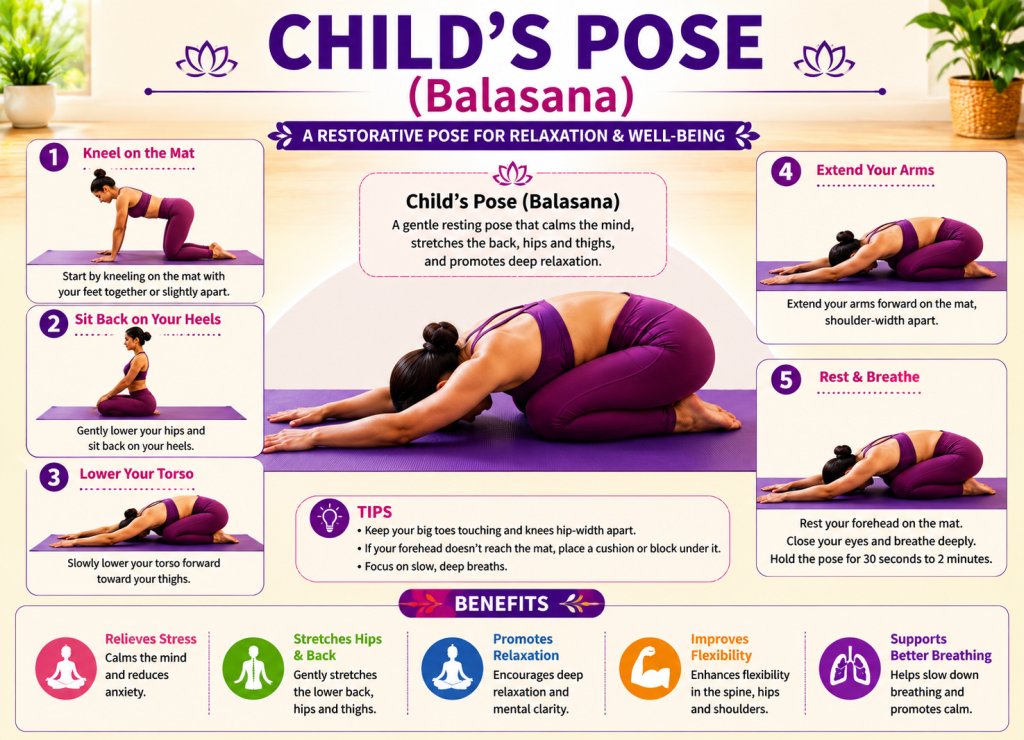
2. Child’s Pose (Balasana)
Child’s Pose is one of the most relaxing yoga postures. It gently stretches the body while calming the nervous system.
Steps
- Kneel on the mat.
- Sit back on your heels.
- Stretch your arms forward.
- Lower your forehead to the floor.
- Relax and breathe deeply.
Hold for one to three minutes.
Benefits
- Relieves stress
- Gently stretches the back
- Reduces fatigue
- Relaxes the hips
- Calms the mind
Beginner Tip
Place a folded blanket under your knees if needed for comfort.
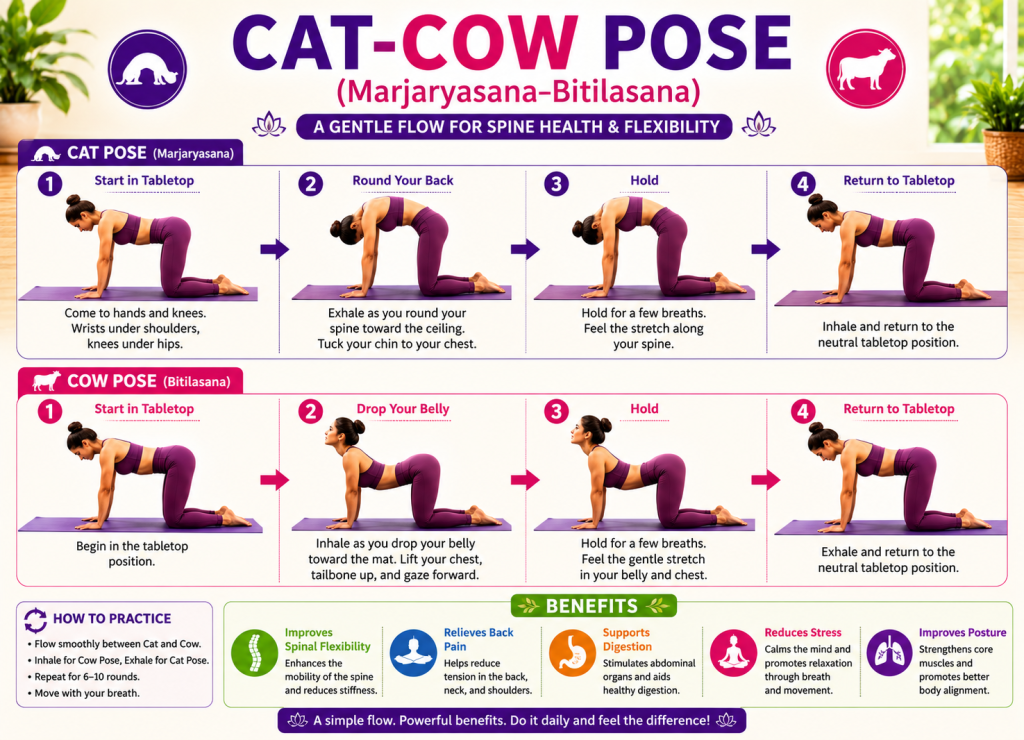
3. Cat-Cow Pose (Marjaryasana-Bitilasana)
This gentle movement improves spinal flexibility and warms up the body.
How to Practice
Start on hands and knees.
Cow Pose
- Lift your head.
- Drop your belly.
- Open your chest.
Cat Pose
- Round your back.
- Tuck your chin.
- Pull your belly inward.
Repeat for 10–15 breaths.
Benefits
- Improves spinal mobility
- Relieves back stiffness
- Improves posture
- Warms the body
- Enhances coordination
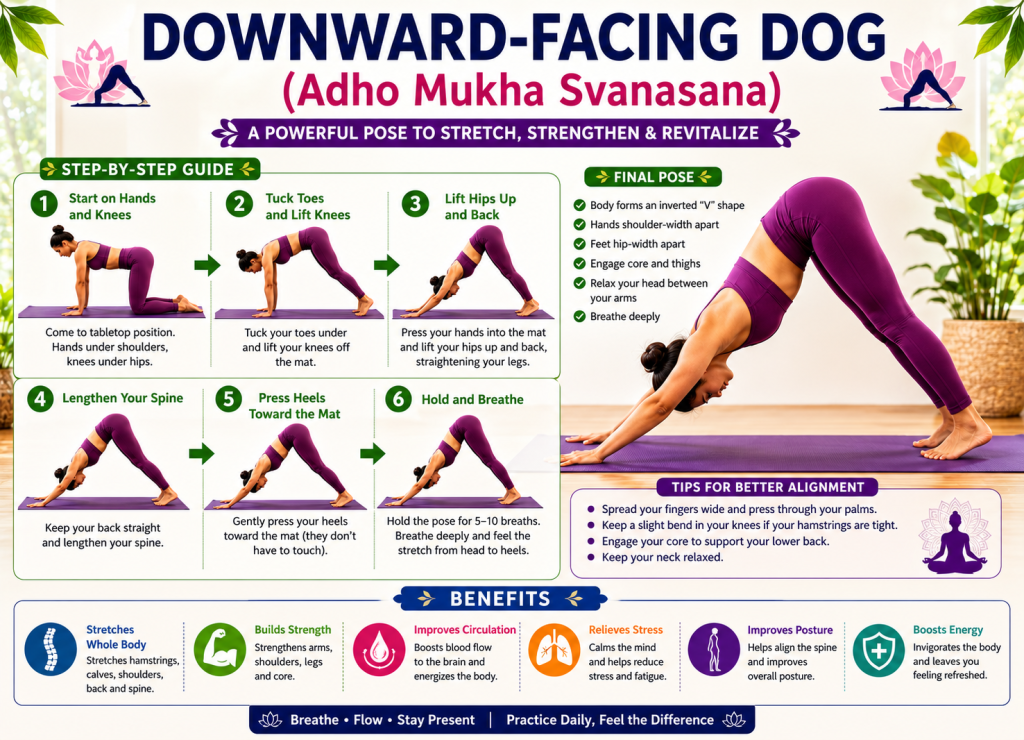
4. Downward Facing Dog (Adho Mukha Svanasana)
This is one of the most famous yoga poses and appears in many yoga sequences.
Steps
- Begin on hands and knees.
- Lift your hips upward.
- Straighten your legs as much as comfortable.
- Press your hands firmly into the mat.
- Keep your head relaxed.
Hold for 30–60 seconds.
Benefits
- Strengthens shoulders
- Stretches hamstrings
- Improves circulation
- Increases flexibility
- Energizes the body
Beginner Tip
Keeping your knees slightly bent is perfectly acceptable.
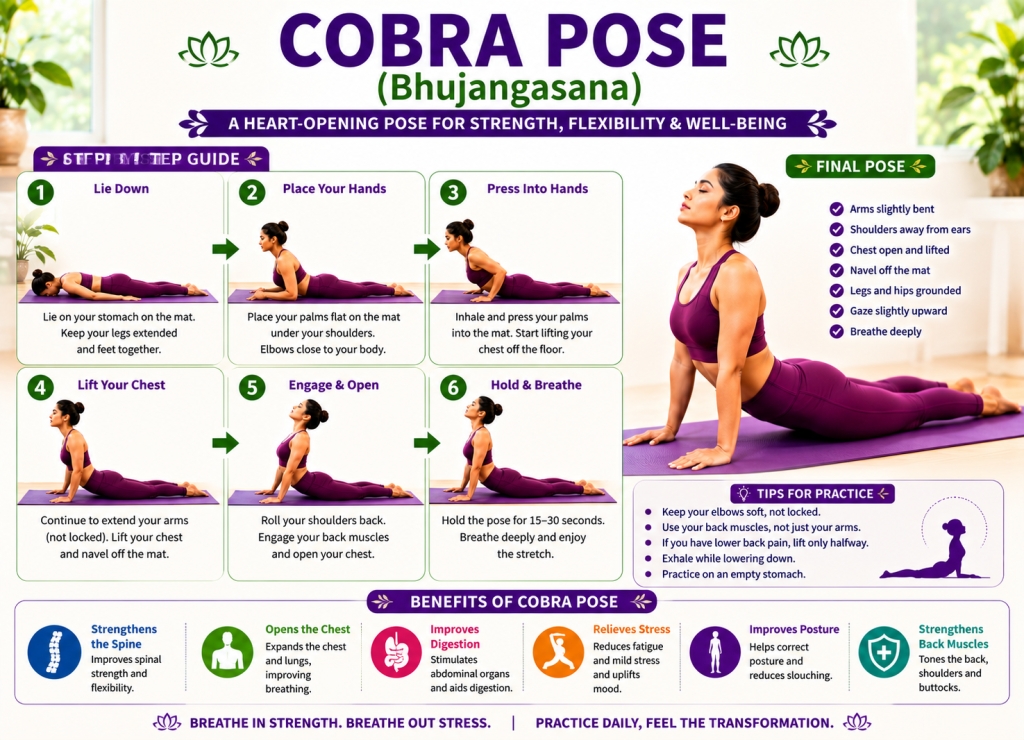
5. Cobra Pose (Bhujangasana)
Cobra Pose gently strengthens the back and opens the chest.
Steps
- Lie face down.
- Place hands beneath your shoulders.
- Press lightly into your palms.
- Lift your chest.
- Keep your elbows slightly bent.
Hold for 20–30 seconds.
Benefits
- Strengthens the spine
- Opens the chest
- Improves posture
- Reduces back stiffness
- Increases flexibility
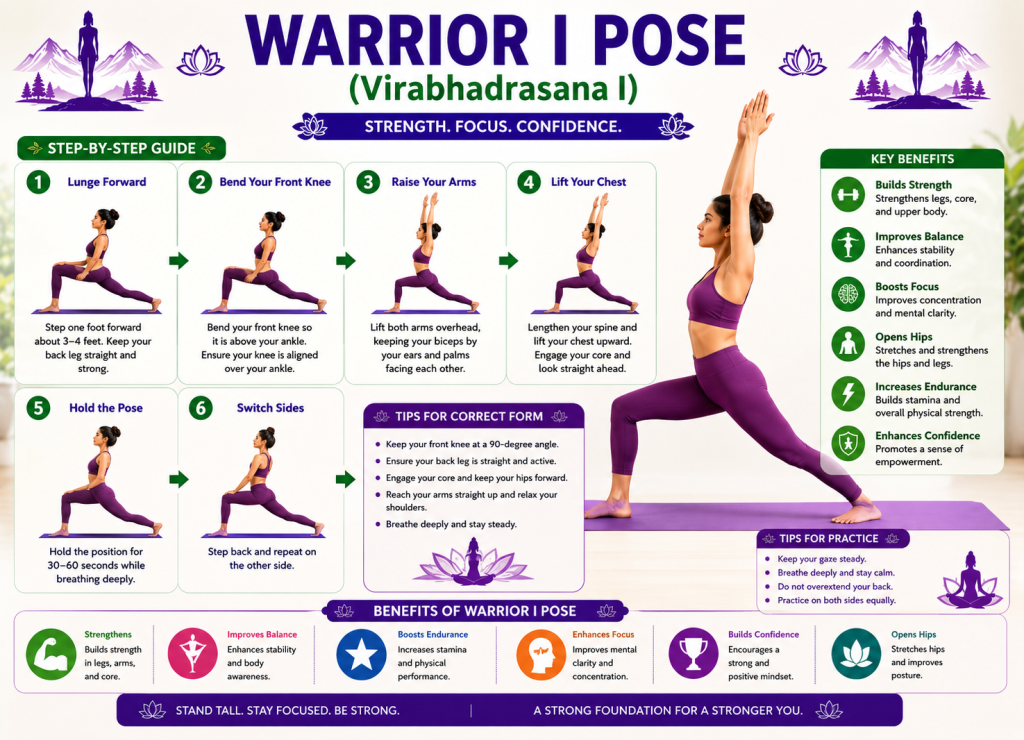
6. Warrior I (Virabhadrasana I)
Warrior I develops confidence, strength, and stability.
Steps
- Step one foot forward.
- Bend the front knee.
- Keep the back leg straight.
- Raise both arms overhead.
- Face forward.
Hold for 30 seconds before switching sides.
Benefits
- Strengthens legs
- Improves balance
- Opens hips
- Builds endurance
- Increases confidence
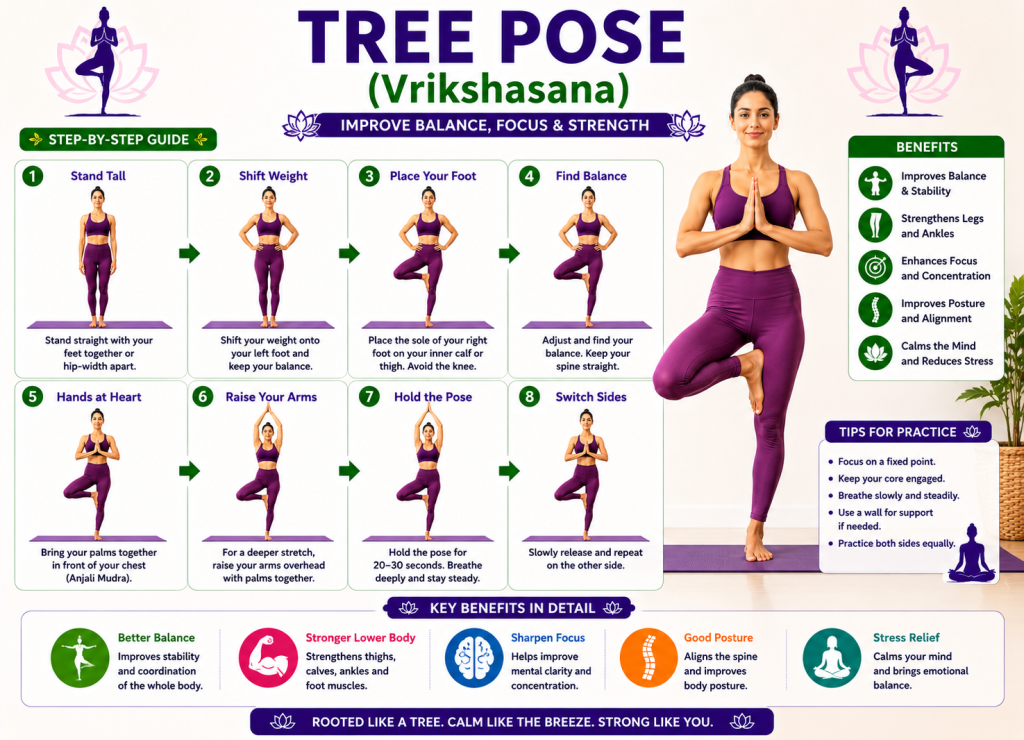
7. Tree Pose (Vrikshasana)
Tree Pose improves balance and concentration.
Steps
- Stand tall.
- Shift your weight onto one foot.
- Place the opposite foot on your inner calf or thigh.
- Join your palms together.
- Focus on one point.
Hold for 20–40 seconds.
Benefits
- Improves balance
- Strengthens ankles
- Builds concentration
- Enhances posture
- Develops stability
Avoid
Never place your foot directly on your knee.
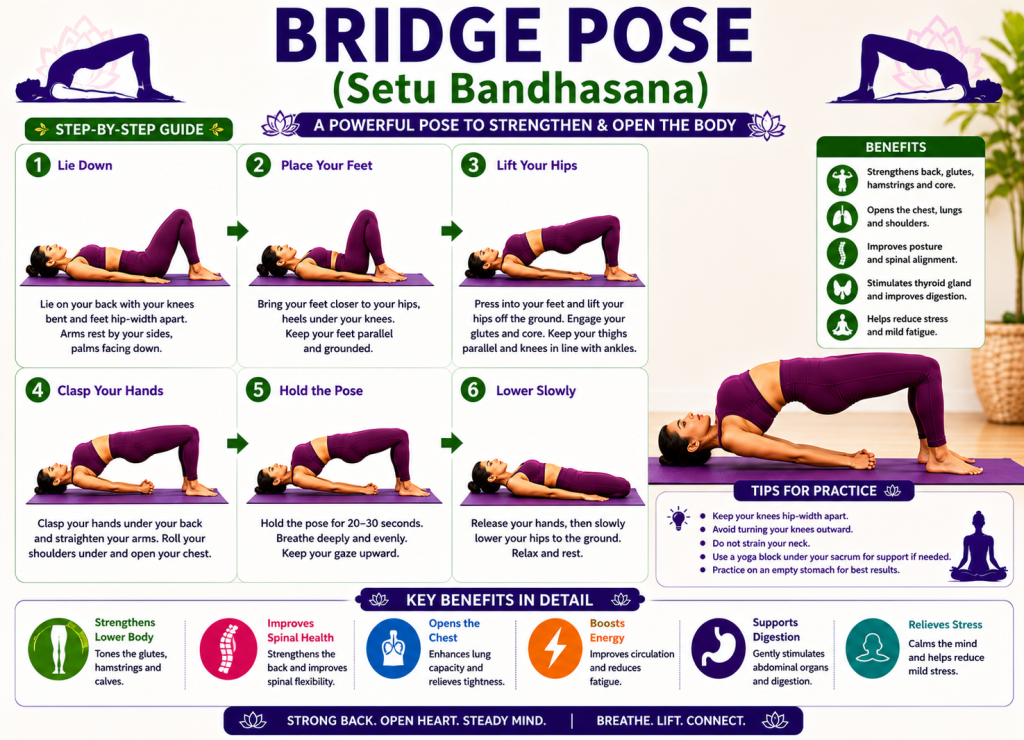
8. Bridge Pose (Setu Bandhasana)
Bridge Pose strengthens the lower body and stretches the front of the body.
Steps
- Lie on your back.
- Bend your knees.
- Keep feet hip-width apart.
- Lift your hips.
- Press your feet into the floor.
Hold for 20–40 seconds.
Benefits
- Strengthens glutes
- Supports the spine
- Opens the chest
- Improves circulation
- Reduces stress
9. Seated Forward Bend (Paschimottanasana)
This pose stretches the entire back of the body.
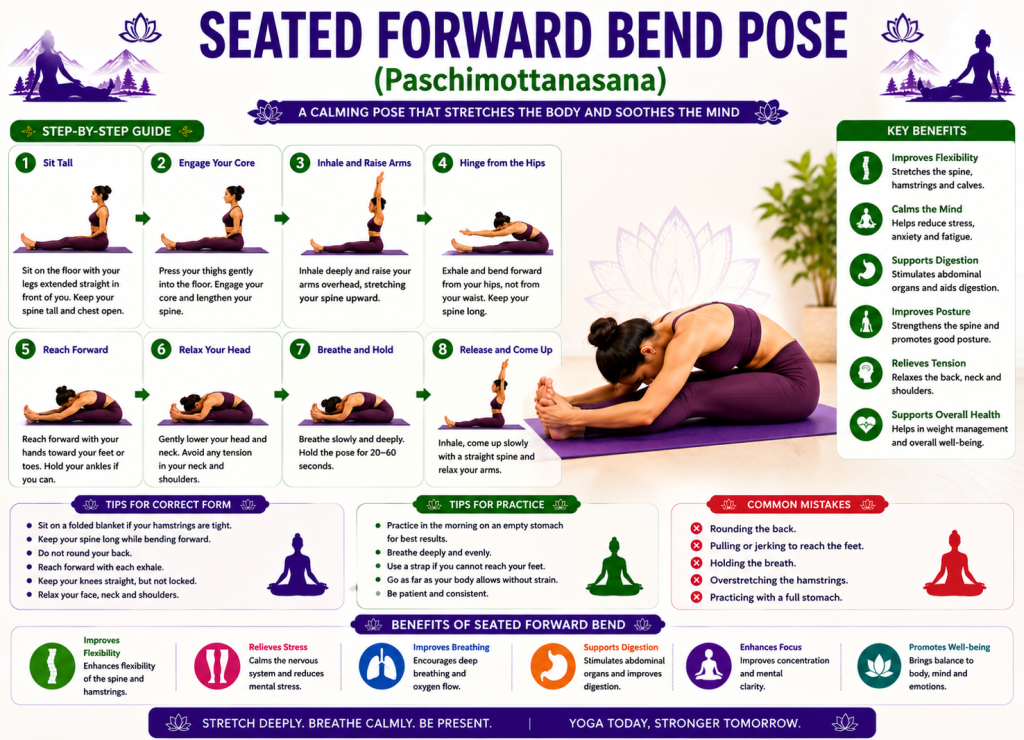
Steps
- Sit with legs extended.
- Lengthen your spine.
- Bend forward from the hips.
- Reach toward your feet.
- Relax your neck.
Hold for one minute.
Benefits
- Improves flexibility
- Calms the mind
- Stretches hamstrings
- Relieves stress
- Supports digestion
10. Corpse Pose (Savasana)
Every yoga session should end with Savasana. It allows the body to absorb the benefits of practice.
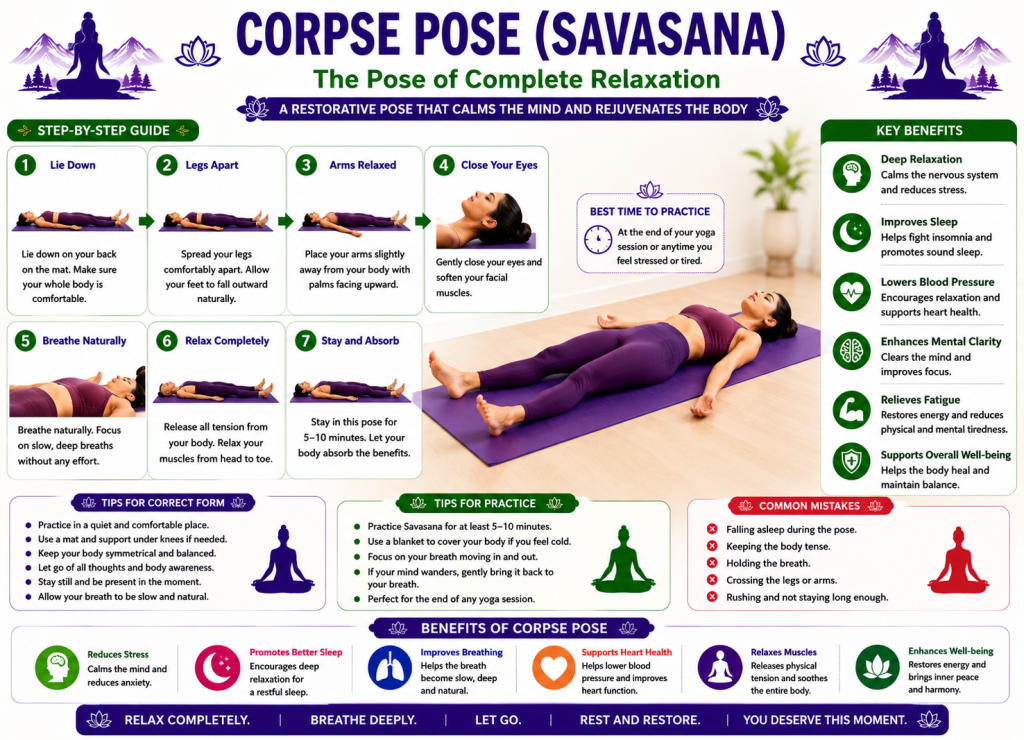
Steps
- Lie flat on your back.
- Relax your arms and legs.
- Close your eyes.
- Breathe naturally.
- Stay still for 5–10 minutes.
Benefits
- Deep relaxation
- Reduces stress
- Improves mental clarity
- Lowers fatigue
- Restores energy
A Simple Beginner Yoga Routine
You can combine these poses into a 20-minute daily practice.
- Mountain Pose – 1 minute
- Cat-Cow Pose – 2 minutes
- Child’s Pose – 2 minutes
- Downward Dog – 2 minutes
- Cobra Pose – 2 minutes
- Warrior I – 4 minutes
- Tree Pose – 2 minutes
- Bridge Pose – 2 minutes
- Seated Forward Bend – 2 minutes
- Savasana – 5 minutes
Practicing this routine regularly can noticeably improve flexibility, posture, strength, and mental calmness.
Common Mistakes Beginners Should Avoid
- Holding your breath
- Comparing yourself with others
- Practicing too aggressively
- Ignoring pain
- Skipping warm-up
- Forgetting relaxation at the end
- Practicing inconsistently
Yoga is a personal journey. Progress comes with patience and regular practice.
Frequently Asked Questions
How often should beginners practice yoga?
Three to five sessions per week are ideal, though even 15–20 minutes daily can be beneficial.
Is yoga suitable for all ages?
Yes. Yoga can be adapted for children, adults, and seniors with appropriate modifications.
Do I need to be flexible to start yoga?
No. Flexibility develops gradually through consistent practice.
Can yoga help with stress?
Yes. Yoga combines movement, breathing, and mindfulness, which can help reduce stress and promote relaxation.
What is the best time to practice yoga?
Many people prefer the morning because it energizes the body, but any consistent time that fits your schedule is suitable.
Final Thoughts
Beginning a yoga journey does not require expensive equipment, exceptional flexibility, or previous experience. All you need is a willingness to learn and practice consistently.
The ten beginner-friendly yoga poses covered in this guide build a strong foundation for lifelong wellness. They strengthen your muscles, improve flexibility, enhance posture, calm the mind, and support overall health. As your confidence grows, you can gradually explore more advanced postures and longer yoga sessions.
Remember that yoga is not about achieving the perfect pose. It is about developing awareness, improving your health, and creating balance in your daily life. Practice patiently, breathe deeply, and enjoy the journey. With regular dedication, yoga can become one of the most rewarding habits you ever develop.