Samaveda: The Veda of Music, Chanting, and Divine Wisdom
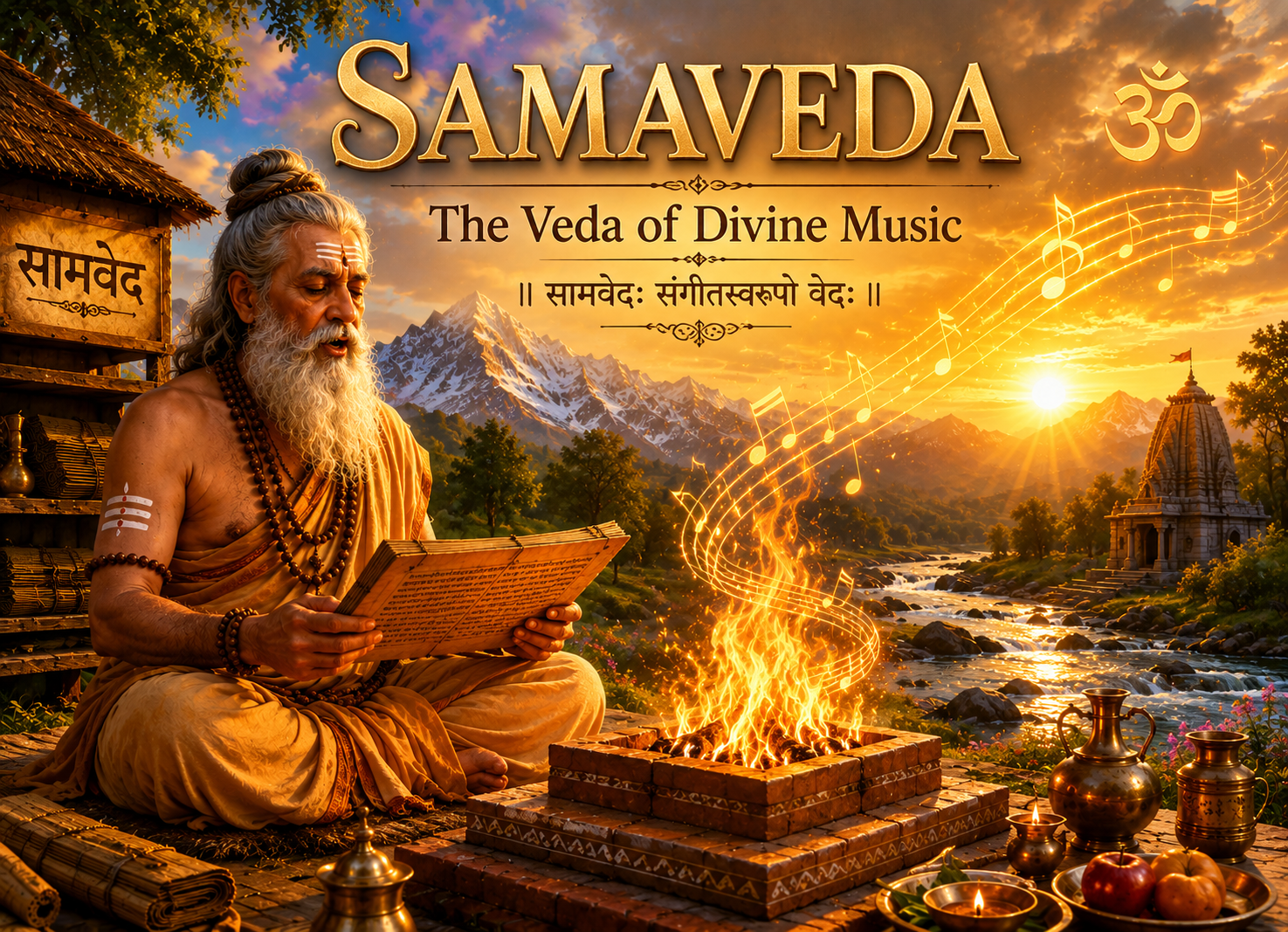
The Samaveda is one of the four sacred Vedas of Hinduism and is widely known as the Veda of Melodies. Among the four Vedas—Rigveda, Yajurveda, Samaveda, and Atharvaveda—it holds a unique place because it transforms sacred hymns into beautiful musical chants. While the Rigveda is famous for its hymns and the Yajurveda for its ritual formulas, the Samaveda is celebrated for its devotional singing and spiritual music.
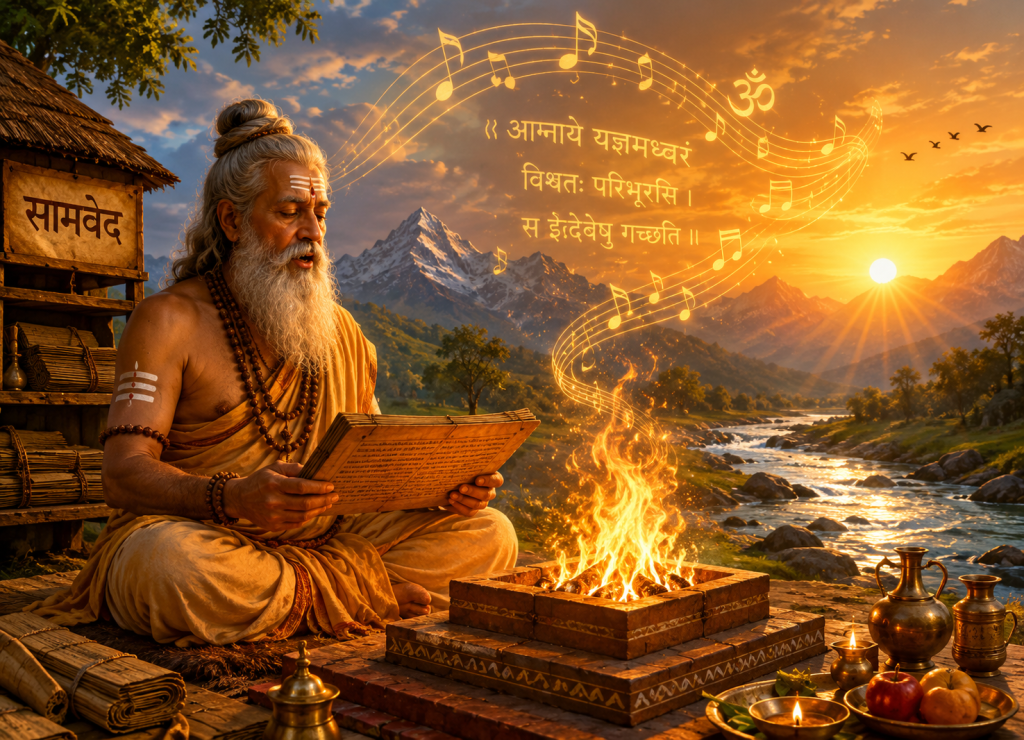
For thousands of years, the Samaveda has inspired priests, sages, musicians, and devotees. It is not merely a religious text but also one of the earliest foundations of Indian classical music. Every chant in the Samaveda is designed to elevate the mind, purify the heart, and create harmony between human beings and the Divine.
Many scholars regard the Samaveda as one of the oldest surviving musical traditions in the world. Its chanting methods have been preserved through an unbroken oral tradition that has continued for more than three thousand years. Even today, Vedic scholars carefully teach each melody exactly as it was handed down by ancient sages.
This article explores the history, structure, teachings, significance, and lasting influence of the Samaveda. Whether you are a student of Hinduism, a devotee, or simply curious about ancient Indian wisdom, this guide will help you understand why the Samaveda remains one of humanity’s greatest spiritual treasures.
What Does “Samaveda” Mean?
The word Samaveda comes from two Sanskrit words:
- Sāman (Sama) – Melody, musical chant, or sacred song.
- Veda – Knowledge or sacred wisdom.
Thus, Samaveda literally means “The Knowledge of Sacred Melodies.”
Unlike ordinary songs, the melodies of the Samaveda are considered sacred. Every note is believed to carry spiritual power. Ancient Hindu sages taught that chanting these melodies with devotion brings peace, concentration, and divine blessings.
The Samaveda demonstrates that worship is not limited to spoken prayers. Music itself becomes a form of meditation and communication with God.
Why Is the Samaveda Called the Veda of Music?
The Samaveda is often called the Veda of Music because almost all its verses are meant to be sung rather than simply recited.
Most of its mantras originate from the Rigveda. However, instead of repeating the verses in ordinary speech, the Samaveda arranges them into musical patterns.
This transformation serves several purposes:
- It makes the hymns easier to remember.
- It enhances concentration during worship.
- It creates a sacred atmosphere during Vedic rituals.
- It expresses devotion through melody.
- It connects the worshipper emotionally with the Divine.
These musical traditions later influenced the development of Indian classical music, devotional singing, temple chanting, and many spiritual practices that continue today.
Place of the Samaveda Among the Four Vedas
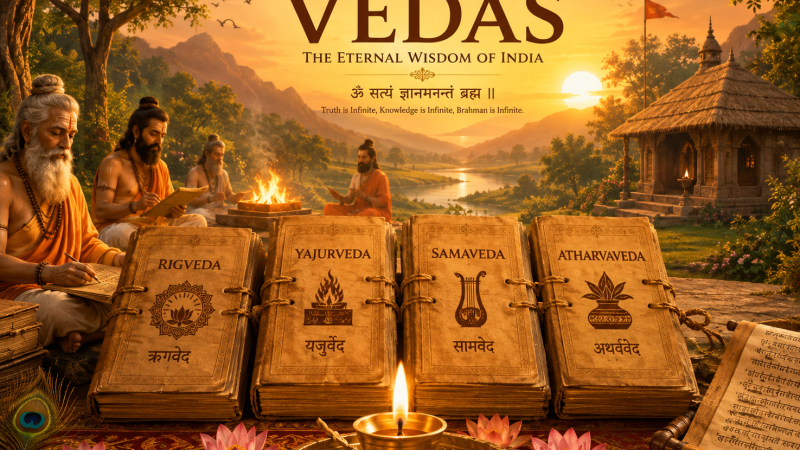
Hinduism recognizes four principal Vedas:
| Veda | Main Focus |
|---|---|
| Rigveda | Hymns and prayers |
| Yajurveda | Ritual procedures |
| Samaveda | Musical chanting |
| Atharvaveda | Daily life, healing, and philosophy |
Although the Samaveda contains the fewest verses among the four Vedas, its importance is enormous.
Each Veda had a specific role in Vedic sacrifices:
- The Hotri priest recited Rigvedic hymns.
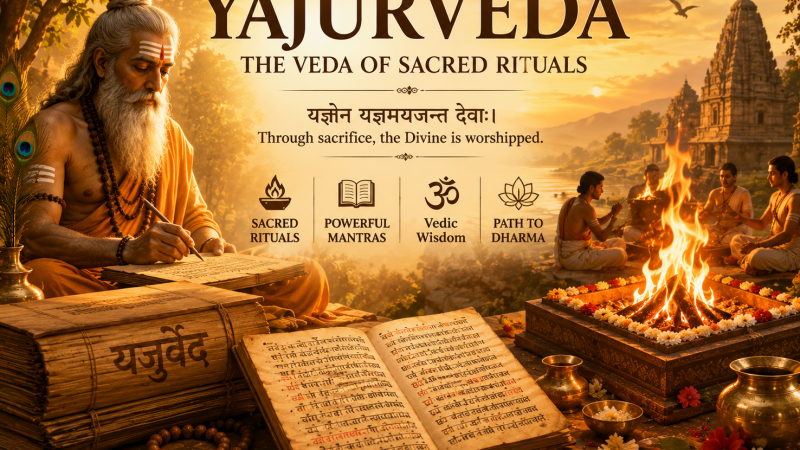
- The Adhvaryu priest performed rituals using the Yajurveda.
- The Udgatri priest sang the Samaveda melodies.
- The Brahma priest supervised the entire ceremony.
Without the musical chanting of the Udgatri priest, many Vedic sacrifices were considered incomplete.
Historical Background of the Samaveda
The Samaveda originated during the Vedic Period, one of the earliest phases of Indian civilization.
Most historians estimate that the Vedic literature developed between 1500 BCE and 1000 BCE, although many Hindu traditions believe the Vedas are timeless and were revealed directly to ancient sages through divine inspiration.
Unlike modern books, the Vedas were not written by human authors.
Instead, Hindu tradition describes them as Shruti, meaning “that which is heard.”
The sages entered deep states of meditation and spiritually perceived eternal truths. These truths were then passed orally from teacher to student with extraordinary precision.
For centuries, no written manuscripts existed.
Students memorized every word, accent, pause, and melody perfectly. This oral tradition became one of the greatest achievements in world history.
Divine Origin According to Hindu Tradition
According to Hindu belief, the Vedas are Apaurusheya, meaning “not created by any human being.”
They are regarded as eternal knowledge that exists beyond time.
Ancient sages, known as Rishis, did not compose the Vedas. Instead, they received divine wisdom during intense meditation.
The great sage Vyasa later organized this vast body of knowledge into four separate Vedas so that future generations could preserve and study them more easily.
Because of this monumental work, Vyasa is respectfully known as Veda Vyasa.
His contribution ensured that the sacred knowledge survived through countless generations.
The Oral Tradition of the Samaveda
One of the most remarkable aspects of the Samaveda is its method of preservation.
Long before paper or printing existed, Vedic scholars memorized every syllable through disciplined oral training.
The process included:
- Listening carefully to the teacher.
- Repeating the chants accurately.
- Learning correct pronunciation.
- Mastering musical notes.
- Preserving the exact rhythm.
- Memorizing different patterns of recitation.
Students often spent many years perfecting these chants.
Even a small mistake in pronunciation was corrected immediately because every sound was considered sacred.
Modern researchers continue to admire the accuracy of this oral tradition.
Why Music Was So Important in Vedic Worship
Ancient Hindu sages believed that the universe itself is based on vibration.
Every sound possesses energy.
When sacred mantras are sung with proper melody, they are believed to harmonize the individual with cosmic order.
Music during Vedic sacrifices served several purposes:
Spiritual Concentration
Melodic chanting helps calm the mind.
Instead of becoming distracted, worshippers naturally focus on the sacred sounds.
Emotional Devotion
Music awakens feelings that ordinary speech cannot express.
The Samaveda therefore emphasizes devotion through melody.
Sacred Atmosphere
The musical chants create an atmosphere suitable for worship, meditation, and prayer.
Community Participation
Group chanting united priests and participants in collective worship.
How the Samaveda Differs from the Rigveda
Many people wonder why the Samaveda exists if most of its verses already appear in the Rigveda.
The answer lies in its purpose.
The Rigveda provides the original hymns.
The Samaveda transforms many of those hymns into musical compositions suitable for ritual singing.
Think of it this way:
- The Rigveda provides the lyrics.
- The Samaveda provides the music.
Although many verses are shared, the arrangement, notation, and chanting style make the Samaveda a completely distinct scripture.
Number of Hymns in the Samaveda
The Samaveda contains approximately 1,875 verses, although the exact number may vary slightly among different recensions.
Interestingly, only about 75 verses are unique.
The remaining verses are primarily drawn from the Rigveda but are rearranged for singing.
This does not reduce the importance of the Samaveda.
Instead, it highlights its specialized role in preserving the sacred musical tradition.
Its true uniqueness lies not only in the words but also in the melodies attached to them.
The Spiritual Purpose of the Samaveda
The Samaveda teaches that divine worship involves both the mind and the heart.
Knowledge alone is not enough.
Music transforms knowledge into devotion.
The sacred melodies inspire:
- Inner peace
- Spiritual discipline
- Mental purity
- Emotional balance
- Devotion to God
- Harmony with nature
- Unity among worshippers
Through these teachings, the Samaveda reminds us that spirituality is not merely intellectual—it is also deeply emotional and experiential.
Importance of the Samaveda in Modern Times
Although thousands of years have passed since its origin, the Samaveda remains highly relevant today.
Its teachings continue to inspire:
- Hindu temple worship
- Vedic chanting traditions
- Classical Indian music
- Meditation practices
- Yoga philosophy
- Spiritual education
- Academic research on ancient civilizations
Many musicologists even consider the Samaveda to be one of the earliest documented sources of organized musical theory.
Its influence can still be seen in devotional songs, temple rituals, and traditional Indian music.
How the Samaveda Is Organized
Unlike ordinary books, the Samaveda was created primarily for oral transmission rather than reading. Its arrangement reflects the practical needs of Vedic priests who performed elaborate fire sacrifices.
The Samaveda is broadly divided into two main parts:
1. Purvarchika (Earlier Collection)
The Purvarchika is the first major section of the Samaveda. It contains hymns arranged mainly according to the deities to whom they are dedicated.
Students traditionally learned this section first because it introduced the sacred melodies used in worship.
The Purvarchika serves several purposes:
- It teaches the basic melodic patterns.
- It introduces important Vedic deities.
- It prepares priests for ceremonial chanting.
- It provides the foundation for advanced study.
Many of its hymns praise gods such as Agni, Indra, and Soma, who played central roles in Vedic religion.
2. Uttararchika (Later Collection)
The Uttararchika forms the second major division of the Samaveda.
This section is more closely connected with actual ritual performance. Instead of grouping hymns primarily by deity, it arranges them according to the sequence in which they are sung during different sacrifices.
The Uttararchika demonstrates how music was woven into every stage of Vedic worship.
Its hymns accompany:
- Soma sacrifices
- Fire rituals
- Seasonal ceremonies
- Royal sacrifices
- Community worship
Because of this practical arrangement, the Uttararchika became an essential manual for Vedic priests.
The Two Main Purposes of the Samaveda
Every part of the Samaveda serves one of two primary purposes.
Education
Young students learned:
- Correct pronunciation
- Musical notes
- Chanting methods
- Sacred accents
- Ritual discipline
Training often required many years of careful practice.
Ritual Performance
Experienced priests used the Samaveda while conducting important sacrifices.
Each melody had to be sung at the correct moment.
Ancient Hindu tradition considered accurate chanting essential because the sound itself was believed to carry spiritual power.
The Branches (Shakhas) of the Samaveda
Like the other Vedas, the Samaveda originally existed in many different schools of learning called Shakhas.
A Shakha is a branch or recension that preserves the scripture according to a particular teaching tradition.
Ancient texts mention that the Samaveda once had thousands of branches. Unfortunately, most have disappeared over time.
Today, only a few important branches survive.
1. Kauthuma Shakha
The Kauthuma branch is the most widely preserved and studied recension of the Samaveda.
Many present-day Vedic scholars follow this tradition.
Characteristics include:
- Extensive chanting traditions
- Well-preserved melodies
- Wide acceptance throughout India
- Numerous surviving manuscripts
Much of what modern scholars know about the Samaveda comes from this branch.
2. Ranayaniya Shakha
The Ranayaniya branch closely resembles the Kauthuma tradition but contains certain differences in pronunciation, melody, and arrangement.
Although less common today, it remains an important part of Vedic heritage.
Its distinctive chanting style illustrates the richness and diversity of India’s oral traditions.
3. Jaiminiya Shakha
The Jaiminiya branch is especially valuable because it preserves several very ancient musical traditions.
Scholars often study this recension to understand early Vedic chanting practices.
The Jaiminiya melodies are considered among the oldest surviving musical traditions in the world.
Why Did Most Shakhas Disappear?
Over thousands of years, many factors contributed to the disappearance of numerous Vedic schools.
These include:
- Decline of traditional educational centers
- Political instability
- Foreign invasions
- Loss of oral lineages
- Reduced number of trained priests
- Natural disasters
- Changing social conditions
Despite these challenges, dedicated scholars preserved several important traditions that continue to this day.
The Udgatri Priest
One of the most important figures associated with the Samaveda is the Udgatri priest.
Among the four principal Vedic priests, the Udgatri specialized in singing the Samaveda.
His responsibilities included:
- Singing sacred hymns
- Maintaining correct melody
- Leading ritual chanting
- Inspiring devotion among participants
- Preserving the musical tradition
The Udgatri underwent years of intensive training before becoming qualified to perform these sacred duties.
The Four Principal Vedic Priests
Large Vedic sacrifices required four chief priests.
Hotri
The Hotri recited hymns from the Rigveda.
His prayers invited the gods to participate in the sacrifice.
Adhvaryu
The Adhvaryu performed the physical rituals using instructions from the Yajurveda.
He measured the altar, prepared offerings, and conducted ceremonial actions.
Udgatri
The Udgatri sang the melodies of the Samaveda.
His musical chanting filled the sacrifice with devotion and spiritual energy.
Brahma
The Brahma priest supervised the entire ceremony.
He ensured that every ritual was performed correctly and corrected mistakes if necessary.
Together, these four priests represented the harmonious cooperation of all four Vedas.
Major Deities in the Samaveda
Although the Samaveda emphasizes music, it also praises many important Vedic deities.
These gods symbolize different aspects of nature, cosmic order, and divine power.
Agni
Agni, the god of fire, appears frequently in the Samaveda.
Fire served as the sacred messenger between humans and the gods.
Offerings placed into the fire were believed to reach the divine realm through Agni.
He represents:
- Purity
- Light
- Transformation
- Sacrifice
- Divine communication
Indra
Indra is among the most praised deities in the Samaveda.
He is celebrated as:
- King of the gods
- Lord of thunder
- Protector of righteousness
- Destroyer of evil forces
- Giver of rain and prosperity
Many Soma chants honor Indra’s courage and strength.
Soma
Soma occupies a central position in the Samaveda.
The word refers both to:
- A sacred ritual drink
- A divine deity associated with spiritual inspiration
Many Samavedic melodies accompany Soma sacrifices, where priests offered Soma with great devotion.
Surya
Surya, the Sun God, symbolizes:
- Light
- Knowledge
- Health
- Energy
- Truth
His presence reminds worshippers that divine wisdom removes the darkness of ignorance.
Varuna
Varuna represents cosmic order, morality, and truth.
He protects Rta, the universal law that governs the universe.
His hymns encourage honesty, justice, and righteous living.
Vayu
Vayu is the deity of wind and life force.
He represents movement, breath, and vitality.
Without air, life cannot exist, making Vayu one of the essential forces of creation.
The Importance of Soma Sacrifices
Many Samaveda hymns were composed specifically for Soma Yajnas.
These elaborate rituals occupied a central place in Vedic religion.
The ceremonies involved:
- Sacred chanting
- Fire offerings
- Musical recitation
- Ritual preparation
- Community participation
The purpose was not merely material prosperity but spiritual harmony between humanity and the divine powers.
Musical Notation in the Samaveda
One of the most remarkable features of the Samaveda is its early system of musical notation.
Ancient teachers developed methods to indicate:
- Rising notes
- Falling notes
- Sustained sounds
- Special vocal ornaments
- Repeated syllables
This careful notation ensured that each generation reproduced the chants accurately.
Many music historians regard this as one of the earliest organized systems of musical instruction in human civilization.
The Language of the Samaveda
The Samaveda is written in Vedic Sanskrit, one of the oldest known forms of the Sanskrit language.
Compared with Classical Sanskrit used in later literature, Vedic Sanskrit contains:
- Older grammatical forms
- Unique vocabulary
- Ancient pronunciation patterns
- Specialized ritual expressions
Because of its antiquity, studying the Samaveda also helps scholars understand the history of the Sanskrit language.
Memorization Techniques
Ancient students did not simply memorize the text once.
They learned it through multiple methods.
Some traditional techniques included:
Pada Patha
Each word was recited separately.
This ensured perfect pronunciation.
Krama Patha
Words were repeated in overlapping pairs.
This strengthened memory.
Advanced Recitation Methods
More complex chanting systems repeated words in carefully designed patterns, making it almost impossible for mistakes to enter the oral tradition.
These extraordinary techniques helped preserve the Samaveda with remarkable accuracy over thousands of years.
The Harmony of Sound and Spirituality
The Samaveda teaches that sound is more than vibration—it is a sacred bridge between the human soul and the Divine.
Through disciplined chanting, worshippers sought to:
- Purify the mind
- Strengthen concentration
- Express devotion
- Cultivate inner peace
- Experience spiritual unity
Its melodies remind us that worship is not limited to words alone. Music can become prayer, meditation, and an offering of the heart.
The Central Message of the Samaveda
The Samaveda teaches that God can be worshipped through sincere devotion expressed in sacred sound.
Unlike ordinary music, the melodies of the Samaveda are intended to elevate human consciousness. They encourage people to move beyond worldly distractions and experience inner peace.
The scripture emphasizes several key principles:
- Devotion is more powerful than empty ritual.
- Sacred sound has transformative power.
- Harmony should exist between humans and nature.
- Knowledge and devotion should work together.
- A disciplined life leads to spiritual growth.
- Divine blessings come through sincerity and righteousness.
These teachings remain meaningful even in today’s fast-paced world.
The Power of Sacred Sound
One of the greatest contributions of the Samaveda is its emphasis on sound as a spiritual force.
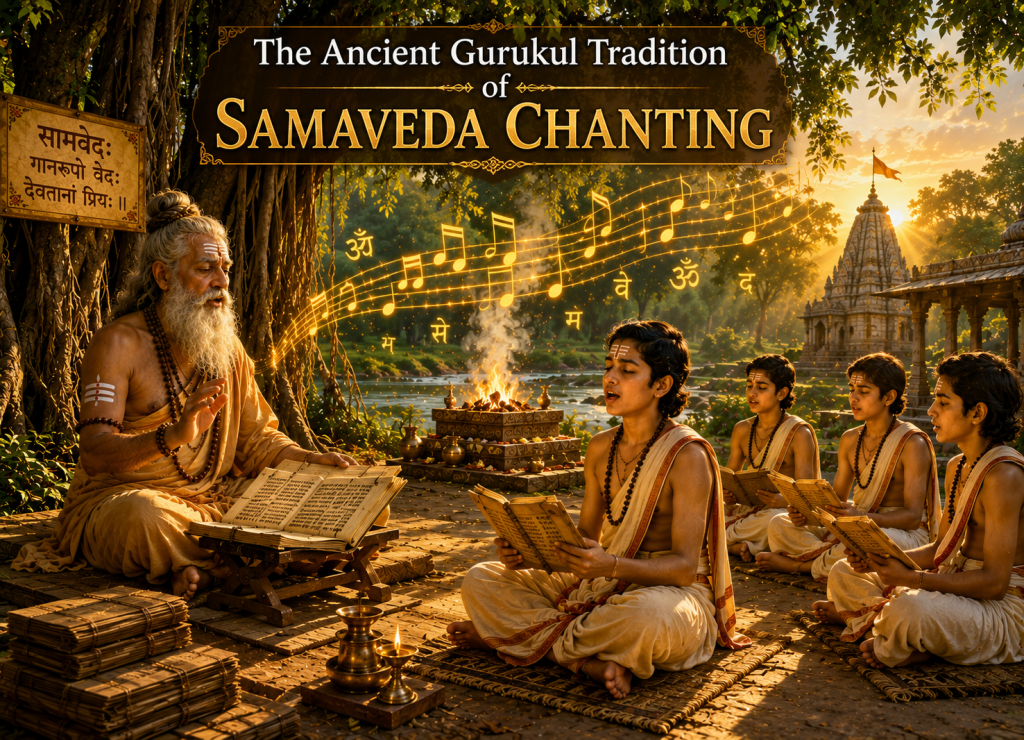
Ancient sages believed that the entire universe originated from divine vibration. Every sound carries energy, and sacred sounds possess the ability to influence both the mind and the environment.
When a mantra is chanted correctly, it is believed to:
- Calm the mind.
- Improve concentration.
- Purify thoughts.
- Inspire devotion.
- Create positive vibrations.
- Strengthen spiritual awareness.
For this reason, Vedic priests devoted years to mastering proper pronunciation, rhythm, and melody.
Music as a Form of Worship
The Samaveda presents music as one of the highest expressions of devotion.
Today, devotional singing is common in Hindu temples and homes, but its roots go back to the Samavedic tradition.
According to the Samaveda, singing sacred hymns:
- Expresses love for God.
- Brings joy to the worshipper.
- Creates a peaceful atmosphere.
- Unites communities in prayer.
- Helps focus the wandering mind.
This tradition later inspired forms of devotional music such as bhajans, kirtans, and temple chants across India.
The Importance of Faith
The Samaveda repeatedly emphasizes faith.
Faith does not mean blind belief. Instead, it means trusting the Divine while living a righteous life.
People who cultivate genuine faith are encouraged to:
- Practice honesty.
- Respect others.
- Perform their duties.
- Serve society.
- Seek wisdom.
- Develop humility.
Faith becomes meaningful only when reflected in daily actions.
Truth as the Foundation of Life
Truth occupies a central place in Vedic philosophy.
The Samaveda teaches that truth is eternal because it reflects the nature of the Divine.
A truthful person:
- Gains inner peace.
- Earns respect.
- Builds strong relationships.
- Lives without fear.
- Progresses spiritually.
Falsehood may provide temporary success, but lasting happiness comes from truth and integrity.
The Value of Self-Discipline
Spiritual progress requires discipline.
The Samaveda encourages people to control:
- Speech
- Thoughts
- Emotions
- Actions
- Desires
Self-discipline helps individuals avoid harmful habits and focus on higher goals.
Ancient students who studied the Samaveda lived disciplined lives, waking early, practicing chanting, serving their teachers, and dedicating themselves to learning.
Harmony with Nature
Nature occupies a sacred place in the Samaveda.
Many hymns praise natural forces such as:
- Fire
- Wind
- Rain
- Rivers
- Sunlight
- Dawn
- Sky
Rather than viewing nature merely as a resource, the Samaveda teaches that it should be respected as an expression of divine order.
This ancient perspective remains highly relevant today as humanity faces environmental challenges.
The scripture reminds us that protecting nature is also a spiritual responsibility.
The Concept of Rta (Cosmic Order)
An important idea reflected in the Samaveda is Rta, the universal order that governs the cosmos.
According to this principle:
- The sun rises according to Rta.
- Seasons change according to Rta.
- Rivers flow according to Rta.
- Moral actions also follow universal law.
Human beings achieve peace when they live in harmony with this cosmic order.
Truthfulness, justice, compassion, and discipline are ways of aligning ourselves with Rta.
Devotion and Knowledge
The Samaveda beautifully combines knowledge and devotion.
Knowledge helps people understand spiritual truth.
Devotion allows them to experience it.
Without knowledge, devotion may become superstition.
Without devotion, knowledge may become pride.
The Samaveda encourages a balanced path where wisdom and love grow together.
Inner Purification
The scripture repeatedly stresses that external rituals alone cannot bring lasting happiness.
True purification begins within.
A pure mind is developed through:
- Prayer
- Meditation
- Chanting
- Good deeds
- Truthfulness
- Compassion
- Self-control
When the heart becomes pure, divine wisdom naturally arises.
The Importance of Sacrifice
The Samaveda frequently refers to Yajna, or sacrifice.
Although ancient sacrifices involved sacred fire ceremonies, the deeper meaning extends beyond ritual offerings.
Modern spiritual teachers often explain sacrifice as:
- Giving up selfishness.
- Helping others.
- Sharing knowledge.
- Serving society.
- Acting without greed.
- Performing duties sincerely.
In this broader sense, every selfless action becomes a sacred offering.
Important Mantras in the Samaveda
Many of the Samaveda’s verses are adapted from the Rigveda and transformed into musical chants.
These mantras praise various deities and express gratitude, devotion, and reverence.
Some well-known themes include prayers for:
- Wisdom
- Strength
- Prosperity
- Peace
- Rain
- Health
- Victory over evil
- Divine guidance
The emphasis is not merely on obtaining material blessings but on cultivating a life aligned with righteousness.
Agni: The Divine Messenger
Agni, the sacred fire, is one of the most frequently praised deities.
Agni symbolizes:
- Light
- Purification
- Energy
- Transformation
- Divine presence
The fire altar represented the meeting place between humans and the Divine.
Offerings placed into the fire symbolized surrendering ego and selfishness.
Indra: Symbol of Courage
Many Samavedic hymns celebrate Indra, the king of the gods.
Indra represents:
- Strength
- Leadership
- Victory
- Protection
- Determination
His stories encourage people to overcome fear and confront life’s challenges with confidence.
Soma: Spiritual Inspiration
The Samaveda gives special importance to Soma.
Beyond its ritual significance, Soma symbolizes:
- Divine joy
- Inspiration
- Spiritual awakening
- Inner bliss
Many scholars interpret Soma as representing the higher states of consciousness experienced through devotion and meditation.
Surya: The Light of Knowledge
The Sun is celebrated not only as the giver of physical light but also as the source of spiritual illumination.
Surya represents:
- Knowledge
- Truth
- Vitality
- Wisdom
- Hope
Just as sunlight removes darkness, wisdom removes ignorance.
The Meaning of Chanting
Chanting is far more than singing beautiful melodies.
According to the Samaveda, chanting should involve:
- Correct pronunciation.
- Proper rhythm.
- Mental concentration.
- Devotional feeling.
- Respect for sacred tradition.
When these elements come together, chanting becomes a form of meditation.
Meditation Through Music
The Samaveda teaches that music itself can become meditation.
As the mind follows sacred melodies:
- Breathing naturally becomes calmer.
- Thoughts slow down.
- Emotional stress decreases.
- Attention becomes focused.
- The heart fills with devotion.
This explains why Vedic chanting continues to be practiced in many temples, monasteries, and spiritual centers around the world.
Influence on Indian Classical Music
Perhaps the greatest cultural contribution of the Samaveda is its influence on Indian music.
Musicologists widely regard the Samaveda as one of the earliest foundations of India’s rich musical heritage.
Many later developments—including melodic patterns, disciplined vocal training, and the close relationship between music and spirituality—reflect ideas found in the Samavedic tradition.
Although modern classical music has evolved over centuries, its spiritual roots can be traced back to these ancient chants.
Relevance in Modern Life
Although composed thousands of years ago, the teachings of the Samaveda remain timeless.
Its message encourages people to:
- Live honestly.
- Respect nature.
- Develop inner peace.
- Practice compassion.
- Cultivate self-discipline.
- Appreciate the power of music.
- Balance knowledge with devotion.
- Seek harmony rather than conflict.
These principles continue to inspire spiritual seekers across the world.
Lessons We Can Learn from the Samaveda
Modern readers can apply the wisdom of the Samaveda in everyday life.
Some practical lessons include:
- Begin each day with gratitude.
- Speak truthfully.
- Use music to calm the mind.
- Respect nature and all living beings.
- Practice kindness and generosity.
- Learn continuously throughout life.
- Perform work sincerely without selfish motives.
- Develop patience during difficult times.
- Remember that spiritual growth begins within.
These timeless values make the Samaveda not only a sacred scripture but also a practical guide for ethical living.
The Samaveda’s Influence on Hindu Worship
The Samaveda has profoundly influenced the way Hindus worship. In ancient Vedic rituals, hymns were not simply recited—they were sung with carefully preserved melodies. This transformed worship into a deeply spiritual and emotional experience.
Many traditions seen in Hindu temples today reflect the influence of the Samaveda, including:
- Devotional singing during festivals
- Morning and evening temple prayers
- Chanting during fire sacrifices (Yajnas)
- Sacred recitation by priests
- Musical offerings to deities
- Community devotional gatherings
Although modern worship includes many practices that developed later, the Samavedic ideal of expressing devotion through music remains central.
Foundation of Indian Classical Music
One of the greatest contributions of the Samaveda is its role in the development of Indian music.
Long before formal systems of classical music emerged, Samavedic priests were already using structured melodies, pitch variations, and disciplined vocal techniques in religious ceremonies.
Many scholars consider the Samaveda to be one of the earliest known sources of organized musical expression.
Its legacy can be seen in:
- Classical vocal traditions
- Temple music
- Devotional songs
- Bhajans
- Kirtans
- Sacred chanting
- Traditional music education
While Indian classical music has evolved over many centuries, its earliest spiritual inspiration can be traced back to the melodic chants of the Samaveda.
Connection with the Upanishads
The Samaveda is closely associated with several important Upanishads, which represent the philosophical culmination of Vedic thought.
Among the most significant are:
Chandogya Upanishad
The Chandogya Upanishad is one of the oldest and most influential Upanishads.
It explores profound spiritual ideas such as:
- The nature of the soul (Atman)
- The ultimate reality (Brahman)
- Meditation
- Ethical living
- Self-realization
- The unity of all existence
The famous teaching “Tat Tvam Asi” (“Thou Art That”) appears in this Upanishad, emphasizing the essential unity between the individual self and the ultimate reality.
Kena Upanishad
The Kena Upanishad also belongs to the Samavedic tradition.
It asks profound questions such as:
- What powers the mind?
- Who enables speech?
- What is the source of consciousness?
- Who directs the senses?
Rather than offering simple answers, it encourages seekers to discover the Divine through deep reflection and direct spiritual experience.
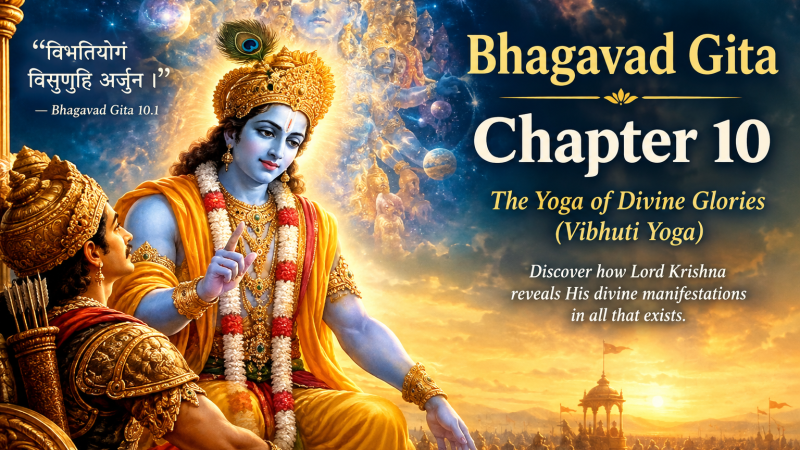
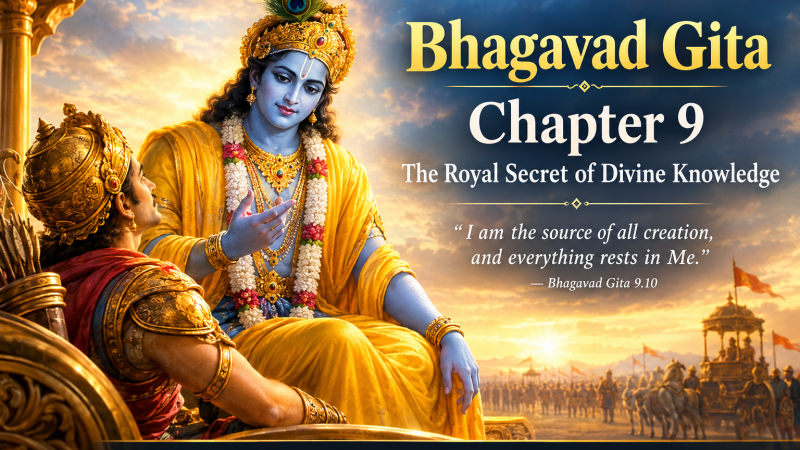
The Bhagavad Gita and the Samaveda
The Samaveda receives special recognition in the Bhagavad Gita.
In Chapter 10, where Lord Krishna describes His divine manifestations, He declares:
“Among the Vedas, I am the Samaveda.”
This statement highlights the exceptional spiritual importance of the Samaveda within Hindu tradition.
Many commentators explain that Krishna refers to the Samaveda because of its beauty, devotion, and ability to elevate the human heart through sacred music.
Preservation Through Oral Tradition
One of humanity’s greatest intellectual achievements is the preservation of the Vedas through oral transmission.
For centuries, the Samaveda survived without printed books.
Teachers carefully instructed students using methods that emphasized:
- Perfect pronunciation
- Correct rhythm
- Exact melody
- Accurate accents
- Repeated memorization
- Daily practice
This system was so precise that many modern scholars have praised it as one of the most reliable oral traditions in world history.
Even today, trained Vedic scholars continue this ancient tradition.
The Samaveda in Modern Research
The Samaveda is studied by scholars around the world for many reasons.
Researchers in different fields examine it from unique perspectives.
Historians
They study the Samaveda to understand ancient Indian civilization.
Linguists
They analyze its ancient Sanskrit language and grammar.
Musicologists
They investigate its contribution to the history of music.
Philosophers
They explore its spiritual teachings.
Religious scholars
They compare its ideas with other sacred traditions.
As a result, the Samaveda remains an important subject in universities and research institutions across the globe.
Lessons for Modern Society
Although thousands of years old, the Samaveda offers timeless guidance for modern life.
Practice Inner Peace
Modern life often brings stress and anxiety.
The Samaveda reminds us that peaceful thoughts create a peaceful life.
Prayer, meditation, and sacred music can help calm the mind.
Respect Nature
The Samaveda reveres the sun, wind, fire, rivers, and earth as sacred manifestations of divine order.
Its teachings encourage environmental responsibility.
Protecting nature becomes both an ethical and spiritual duty.
Live Truthfully
Truth remains one of the scripture’s highest ideals.
Honesty builds trust, strengthens relationships, and supports a stable society.
Balance Knowledge and Devotion
Education is valuable.
Devotion is equally important.
The Samaveda teaches that wisdom becomes complete when learning is combined with humility and compassion.
Value Music
Music is more than entertainment.
It can inspire, heal, unite communities, and elevate the human spirit.
The Samaveda reminds us to use music as a force for goodness.
Amazing Facts About the Samaveda
Here are some fascinating facts about this remarkable scripture.
1. It is called the Veda of Music.
Almost every hymn is intended to be sung rather than spoken.
2. Most verses come from the Rigveda.
However, the Samaveda rearranges them into musical forms specifically designed for chanting.
3. It inspired Indian classical music.
Many scholars consider it the earliest foundation of India’s musical heritage.
4. Only a few branches survive.
Ancient texts mention many more schools, but today the Kauthuma, Ranayaniya, and Jaiminiya traditions are the principal surviving recensions.
5. The Udgatri priest specialized in singing the Samaveda.
His role was essential in major Vedic sacrifices.
6. It preserves one of the world’s oldest musical traditions.
The melodies have been transmitted through continuous oral teaching for thousands of years.
7. It influenced Hindu devotional traditions.
Temple chanting, bhajans, and many forms of sacred music reflect its enduring legacy.
8. It emphasizes both knowledge and devotion.
The Samaveda teaches that wisdom should be expressed through sincere spiritual practice.
Frequently Asked Questions (FAQs)
What is the Samaveda?
The Samaveda is one of the four sacred Vedas of Hinduism. It is primarily a collection of hymns arranged for melodic chanting during Vedic rituals and is known as the Veda of Music.
Why is the Samaveda important?
It preserves one of the oldest traditions of sacred music, guides Vedic worship, and has profoundly influenced Hindu spirituality and Indian classical music.
How many verses are in the Samaveda?
The Samaveda contains approximately 1,875 verses, though the exact count varies slightly among different recensions. Most of these verses are adapted from the Rigveda.
Who composed the Samaveda?
According to Hindu tradition, the Samaveda is Apaurusheya, meaning it was not composed by any human author. Ancient sages (Rishis) received this eternal knowledge through divine revelation, and Veda Vyasa later organized it into its present form.
What language is the Samaveda written in?
The Samaveda is written in Vedic Sanskrit, an ancient form of Sanskrit that predates Classical Sanskrit.
What is the main teaching of the Samaveda?
Its central teaching is that sacred sound, devotion, truth, self-discipline, and harmony with the Divine lead to spiritual growth and inner peace.
Which priest used the Samaveda?
The Udgatri priest was responsible for singing the Samavedic hymns during Vedic sacrifices.
Which Upanishads belong to the Samaveda?
The Chandogya Upanishad and the Kena Upanishad are among the most important Upanishads associated with the Samaveda.
Is the Samaveda still relevant today?
Yes. Its teachings on truth, devotion, music, self-discipline, and respect for nature continue to inspire spiritual seekers, scholars, musicians, and devotees around the world.
Conclusion
The Samaveda is one of humanity’s oldest and most treasured spiritual texts. More than a collection of hymns, it is a celebration of the transformative power of sacred music. By turning prayer into melody, it created a unique path in which devotion, knowledge, and discipline unite.
Its influence extends from ancient Vedic fire altars to modern temples, from the oral traditions of dedicated scholars to the rich heritage of Indian classical music. The Samaveda also provides the foundation for profound philosophical works such as the Chandogya Upanishad and the Kena Upanishad, demonstrating that its legacy reaches beyond ritual into the deepest questions of existence.
In an age of constant distraction, the Samaveda offers timeless guidance. It teaches us to speak truthfully, respect nature, cultivate self-discipline, and seek harmony through sincere devotion. Above all, it reminds us that music can be more than art—it can become prayer, meditation, and a bridge between the human soul and the Divine.
Even after thousands of years, the melodies of the Samaveda continue to inspire hearts and minds, proving that genuine wisdom never loses its relevance. Its sacred chants remain a living testament to the enduring spiritual heritage of Hinduism and to the universal human search for peace, truth, and enlightenment.















2 thoughts on “Samaveda: The Veda of Music, Chanting, and Divine Wisdom”