Meenakshi Amman Temple Travel Guide – A Complete Journey Through Madurai’s Sacred Wonder
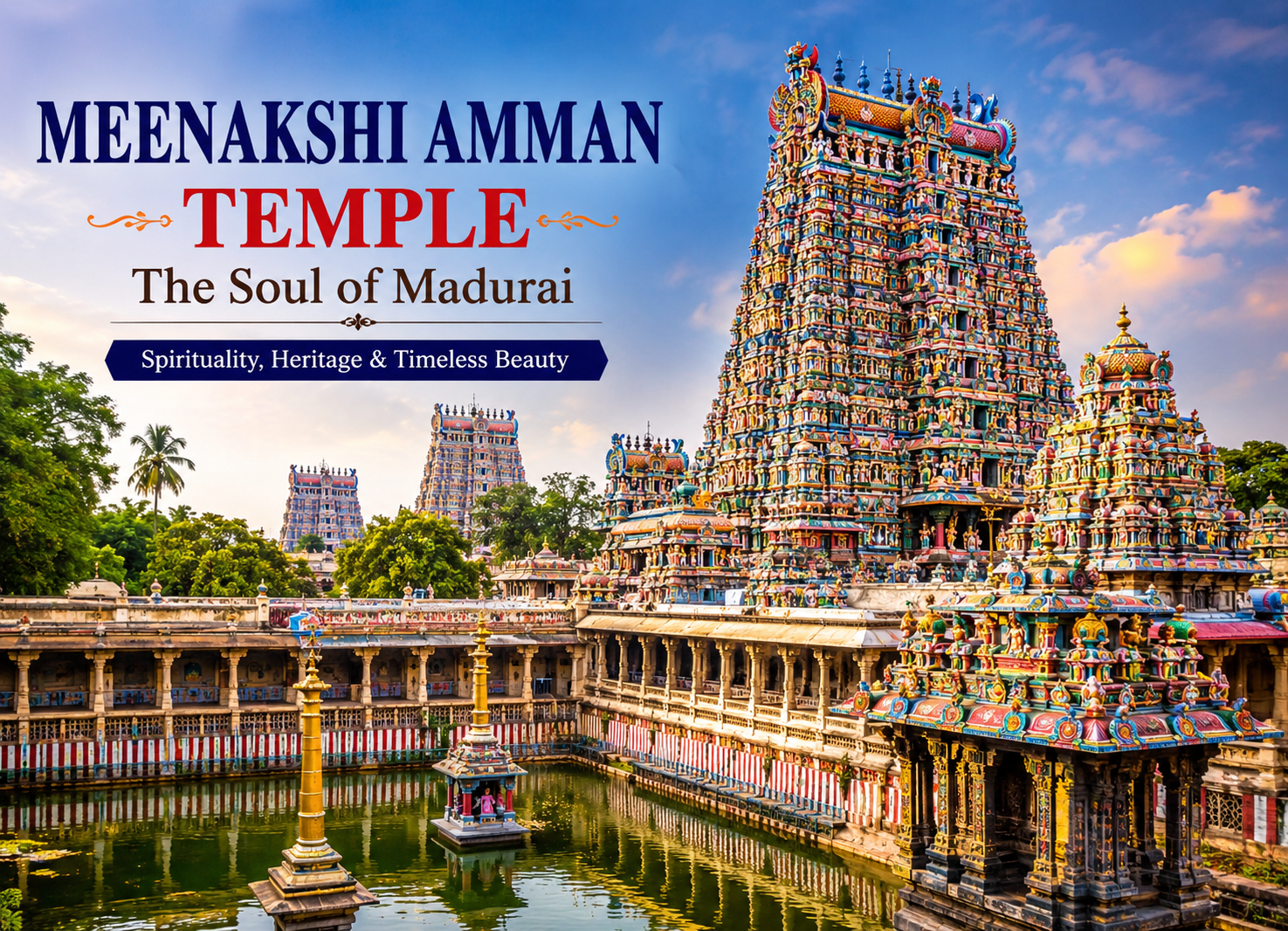
If there is one destination in South India where spirituality, history, culture, architecture, and vibrant local life blend seamlessly, it is the Meenakshi Amman Temple in Madurai, Tamil Nadu. Every traveler who steps inside this magnificent temple quickly realizes that this is much more than a place of worship—it is the beating heart of one of India’s oldest living cities.
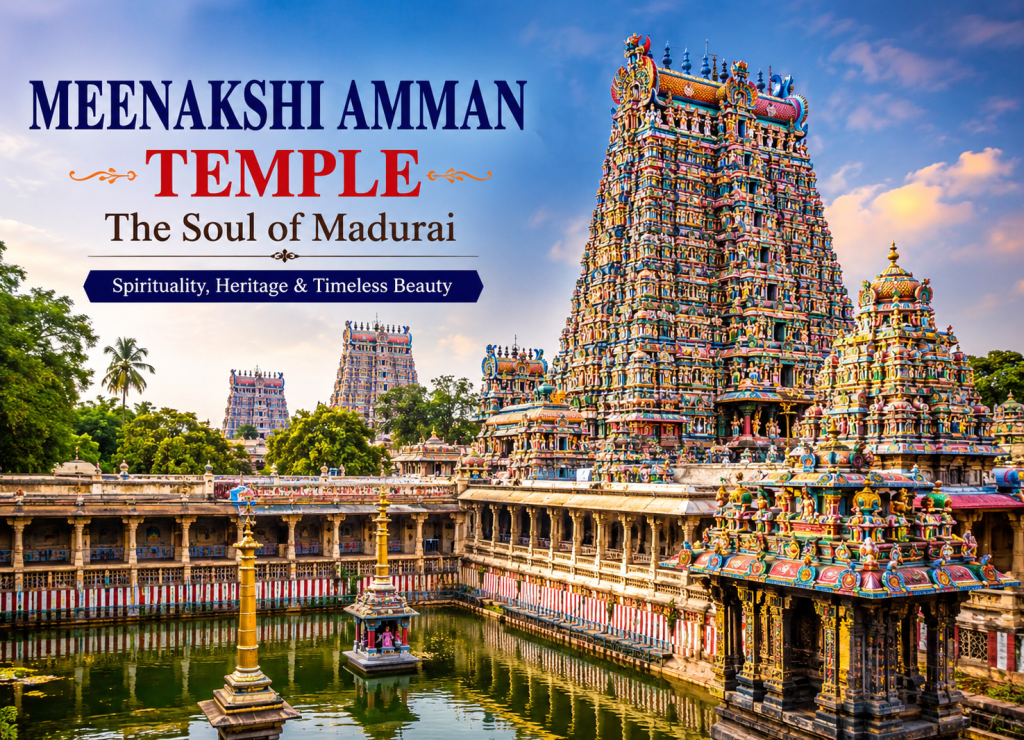
Towering colorful gateways, thousands of intricate sculptures, centuries-old legends, sacred rituals, bustling temple streets, delicious South Indian cuisine, and warm hospitality make this destination unforgettable.
Whether you’re a spiritual seeker, history enthusiast, photographer, architecture lover, or simply someone searching for extraordinary travel experiences, Meenakshi Temple deserves a top place on your India travel bucket list.
This guide covers everything a traveler needs to know before visiting this iconic destination.
Why Visit Meenakshi Amman Temple?
The Meenakshi Amman Temple is among India’s most celebrated Hindu temples and one of the finest examples of Dravidian architecture.
Millions of pilgrims and tourists visit every year to witness:
- Magnificent colorful gopurams
- Ancient temple corridors
- Thousands of carved sculptures
- Rich Tamil traditions
- Daily religious ceremonies
- Historical significance
- Vibrant local markets
- Incredible South Indian food
Unlike many historical monuments that have become museums, this temple remains a living spiritual center where traditions continue every single day.
Where is Meenakshi Amman Temple?
The temple is located in the center of Madurai, one of the oldest continuously inhabited cities in India, in the state of Tamil Nadu.
Madurai is often called the Athens of the East because of its rich cultural heritage and ancient civilization.
The temple dominates the city’s layout, with roads and markets naturally expanding around it over centuries.
The Fascinating History
The origins of the temple date back over two thousand years, although the current magnificent structure largely belongs to the 16th and 17th centuries.
Historical records suggest that earlier temples existed here long before the modern complex was rebuilt.
After invasions during medieval times caused significant destruction, the temple underwent extensive reconstruction under the Nayak rulers, especially King Tirumala Nayak.
Their vision transformed the temple into one of India’s greatest architectural masterpieces.
Today, it remains one of the finest examples of South Indian temple architecture.
The Beautiful Legend of Goddess Meenakshi
According to Hindu mythology, King Malayadhwaja Pandya and Queen Kanchanamalai performed intense prayers seeking a child.
Their prayers were answered when Goddess Parvati herself was born as a daughter named Meenakshi, meaning “fish-eyed goddess.”
She was born with three breasts, and a divine prophecy declared that the third breast would disappear when she met her future husband.
As Meenakshi grew into a fearless warrior queen, she conquered many kingdoms before finally meeting Lord Shiva.
The prophecy came true instantly.
Lord Shiva arrived in Madurai as Sundareswarar, married Meenakshi in a grand celestial wedding, and together they became the divine rulers of Madurai.
This sacred marriage continues to be celebrated every year during one of Tamil Nadu’s largest religious festivals.
First Impression: Entering the Temple
Walking toward Meenakshi Temple is an unforgettable experience.
The surrounding streets are alive with:
- Flower sellers
- Temple bells
- Incense fragrance
- Traditional music
- Souvenir shops
- Brass lamps
- Silk sarees
- Religious items
- Fresh jasmine garlands
As you lift your eyes, the enormous colorful towers dominate the skyline.
The excitement builds with every step.
The Stunning Gopurams
Perhaps the most recognizable feature of Meenakshi Temple is its towering gopurams.
The temple has fourteen massive gateway towers.
Each tower is covered with thousands of brightly painted sculptures depicting:
- Hindu gods
- Goddesses
- Demons
- Saints
- Mythological animals
- Celestial beings
Every sculpture tells a story from Hindu mythology.
The tallest tower reaches around 170 feet, creating one of the most spectacular skylines in India.
The intricate craftsmanship amazes visitors regardless of religious background.
The Temple Complex
The temple covers approximately 14 acres.
Inside lies a fascinating maze of:
- Mandapas (pillared halls)
- Shrines
- Sacred tanks
- Corridors
- Gardens
- Carved pillars
- Temple kitchens
- Ancient pathways
Every corner offers something new to discover.
Even after several hours, visitors continue finding beautiful architectural details.
Hall of Thousand Pillars
One of the temple’s greatest attractions is the famous Hall of Thousand Pillars.
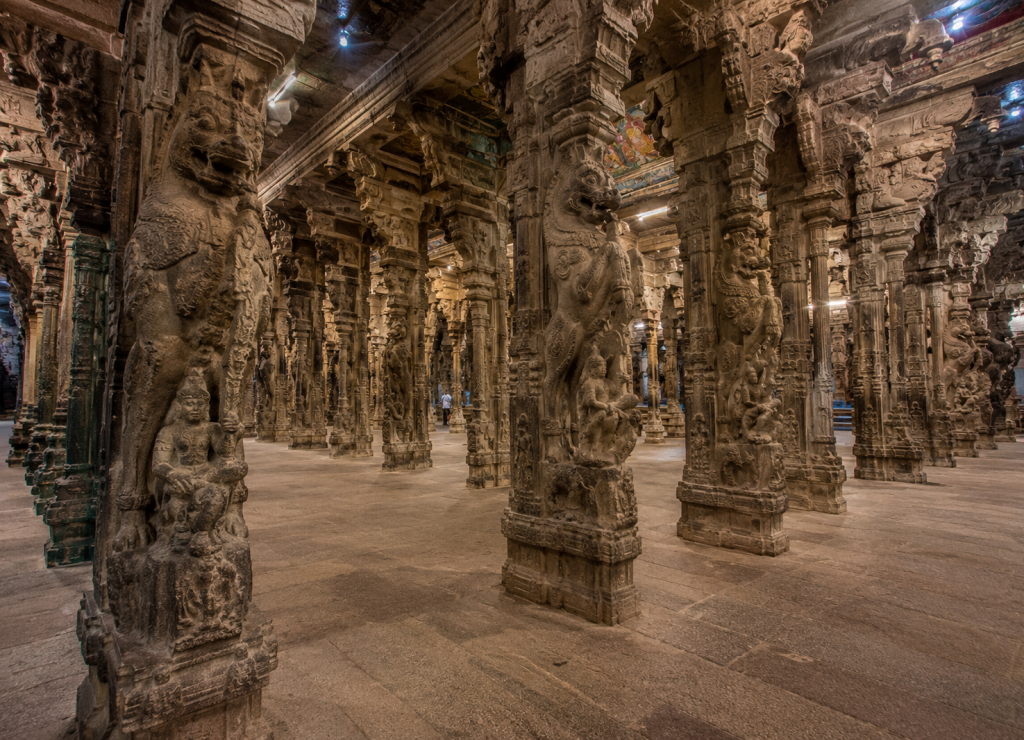
Although the actual number differs slightly, the hall creates an astonishing visual effect.
Each pillar features unique carvings.
Walking through this hall feels like stepping into an ancient stone museum where every sculpture tells a different story.
The symmetry, precision, and craftsmanship remain remarkable centuries later.
Photography lovers will especially appreciate this area.
The Sacred Golden Lotus Tank
Known as Porthamarai Kulam, the Golden Lotus Tank occupies a peaceful corner inside the temple.
Legend says that no fish or aquatic creatures live in its waters because Lord Shiva blessed it for spiritual purposes.
Pilgrims often pause here for quiet reflection before visiting the inner sanctum.
The calm atmosphere provides a welcome contrast to the busy temple corridors.
Spiritual Atmosphere
Unlike many tourist attractions, Meenakshi Temple is deeply alive with daily worship.
Throughout the day visitors witness:
- Priests performing rituals
- Devotees chanting prayers
- Temple bells ringing
- Sacred lamps glowing
- Traditional music
- Offerings of flowers and fruits
Even non-Hindu visitors often describe the atmosphere as peaceful and uplifting.
Respectful behavior is appreciated throughout the complex.
Architecture That Leaves You Speechless
Every inch of the temple showcases extraordinary craftsmanship.
Look closely and you’ll notice:
- Stone elephants
- Dancing Shiva sculptures
- Mythological creatures
- Floral carvings
- Ornamental ceilings
- Painted corridors
- Decorative columns
The colorful exterior contrasts beautifully with the cool stone interiors.
Every visit reveals details easily missed the first time.
Best Time to Visit
The ideal months are:
October to March
The weather remains pleasant for sightseeing.
Early mornings offer:
- Cooler temperatures
- Smaller crowds
- Peaceful photography
- Beautiful sunlight
Evenings provide:
- Illuminated towers
- Temple ceremonies
- Vibrant atmosphere
- Pleasant temperatures
Festivals Worth Experiencing
If your schedule allows, visit during the spectacular Chithirai Festival.
Highlights include:
- Divine wedding ceremony
- Temple processions
- Decorated chariots
- Traditional music
- Cultural performances
- Thousands of devotees
The city transforms into one enormous celebration.
Accommodation should be booked months in advance.
Photography Tips
Photography inside certain sacred areas may be restricted.
Always follow temple rules.
Excellent photography locations include:
- Outside the gopurams
- Temple streets
- Evening lighting
- Market entrances
- Nearby rooftop cafés
- Golden hour before sunset
Wide-angle lenses work especially well.
Dress Code
Visitors should wear modest clothing.
Recommended:
- Covered shoulders
- Full-length trousers
- Long skirts
- Traditional Indian attire
- Comfortable footwear
Shoes must be removed before entering.
Carrying socks helps during hot afternoons because temple stones become very warm.
Entry Information
General temple entry is free.
Some areas, museums, or special darshan queues may require separate tickets.
Visitors should check the latest guidelines before arrival.
How to Reach Meenakshi Temple
By Air
Madurai Airport connects with major Indian cities including:
- Chennai
- Bengaluru
- Hyderabad
- Mumbai
- Delhi
The airport is about 12 km from the temple.
By Train
Madurai Junction is one of South India’s busiest railway stations.
The temple is only a short auto-rickshaw ride away.
By Road
Madurai enjoys excellent road connectivity with:
- Chennai
- Coimbatore
- Trichy
- Rameswaram
- Kanyakumari
- Bengaluru
Luxury buses operate regularly.
Local Food Every Traveler Should Try
A visit to Madurai is incomplete without sampling authentic Tamil cuisine.
Must-try dishes include:
- Idli
- Dosa
- Pongal
- Medu Vada
- Filter Coffee
- Jigarthanda
- Banana Leaf Meals
- Kari Dosa
- Parotta
- Sweet Pongal
Street food around the temple is equally exciting.
Shopping Around the Temple
The surrounding markets are perfect for souvenir shopping.
Popular purchases include:
- Brass statues
- Temple jewelry
- Silk sarees
- Cotton textiles
- Wooden carvings
- Handmade toys
- Incense
- Kumkum
- Sandalwood products
- Traditional handicrafts
Bargaining is common in many shops.
Nearby Attractions
Extend your Madurai trip by visiting:
- Thirumalai Nayakkar Mahal
- Gandhi Memorial Museum
- Vandiyur Mariamman Teppakulam
- Alagar Kovil
- Pazhamudircholai
- Samanar Hills
- Vaigai River
Each destination offers unique cultural experiences.
Helpful Travel Tips
- Visit early morning for fewer crowds.
- Carry drinking water.
- Keep cash for small purchases.
- Respect temple customs.
- Maintain silence near sanctums.
- Avoid weekends if you prefer peaceful sightseeing.
- Hire a knowledgeable guide to understand the mythology.
- Wear comfortable walking shoes until reaching the entrance.
Suggested Half-Day Itinerary
6:30 AM – Breakfast in Madurai
7:30 AM – Reach the temple
8:00 AM – Explore the gopurams
9:00 AM – Visit Golden Lotus Tank
10:00 AM – Hall of Thousand Pillars
11:00 AM – Temple museum
12:00 PM – Shopping nearby
1:00 PM – Authentic South Indian lunch
Why Meenakshi Temple Captivates Every Traveler
Many monuments impress with their size.
Some amaze with history.
Others inspire through spirituality.
Meenakshi Amman Temple does all three simultaneously.
It is a place where mythology becomes architecture, devotion becomes daily life, and every sculpture whispers stories that have survived centuries.
Whether you come seeking blessings, artistic inspiration, cultural immersion, or unforgettable photography, the temple offers an experience that lingers long after you’ve returned home.
Madurai’s timeless energy, colorful traditions, welcoming people, and extraordinary heritage make every journey memorable.
If South India is on your travel list, don’t simply visit Meenakshi Amman Temple—slow down, observe the rituals, explore the markets, taste the local cuisine, and let the city’s ancient spirit reveal itself one beautiful moment at a time.
Final Thought: A journey to Meenakshi Amman Temple is more than a sightseeing trip. It is a walk through over two thousand years of living history, faith, art, and culture. Whether you’re a first-time visitor or returning once again, Madurai’s greatest treasure never fails to leave travelers with lasting memories and a deep appreciation for India’s incredible heritage.