The Untold Story of the World’s Richest Hindu Temple
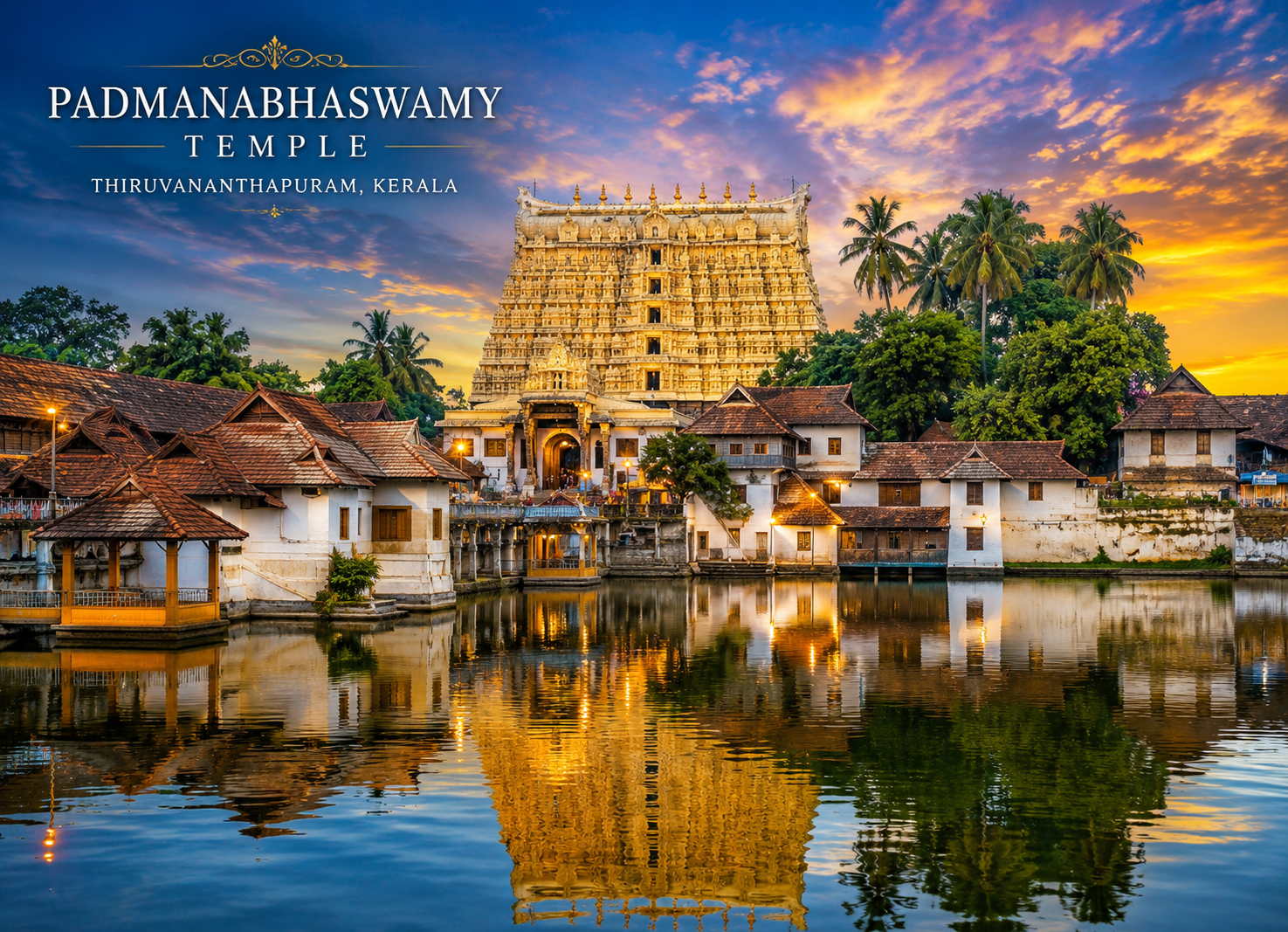
Hidden in the heart of Kerala’s capital city lies a temple that has captivated historians, devotees, archaeologists, treasure hunters, and the global media alike. The Padmanabhaswamy Temple, dedicated to Lord Vishnu, is not merely a place of worship—it is a living symbol of faith, royal devotion, ancient wealth, and enduring mystery.
For centuries, stories circulated about unimaginable treasures hidden beneath the temple’s sacred halls. Many dismissed these tales as legends. However, when several underground vaults were opened in the 21st century, the world discovered that the legends were not exaggerations. Vast quantities of gold, diamonds, precious gems, rare artifacts, and ancient coins were found, making Padmanabhaswamy Temple widely regarded as the richest Hindu temple in the world.
Yet beyond the staggering wealth lies a far more fascinating story—one involving kings who ruled as servants of God, secret vaults protected by tradition, centuries of devotion, and mysteries that remain unsolved to this day.
This is the untold story of the world’s richest Hindu temple.
The Sacred Home of Lord Padmanabha
The Padmanabhaswamy Temple is located in Thiruvananthapuram, Kerala. The city itself derives its name from Lord Anantha Padmanabha, meaning “The Lord Reclining on the Serpent Anantha.”
The temple is dedicated to Lord Vishnu in his cosmic reclining form. The deity is depicted resting on the thousand-headed serpent Anantha, symbolizing eternity and the infinite universe.
One of the temple’s most remarkable features is the gigantic idol of Lord Vishnu, which stretches across the sanctum. Devotees must view the deity through three separate doors to see the face, torso, and feet.
The temple is regarded as one of the 108 Divya Desams, the most sacred Vishnu temples praised by the Alvars, the ancient Tamil saint-poets.
A Temple Older Than Recorded History
While the current structure reflects the architectural style of medieval Kerala, the temple’s origins stretch far deeper into history.
Ancient scriptures, local traditions, and historical references suggest that the shrine existed thousands of years ago. References to the temple appear in various literary works and devotional hymns dating back many centuries.
Historians believe the temple underwent multiple renovations and expansions under different rulers. However, much of its earliest history remains shrouded in mystery.
The lack of complete historical records has only added to the temple’s aura. Some traditions even claim that the temple’s origins reach back to the age of the Mahabharata.
Whether these claims are literal or symbolic, there is no doubt that Padmanabhaswamy Temple has been a major center of devotion for a very long time.
The Royal Family That Served a Deity
One of the most unique aspects of the temple’s history involves the royal family of Travancore.
In 1750, Maharaja Anizham Thirunal Marthanda Varma made a decision that would change the destiny of the kingdom forever.
Instead of declaring himself the ruler of Travancore, he dedicated the entire kingdom to Lord Padmanabha in a ceremony known as Thrippadidanam.
From that moment onward, the king ruled not as a monarch but as “Padmanabha Dasa,” meaning “Servant of Lord Padmanabha.”
This extraordinary act transformed the relationship between the temple and the state. The kingdom’s wealth was viewed as belonging to the deity rather than the royal family.
Successive rulers continued this tradition, strengthening the temple’s status and contributing significantly to its treasury.
How Did the Temple Become So Rich?
The immense wealth of Padmanabhaswamy Temple did not appear overnight.
Several factors contributed to its extraordinary accumulation of treasure.
Royal Donations
The rulers of Travancore made generous offerings to the temple over many centuries. Gold ornaments, crowns, jewels, ceremonial weapons, and valuable artifacts were regularly donated.
Merchant Contributions
Kerala’s strategic position along ancient maritime trade routes attracted merchants from Arabia, Europe, China, and Southeast Asia.
Successful traders frequently offered a portion of their wealth to the temple as an act of devotion and gratitude.
Pilgrim Offerings
Millions of devotees have visited the temple over centuries. Even small offerings made consistently across generations contributed to the growth of the treasury.
Cultural Preservation
Unlike many treasures that were melted down, sold, or lost during periods of conflict, much of the temple’s wealth remained carefully preserved within secure vaults.
As a result, priceless objects accumulated over hundreds of years.
The Discovery That Shocked the World
For generations, stories circulated about hidden chambers beneath the temple.
Few people outside the temple administration knew the true extent of what lay inside.
In 2011, following legal proceedings concerning temple administration, an inventory of several underground vaults was conducted.
What investigators found astonished the world.
Inside the chambers were:
- Gold coins from different civilizations
- Massive gold necklaces
- Precious diamonds and rubies
- Golden idols
- Rare antiques
- Ornate crowns
- Sacred ornaments used in rituals
- Gold statues and ceremonial objects
Some items dated back hundreds of years, while others appeared even older.
The sheer quantity of treasure was beyond anything most people had imagined.
News of the discovery quickly spread across the globe, transforming Padmanabhaswamy Temple into an international sensation.
The Mystery of Vault B
Among all the temple’s hidden chambers, none is more mysterious than Vault B.
Unlike other vaults that were inventoried, Vault B remains unopened.
Temple traditions regard this chamber as highly sacred and protected by divine powers.
According to local beliefs, opening the vault without proper spiritual authority could bring misfortune.
The chamber’s massive iron doors contain no obvious locks or handles, adding to the intrigue.
Legends claim the vault is protected by mystical forces and ancient rituals.
While historians and rationalists seek practical explanations, devotees view the chamber with deep reverence.
Because of ongoing legal, religious, and cultural concerns, Vault B remains sealed.
Its contents continue to fuel speculation worldwide.
Could it contain even greater treasures?
Could it preserve ancient manuscripts?
Or does it hold sacred relics never intended to be revealed?
No one knows for certain.
Architectural Marvel Beyond the Treasure
Although the treasure receives significant attention, the temple itself is a masterpiece of architecture.
The seven-tiered gopuram rises majestically above the city skyline.
Intricate carvings adorn the walls, pillars, and corridors.
The temple’s long pillared corridors are considered among the most beautiful examples of traditional South Indian architecture.
Granite columns display extraordinary craftsmanship that has survived centuries.
The fusion of Kerala and Dravidian architectural styles creates a unique visual identity that distinguishes the temple from others across India.
For many devotees, the spiritual atmosphere is far more valuable than the gold hidden beneath its floors.
Spiritual Wealth Greater Than Material Wealth
The fascination surrounding the temple often focuses on its treasure.
Yet devotees argue that its true wealth is spiritual rather than material.
Every day, rituals continue much as they have for centuries.
Priests perform sacred ceremonies.
Devotees gather to seek blessings.
Ancient traditions are preserved with remarkable dedication.
The temple serves as a reminder that faith can unite generations across vast stretches of time.
For believers, the gold is merely an offering made to the Divine.
The true treasure is devotion itself.
Myths and Legends Surrounding the Temple
Like many ancient sacred sites, Padmanabhaswamy Temple is surrounded by fascinating legends.
One story tells of a sage who witnessed Lord Vishnu appearing as a divine child.
Another legend describes miraculous events that led to the establishment of the shrine.
Stories of hidden tunnels, secret passages, and undiscovered chambers continue to circulate among devotees and historians alike.
While evidence for such tales varies, they contribute to the temple’s enduring mystique.
The combination of documented history and sacred legend creates a powerful narrative that continues to inspire curiosity.
Why the Temple Fascinates the Modern World
In an age of technology and instant information, Padmanabhaswamy Temple represents something increasingly rare: mystery.
Even after extensive study, questions remain unanswered.
How much treasure still lies within the temple?
What secrets are hidden in Vault B?
How did such immense wealth remain preserved for centuries?
What forgotten stories are connected to the artifacts stored inside?
These questions attract historians, researchers, and spiritual seekers from around the world.
The temple demonstrates that even in the modern era, some mysteries continue to endure.
Lessons from the World’s Richest Hindu Temple
The story of Padmanabhaswamy Temple offers several important lessons.
It highlights the importance of preserving cultural heritage.
It demonstrates how faith can shape history and governance.
It reveals the extraordinary generosity of countless devotees across generations.
Most importantly, it reminds us that wealth is not measured solely by gold and jewels.
The preservation of tradition, devotion, wisdom, and spirituality may ultimately be far more valuable.
Conclusion
Padmanabhaswamy Temple is far more than the world’s richest Hindu temple. It is a symbol of devotion, history, mystery, and cultural continuity.
Its treasures have captured global attention, but its true significance lies in the centuries of faith that made those treasures possible.
The unopened Vault B continues to spark speculation, while the temple’s magnificent architecture and sacred traditions inspire millions.
As long as questions remain unanswered, the temple will continue to stand at the intersection of history and mystery—guarding secrets that may never be fully revealed.
And perhaps that is exactly what makes the story of Padmanabhaswamy Temple so extraordinary.