Khajuraho: India’s Most Stunning Temple Mystery You Must Visit Once
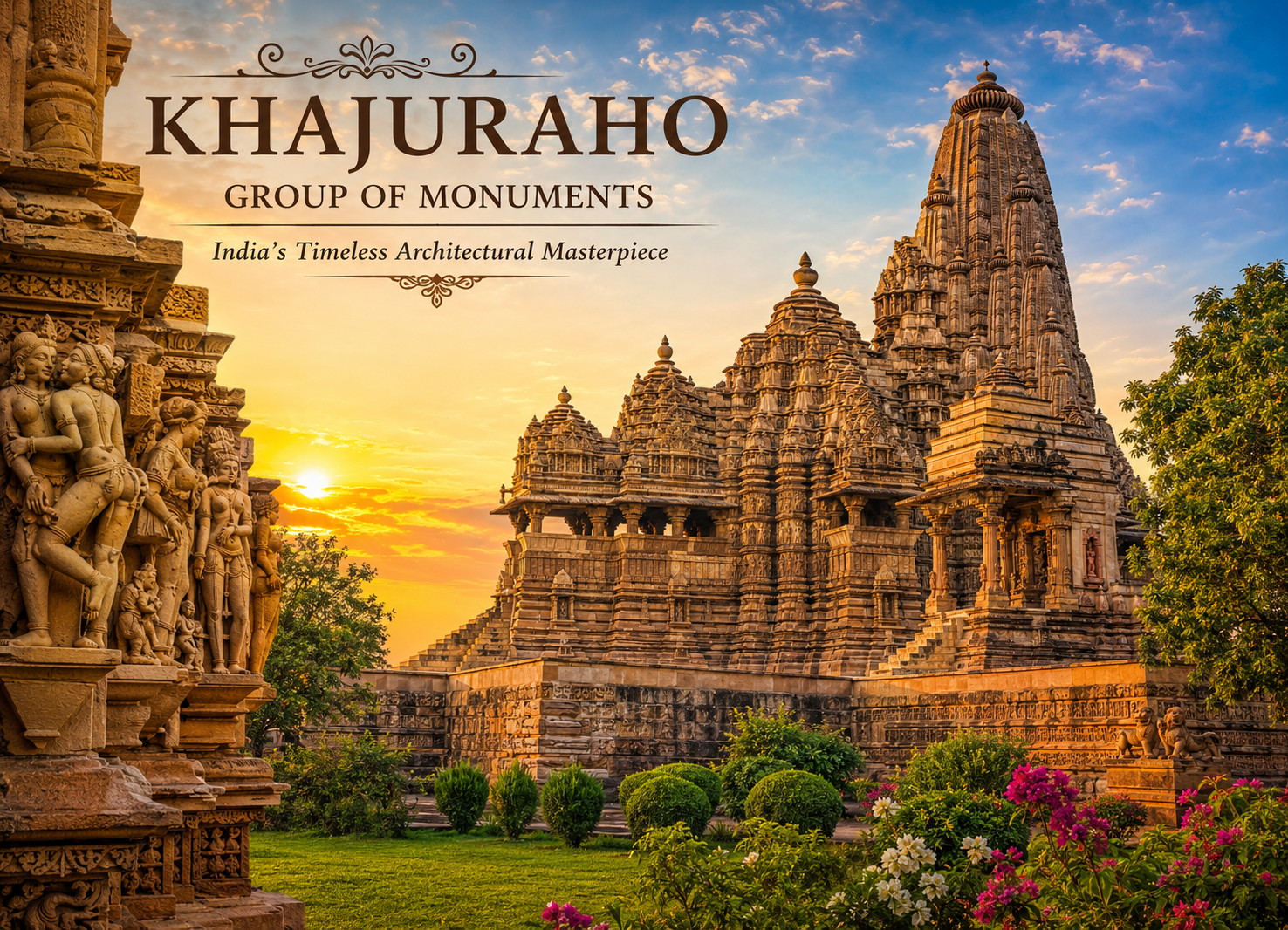
Imagine walking through a peaceful landscape where every stone tells a thousand-year-old story. As the morning sunlight touches intricately carved sandstone temples, every sculpture seems to come alive. Birds sing gently, the breeze carries whispers of history, and before you stands one of India’s greatest architectural masterpieces—the Khajuraho Group of Monuments.
A visit to Khajuraho is much more than sightseeing. It is a journey into India’s glorious past, where spirituality, architecture, art, philosophy, and everyday life blend seamlessly into magnificent stone sculptures.
Whether you are a history enthusiast, architecture lover, photographer, pilgrim, backpacker, or family traveler, Khajuraho promises memories that last forever.
Let’s explore everything you need to know before planning your unforgettable journey.
Where is Khajuraho?
Khajuraho Group of Monuments is located in the Madhya Pradesh, approximately:
- 175 km from Jhansi
- 390 km from Bhopal
- 620 km from Delhi
Today, Khajuraho is one of India’s most visited UNESCO World Heritage Sites and welcomes visitors from across the globe.
Why is Khajuraho So Famous?
Khajuraho is renowned for:
- UNESCO World Heritage status
- Incredible Nagara-style temple architecture
- Intricate sandstone carvings
- Spiritual symbolism
- Beautiful gardens
- Stunning sunrise and sunset views
- Rich Hindu and Jain heritage
- World-famous sculptures
Contrary to popular belief, the famous sculptures represent only a small portion of the temple carvings. Most sculptures depict:
- Gods and goddesses
- Musicians
- Dancers
- Warriors
- Royal life
- Animals
- Daily village activities
- Spiritual symbolism
The temples beautifully celebrate every aspect of human existence.
History of Khajuraho
The Khajuraho temples were built between 950 and 1050 CE by the powerful Chandela dynasty.
Originally, historians believe around 85 temples stood here.
Today, only about 25 temples remain.
For centuries, dense forests hid these architectural wonders until they were rediscovered in 1838 by Captain T. S. Burt.
Since then, Khajuraho has become one of the world’s most admired archaeological treasures.
Why Were These Temples Built?
The temples were dedicated to:
They were constructed to celebrate:
- Spiritual growth
- Devotion
- Prosperity
- Art
- Culture
- Cosmic harmony
The temples symbolize the journey from worldly life toward divine realization.
The Incredible Architecture
Khajuraho represents the finest example of North Indian Nagara temple architecture.
Each temple features:
- High stone platform
- Beautiful entrance
- Mandapa (hall)
- Sanctum (Garbhagriha)
- Towering Shikhara
- Perfect symmetry
The tallest temple appears almost like a mountain rising toward heaven.
The sandstone construction required no modern cement. Massive stones were joined with remarkable engineering precision that still amazes architects today.
The Famous Sculptures
Khajuraho contains nearly 20,000 sculptures.
Every inch of the walls is filled with artistic carvings.
Visitors can find:
- Celestial dancers
- Divine musicians
- Hindu gods
- Mythological stories
- Royal ceremonies
- Hunting scenes
- Animal carvings
- Floral patterns
- Everyday life
- Spiritual symbols
Only about 10% of the sculptures depict intimate themes, yet these have become the site’s most discussed feature. Scholars generally interpret them as symbolic representations of life’s completeness, the balance between worldly existence and spiritual aspiration, or influences from certain Tantric traditions rather than the sole focus of the temples.
Western Group of Temples
The Western Group is the most famous and best-preserved complex.
Major attractions include:
Kandariya Mahadeva Temple
The largest temple in Khajuraho.
Dedicated to Lord Shiva, it features:
- Over 800 sculptures
- Tower height of around 31 meters
- Magnificent sandstone carvings
- Grand entrance
- Exceptional craftsmanship
Lakshmana Temple
One of the oldest temples.
Dedicated to Lord Vishnu, it showcases:
- Rich mythology
- Exquisite carvings
- Beautiful sculptures
- Intricate ceilings
Devi Jagadambi Temple
Known for its graceful beauty.
The temple attracts photographers because of its elegant proportions and peaceful surroundings.
Chitragupta Temple
Dedicated to Surya, the Sun God.
Inside stands an impressive image of Surya riding a seven-horse chariot.
Eastern Group of Temples
These include:
- Jain temples
- Hindu temples
- Peaceful surroundings
- Less crowded atmosphere
Highlights include:
- Parsvanatha Temple
- Adinatha Temple
- Ghantai Temple
These temples showcase exceptional Jain artistry.
Southern Group
Less visited but equally fascinating.
Important temples include:
- Duladeo Temple
- Chaturbhuj Temple
Ideal for travelers seeking tranquility away from crowds.
The Light and Sound Show
One of the highlights of visiting Khajuraho is the evening Light and Sound Show.
The program narrates:
- Chandela history
- Temple construction
- Legends
- Architecture
- Cultural significance
Watching the illuminated temples under the night sky creates an unforgettable experience.
Best Time to Visit
The ideal months are:
October to March
Expect:
- Pleasant weather
- Comfortable sightseeing
- Clear skies
- Great photography
Avoid peak summer afternoons, as temperatures can become extremely high.
Khajuraho Dance Festival
If possible, plan your visit during the famous Khajuraho Dance Festival.

The temples become a spectacular backdrop for performances of India’s classical dance forms, creating an unforgettable cultural experience.
Entry Tickets
Indian and foreign visitor ticket prices, as well as discounts, can change over time. It’s best to check the latest rates through the Archaeological Survey of India before your visit.
Children below a certain age may receive free entry according to current regulations.
Opening Hours
Generally:
Sunrise to Sunset
Light and Sound Show:
Evening (timings vary by season).
Photography Tips
Visit:
- Early morning
- Golden hour
- Sunset
Best photo locations:
- Kandariya Mahadeva Temple
- Temple gardens
- Western Complex
- Temple gateways
Carry a wide-angle lens for architecture and a zoom lens for sculptural details.
Nearby Attractions
You can also explore:
- Raneh Falls
- Ken Gharial Sanctuary
- Panna National Park
- Beni Sagar Dam
How to Reach
By Air
Khajuraho Airport connects the town with major Indian cities through scheduled flights.
By Train
Khajuraho Railway Station offers convenient rail connectivity, while nearby junctions like Mahoba and Satna provide additional options.
By Road
Well-maintained highways connect Khajuraho with:
- Jhansi
- Satna
- Orchha
- Panna
- Bhopal
Local Food to Try
Don’t miss:
- Poha
- Kachori
- Dal Bafla
- Jalebi
- Lassi
- Local sweets
Many restaurants also serve North Indian, South Indian, Jain, and international cuisine.
Travel Tips
- Wear comfortable shoes.
- Carry drinking water.
- Dress modestly while visiting temples.
- Hire a certified guide for deeper insights.
- Visit early to avoid crowds.
- Keep your camera charged.
- Respect the heritage by not touching carvings.
- Allocate at least one full day, or two if you want to explore all temple groups and nearby attractions.
Interesting Facts About Khajuraho
- Originally had around 85 temples.
- About 25 temples survive today.
- Built over 1,000 years ago.
- UNESCO World Heritage Site since 1986.
- Famous sculptures represent only about 10% of the carvings.
- No two sculptures are exactly alike.
- Many carvings depict ordinary life alongside sacred themes.
- The temples are aligned with remarkable architectural precision.
Why Every Traveler Should Visit Khajuraho
Khajuraho is not simply a destination—it is an experience.
Every carving tells a story.
Every temple reflects extraordinary craftsmanship.
Every sunrise paints the sandstone in glowing shades of gold.
Whether you come for photography, history, architecture, spirituality, or cultural exploration, Khajuraho offers a journey unlike any other. It reminds visitors that India’s heritage is not only preserved in books but also carved into stone with timeless artistry.
Frequently Asked Questions (FAQs)
1. Why is Khajuraho famous?
It is famous for its UNESCO-listed temples, magnificent Nagara architecture, and intricate sculptures depicting spirituality, mythology, and everyday life.
2. Who built the Khajuraho temples?
The temples were built by the Chandela dynasty between 950 and 1050 CE.
3. How many temples remain today?
About 25 temples survive from an estimated original total of around 85.
4. Is Khajuraho a UNESCO World Heritage Site?
Yes. It was inscribed on the UNESCO World Heritage List in 1986.
5. What is the best time to visit Khajuraho?
October to March offers the most pleasant weather for sightseeing.
6. How much time should I spend in Khajuraho?
One full day is sufficient for the main temple groups, but two days allow for a more relaxed visit and nearby attractions.
7. Are the temples still used for worship?
Some temples continue to host religious worship, while many are protected heritage monuments open to visitors.
8. Is photography allowed?
Yes, photography is generally permitted for personal use, though restrictions may apply for commercial shoots or certain equipment.
9. Which is the largest temple in Khajuraho?
The Kandariya Mahadeva Temple is the largest and most elaborate temple in the complex.
10. Can families visit Khajuraho?
Absolutely. Families, solo travelers, photographers, students, and history enthusiasts all enjoy the destination. Parents may wish to provide age-appropriate context when discussing some of the sculptural themes with younger children.
11. Is Khajuraho safe for solo travelers?
Yes. Khajuraho is considered a popular and generally safe tourist destination. As with any trip, follow standard travel precautions.
12. Are guides available at the site?
Yes. Licensed guides are available and can greatly enrich your understanding of the temples’ history, symbolism, and architecture.