Konark Sun Temple Guide 2026: Why Every Traveler Should Visit India’s Magnificent Chariot of the Sun
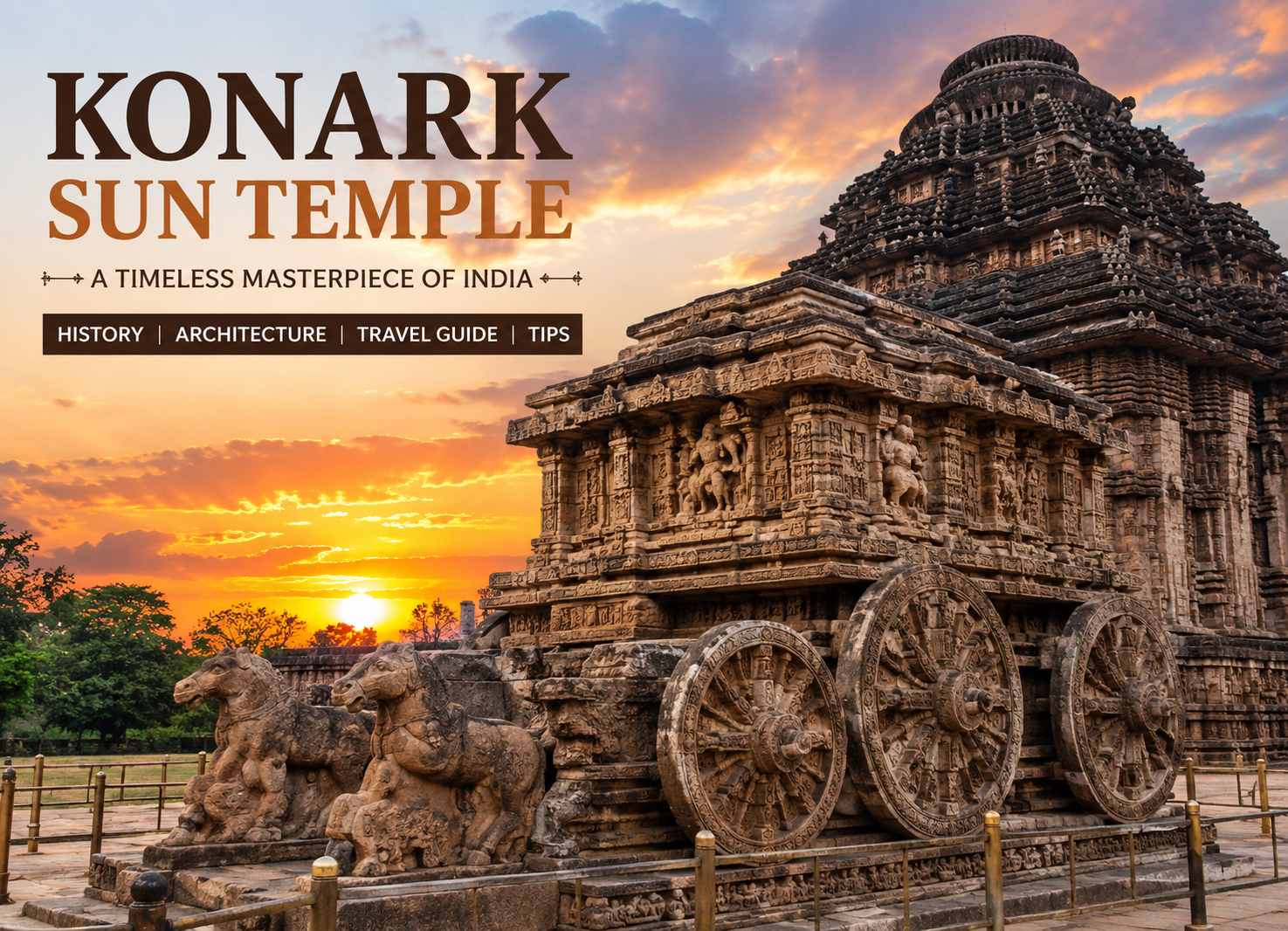
Imagine standing before a gigantic stone chariot emerging from the golden sands of Odisha, where every wheel tells time, every sculpture narrates an ancient tale, and every sunrise paints one of India’s greatest architectural masterpieces in shades of gold. Welcome to the Konark Sun Temple, one of India’s most magnificent historical monuments and a UNESCO World Heritage Site that continues to mesmerize millions of travelers from around the globe.
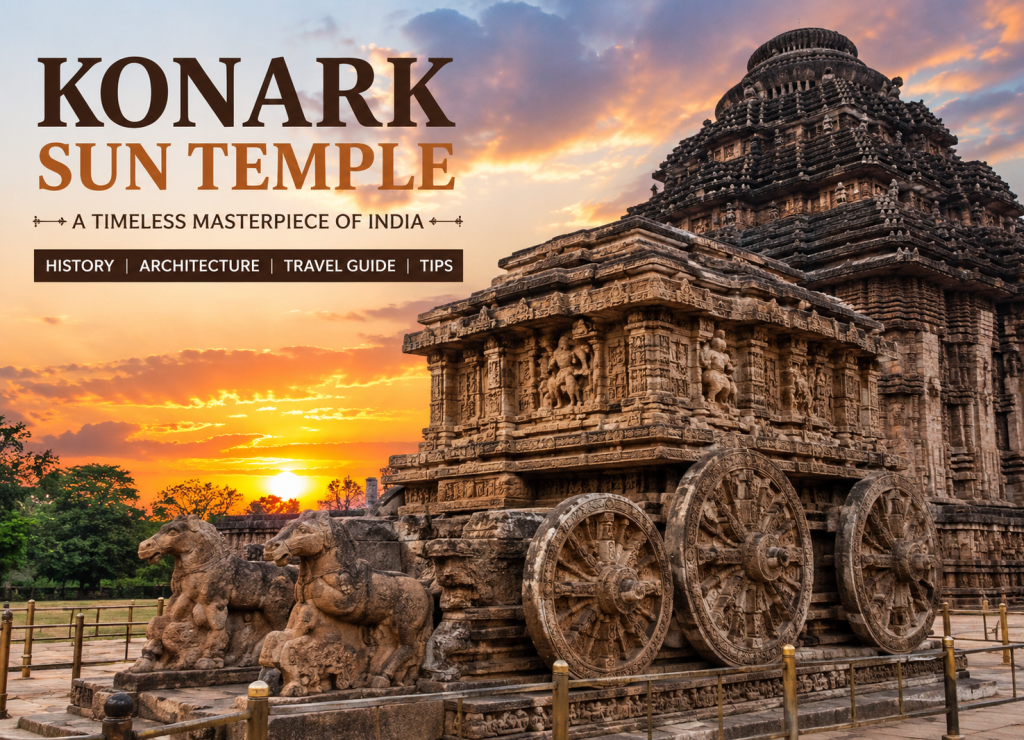
Whether you are a history enthusiast, architecture lover, spiritual traveler, photographer, or someone planning an unforgettable Odisha trip, the Konark Sun Temple deserves a top spot on your itinerary.
This comprehensive travel guide covers everything you need to know—from history and architecture to travel tips, nearby attractions, ticket prices, and the best time to visit.
Why Visit Konark Sun Temple?
Few monuments in India combine spirituality, engineering, astronomy, sculpture, and mythology as beautifully as the Konark Sun Temple.
The temple is famous for:
- UNESCO World Heritage status
- Magnificent stone chariot design
- Giant carved wheels
- Exquisite sculptures
- Ancient astronomical significance
- Incredible sunrise views
- Rich Odia culture
- Nearby pristine beaches
- Easy access from Puri and Bhubaneswar
Every year, thousands of domestic and international tourists visit Konark to witness one of the greatest achievements of medieval Indian architecture.
Where is Konark Sun Temple Located?
Konark Sun Temple is situated in the Puri district of Odisha, on India’s eastern coast along the Bay of Bengal.
Distance from major cities:
- Puri – approximately 35 km
- Bhubaneswar – approximately 65 km
- Cuttack – approximately 90 km
The scenic Marine Drive connecting Puri and Konark is considered one of India’s most beautiful coastal roads.
The Fascinating History of Konark Sun Temple
The Konark Sun Temple was built during the 13th century by King Narasimhadeva I of the Eastern Ganga Dynasty around 1250 CE.
The temple was dedicated to Surya, the Sun God.
It symbolized the military victories of the Ganga rulers and demonstrated their immense wealth, devotion, and architectural excellence.
Originally, the temple stood much taller than what visitors see today. Historical accounts suggest that its towering sanctum once rose over 220 feet, making it one of the tallest temples of medieval India.
Unfortunately, centuries of invasions, natural disasters, weathering, and structural instability caused the main sanctum to collapse.
Even in its partially ruined state, Konark remains one of the greatest architectural wonders ever created.
Why is it Called the Black Pagoda?
European sailors navigating the Bay of Bengal called Konark the Black Pagoda.
The temple’s dark appearance, combined with its towering structure visible from the sea, served as a major navigational landmark.
In contrast, the famous Jagannath Temple at Puri became known as the “White Pagoda.”
UNESCO World Heritage Site
In 1984, UNESCO designated the Konark Sun Temple as a World Heritage Site due to its outstanding universal value.
Today, it is protected by the Archaeological Survey of India (ASI), ensuring preservation for future generations.
The Temple as a Giant Stone Chariot
Perhaps the most remarkable feature of Konark is that the entire temple resembles the celestial chariot of Surya.
The chariot includes:
- 24 intricately carved wheels
- Seven powerful horses
- Massive stone platform
- Countless sculptural panels
According to Hindu mythology, the Sun God rides across the sky in a magnificent chariot pulled by seven horses.
Konark transforms this divine vision into breathtaking stone architecture.
The Famous Wheels of Konark
The 24 giant wheels are masterpieces of engineering.
Each wheel:
- Measures nearly 3 meters in diameter
- Contains intricate carvings
- Represents different divisions of time
- Functions as a sundial
Historians believe these wheels could accurately indicate time using the shadow cast by sunlight.
Today, they remain among India’s most photographed architectural features.
Seven Horses Symbolize Energy
The seven stone horses symbolize:
- Seven days of the week
- Seven colors of sunlight
- Seven chakras
- Continuous movement of time
Though many horses have suffered damage over the centuries, their symbolism remains deeply significant.
Extraordinary Architecture
Konark represents the pinnacle of Kalinga architecture.
Visitors can admire:
- Intricately carved pillars
- Dancing figures
- Royal processions
- Musicians
- Animals
- Floral motifs
- Mythological scenes
- Celestial beings
- Daily life in medieval India
Almost every inch of the temple showcases remarkable craftsmanship.
The Famous Erotic Sculptures
Like the temples of Khajuraho, Konark contains beautifully carved erotic sculptures.
These sculptures symbolize:
- Human life
- Fertility
- Prosperity
- Balance between spirituality and worldly existence
Rather than being purely decorative, they reflect the inclusive philosophy of medieval Indian temple art.
Spiritual Significance
The temple is dedicated to Lord Surya, one of Hinduism’s oldest deities.
Traditionally, devotees offered prayers to Surya for:
- Good health
- Prosperity
- Success
- Protection
- Positive energy
Although regular worship no longer takes place inside the ruined sanctum, Konark continues to attract spiritual seekers.
Best Time to Visit Konark Sun Temple
October to February
This is the ideal season.
The pleasant weather makes sightseeing comfortable, and photography conditions are excellent.
December
December is particularly special because of the internationally renowned Konark Dance Festival, where classical dancers perform against the stunning backdrop of the illuminated temple.
March to June
Summer temperatures can exceed 40°C.
Early morning visits are recommended.
July to September
The monsoon transforms the surroundings into lush greenery.
Although occasional rain may interrupt sightseeing, the landscape becomes exceptionally beautiful.
Konark Sun Temple Timings
- Opening Time: 6:00 AM
- Closing Time: 8:00 PM
Sunrise and early morning offer the most magical experience.
Entry Fee
(Subject to revision by the Archaeological Survey of India.)
Typically:
- Indian citizens – Budget-friendly entry fee
- Foreign tourists – Higher entry fee
- Children below the prescribed age – Usually free
Visitors should verify the latest ticket prices before traveling.
How to Reach Konark
By Air
The nearest airport is Biju Patnaik International Airport in Bhubaneswar.
From there, taxis and buses are readily available.
By Train
Nearest railway stations:
- Puri
- Bhubaneswar
Both cities are well connected to major Indian destinations.
By Road
Regular buses and taxis operate from:
- Puri
- Bhubaneswar
- Cuttack
The coastal drive from Puri to Konark is especially scenic.
Places to Visit Near Konark
Chandrabhaga Beach
Only a few kilometers away, Chandrabhaga Beach is famous for:
- Sunrise
- Clean shoreline
- Peaceful atmosphere
- Photography
Konark Museum
Managed by the Archaeological Survey of India, the museum houses sculptures and architectural fragments recovered from the temple complex.
Ramachandi Temple
Located near the Kushabhadra River, this serene temple is dedicated to Goddess Ramachandi and is surrounded by picturesque natural beauty.
Puri
Just a short drive away, Puri offers:
- Jagannath Temple
- Golden Beach
- Local seafood
- Shopping
- Cultural heritage
Bhubaneswar
Known as the Temple City of India, Bhubaneswar features ancient temples, museums, caves, and vibrant local cuisine.
Photography Tips
Konark is a paradise for photographers.
Best photo opportunities include:
- Sunrise
- Temple wheels
- Stone horses
- Sculptured walls
- Wide-angle architectural shots
- Evening golden light
Carry a wide-angle lens if possible.
Local Food to Try
While visiting Konark, don’t miss:
- Dalma
- Pakhala Bhata
- Chhena Poda
- Rasabali
- Khaja
- Fresh seafood (for non-vegetarians)
Nearby restaurants also serve excellent Odia thalis.
Shopping in Konark
Popular souvenirs include:
- Stone carvings
- Pattachitra paintings
- Palm leaf engravings
- Brass handicrafts
- Wooden sculptures
- Traditional Odia textiles
Buying from local artisans helps preserve Odisha’s rich cultural heritage.
Useful Travel Tips
- Visit early morning to avoid crowds.
- Wear comfortable footwear.
- Carry drinking water.
- Use sunscreen and a hat.
- Respect heritage rules.
- Avoid climbing protected structures.
- Hire an authorized guide for deeper historical insights.
- Allocate at least 2–3 hours to explore the complex thoroughly.
- Combine Konark with Puri and Bhubaneswar for a memorable Odisha circuit.
Suggested One-Day Konark Itinerary
6:00 AM – Arrive for sunrise
7:00 AM – Explore the temple complex
9:00 AM – Visit the ASI Museum
10:30 AM – Breakfast at a local restaurant
12:00 PM – Chandrabhaga Beach
2:00 PM – Ramachandi Temple
4:00 PM – Scenic Marine Drive toward Puri
Evening – Relax at Puri Beach or visit Jagannath Temple (subject to temple entry regulations).
Interesting Facts About Konark Sun Temple
- It took around 12 years to complete the temple.
- More than 1,000 skilled artisans are believed to have worked on its construction.
- The wheels function as ancient sundials.
- The temple was originally much taller than its current form.
- Konark is one of India’s finest examples of medieval stone architecture.
- The monument has inspired architects, historians, artists, and travelers worldwide for centuries.
- It remains one of the most photographed heritage sites in India.
Why Konark Should Be on Every Traveler’s Bucket List
Konark is far more than an ancient monument—it is a timeless celebration of human imagination, artistic brilliance, scientific understanding, and spiritual devotion. Walking among its magnificent stone wheels and intricately carved walls feels like stepping into a living chapter of Indian history.
Whether you come to admire its breathtaking architecture, witness the first rays of the sun illuminating its sculptures, capture stunning photographs, or immerse yourself in Odisha’s rich cultural heritage, the experience is unforgettable. Paired with nearby attractions such as Chandrabhaga Beach, Puri, and Bhubaneswar, a visit to Konark offers the perfect blend of history, nature, spirituality, and coastal charm.
If you’re planning a journey through eastern India in 2026, make the Konark Sun Temple the centerpiece of your itinerary. It is not just a destination—it is an enduring masterpiece that continues to inspire awe centuries after its creation.