Amarnath Yatra Travel Guide 2026: A Complete Journey to the Sacred Ice Shivling – Route, Registration, Best Time, Tips & Spiritual Experience
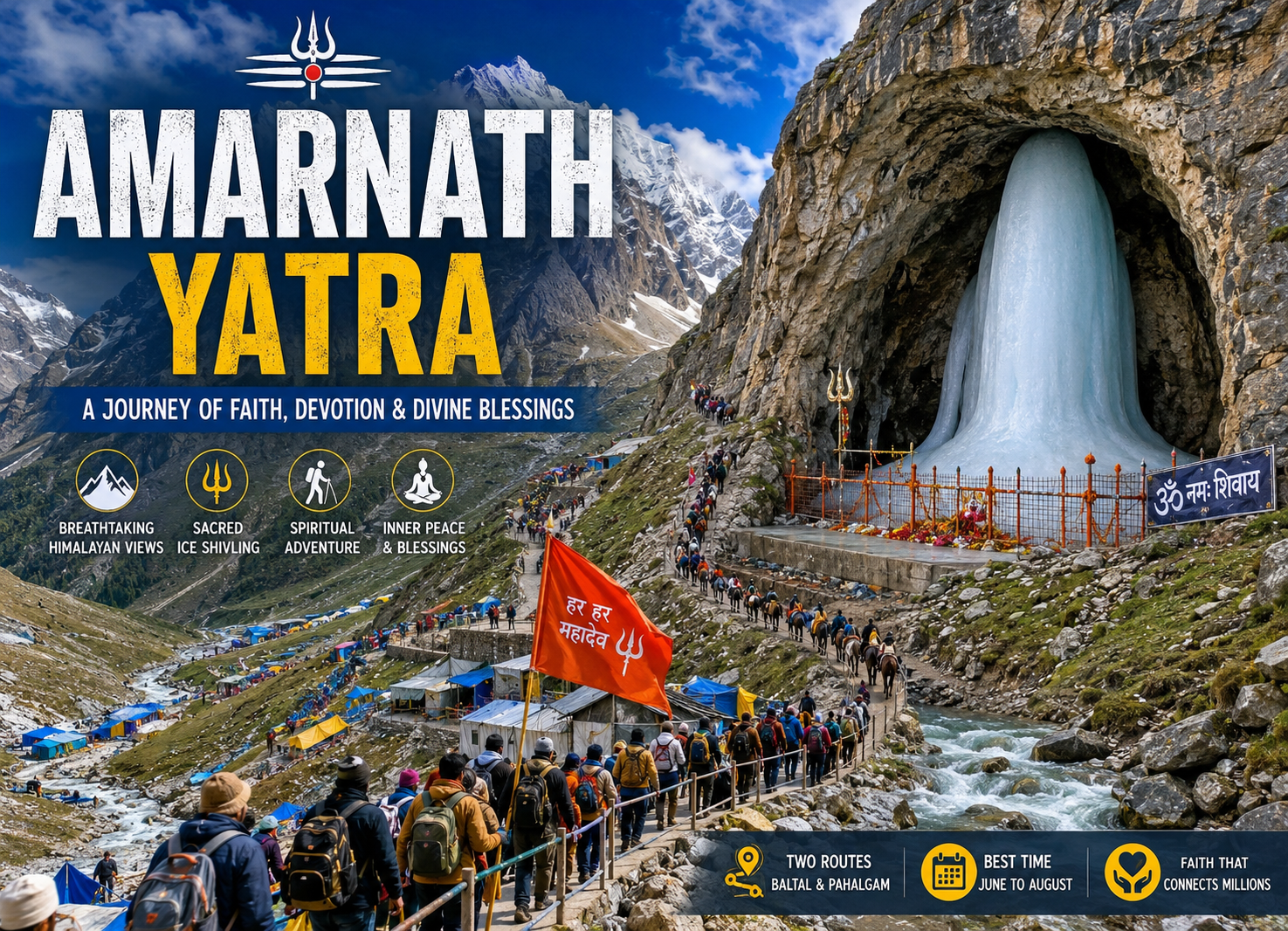
High in the snow-covered Himalayas of Jammu and Kashmir lies one of the holiest pilgrimage destinations for Hindus—the sacred Amarnath Cave, home to the naturally formed Ice Shivling, believed to represent Lord Shiva himself. Every year, hundreds of thousands of devotees undertake the challenging yet spiritually uplifting Amarnath Yatra, braving steep mountain trails, unpredictable weather, and high altitudes to seek the blessings of Baba Barfani.
But Amarnath Yatra is much more than a religious pilgrimage. It is an extraordinary travel experience that combines breathtaking Himalayan landscapes, ancient mythology, thrilling trekking adventures, vibrant local culture, and moments of profound inner peace.
Whether you are a first-time pilgrim, an adventure enthusiast, a travel blogger, or someone searching for a once-in-a-lifetime spiritual journey, this comprehensive guide will help you plan every aspect of your Amarnath Yatra.
The Spiritual Importance of Amarnath
According to Hindu mythology, Lord Shiva chose the secluded Amarnath Cave to reveal the secret of immortality (Amar Katha) to Goddess Parvati.
To ensure complete secrecy, Shiva is believed to have left behind everything connected to worldly life:
- Nandi at Pahalgam
- Moon at Chandanwari
- Snake at Sheshnag
- Son Ganesha at Mahagunas Top
- Five Elements at Panchtarni
Only after reaching the isolated cave did Lord Shiva narrate the eternal mystery of life and death.
Today, the naturally formed Ice Shivling inside the cave symbolizes this divine revelation and attracts pilgrims from across the globe.
History of Amarnath Yatra
Although references to Amarnath appear in ancient Hindu scriptures, the pilgrimage became widely known after a local shepherd, Buta Malik, reportedly rediscovered the cave centuries ago.
The cave has since become one of India’s most significant pilgrimage sites.
Today, the pilgrimage is managed by the Shri Amarnath Ji Shrine Board (SASB), ensuring organized registration, medical facilities, security, accommodation, and environmental conservation.
Where is Amarnath Cave?
The Amarnath Cave is located in the Anantnag district of Jammu and Kashmir at an altitude of approximately 3,888 meters (12,756 feet) above sea level.
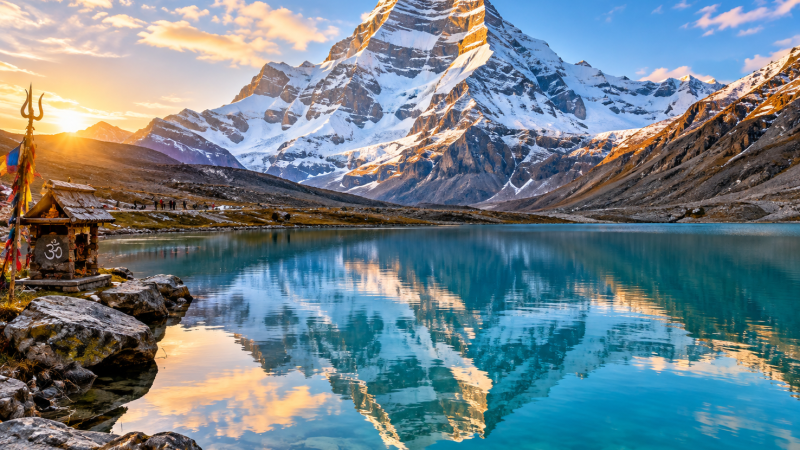
Surrounded by towering Himalayan peaks, glaciers, alpine meadows, and pristine streams, the cave offers one of the most spectacular mountain landscapes in India.
The Ice Shivling – Nature’s Divine Wonder
One of the most fascinating aspects of the pilgrimage is the naturally formed Ice Shivling.
Unlike man-made idols, this sacred formation develops naturally from freezing water droplets that fall from the cave’s ceiling.
The Shivling gradually grows and shrinks according to the lunar cycle.
Many devotees believe witnessing Baba Barfani in person is a deeply transformative spiritual experience.
Best Time to Visit Amarnath
The Amarnath Yatra is conducted only during a limited period each year, generally between late June and August, depending on weather conditions and the Hindu calendar.
Weather Overview
| Month | Temperature |
|---|---|
| June | 5°C–15°C |
| July | 3°C–12°C |
| August | 2°C–10°C |
Snowfall can occur even during summer.
Weather changes rapidly, making warm clothing essential.
How to Reach Amarnath
By Air
Nearest Airport:
- Srinagar International Airport
From Srinagar, taxis and buses connect pilgrims to:
- Baltal
- Pahalgam
By Train
Nearest Railway Station:
- Jammu Tawi
From Jammu:
- Government buses
- Shared taxis
- Private vehicles
operate regularly to Srinagar, Baltal, and Pahalgam.
By Road
Well-connected roads link Jammu with:
- Srinagar
- Sonamarg
- Baltal
- Pahalgam
The scenic drive itself is one of Kashmir’s greatest experiences.
Registration Process
Every pilgrim must complete registration before undertaking the Yatra.
Registration generally requires:
- Government-issued photo ID
- Compulsory health certificate
- Passport-size photographs
- Yatra permit
Advance registration is strongly recommended due to limited daily pilgrim quotas.
Two Main Routes of Amarnath Yatra
1. Baltal Route
Distance:
Approximately 14 km (one way)
Advantages:
- Shorter route
- Suitable for fit trekkers
- Can be completed in one day
Challenges:
- Very steep climb
- Physically demanding
- Less time for acclimatization
Perfect for experienced trekkers.
2. Pahalgam Route
Distance:
Approximately 36–48 km
Major Stops:
- Pahalgam
- Chandanwari
- Sheshnag
- Mahagunas Top
- Panchtarni
- Amarnath Cave
Advantages:
- Scenic
- Gradual ascent
- Better acclimatization
Challenges:
- Requires multiple days
This route is considered the traditional pilgrimage trail.
A Day-by-Day Travel Experience
Day 1 – Arrival in Srinagar
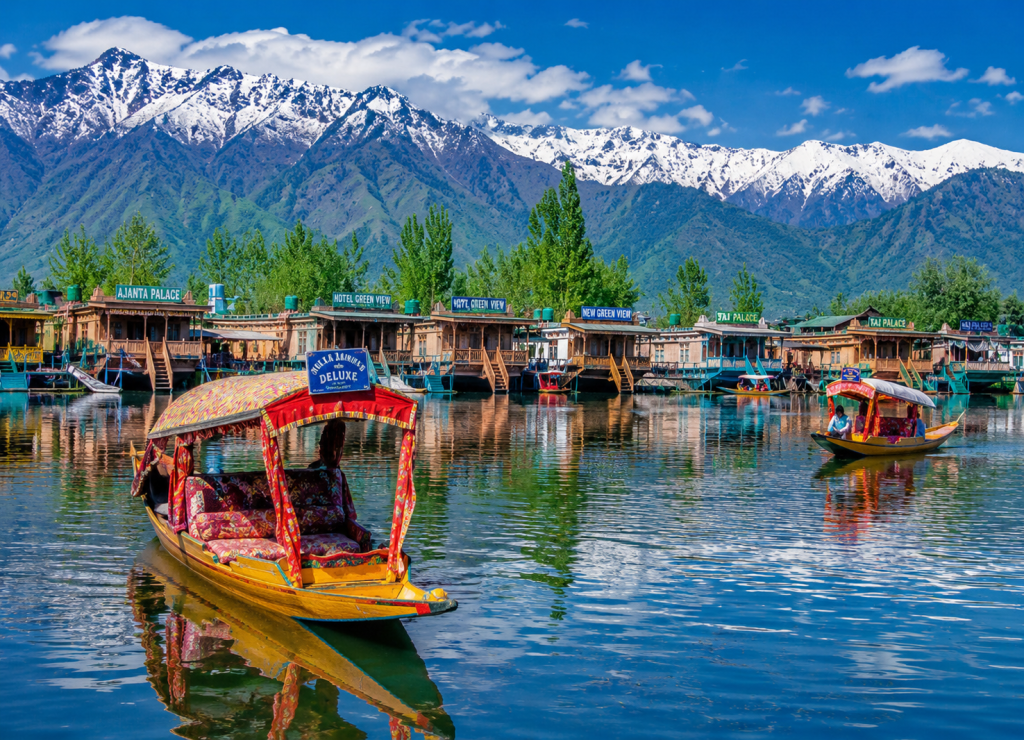
Explore Dal Lake, enjoy a peaceful Shikara ride, visit Mughal Gardens, and taste authentic Kashmiri cuisine before beginning the sacred journey.
Day 2 – Srinagar to Pahalgam
The drive offers breathtaking valleys, pine forests, rivers, and mountain villages.
Pahalgam serves as the base camp for many pilgrims.
Day 3 – Trek to Chandanwari
The journey officially begins.
Snow-covered peaks and glacier-fed streams accompany pilgrims throughout the trail.
Day 4 – Chandanwari to Sheshnag
One of the most beautiful stretches of the trek.
Highlights include:
- Crystal-clear alpine lake
- Mountain reflections
- Green meadows
- Snowfields
Day 5 – Sheshnag to Panchtarni
Cross the majestic Mahagunas Pass.
This is physically demanding but visually unforgettable.
Clouds drift below mountain ridges while waterfalls roar through deep valleys.
Day 6 – Panchtarni to Holy Cave
The final ascent fills every pilgrim with excitement.
Upon entering the sacred cave, chants of:
“Har Har Mahadev”
echo continuously.
The first glimpse of Baba Barfani often becomes the emotional highlight of the journey.
Helicopter Service
Helicopter services operate from:
- Baltal
- Pahalgam
Ideal for:
- Senior citizens
- Families
- People with medical limitations
Even helicopter passengers must walk the final stretch to the cave.
Accommodation Options
Pilgrims can stay in:
- Government camps
- Shrine Board tents
- Private camps
- Hotels in Srinagar
- Hotels in Pahalgam
- Hotels in Sonamarg
Advance booking is highly recommended.
Food During the Journey
One of the beautiful aspects of Amarnath Yatra is the availability of free community kitchens (Langars).
Pilgrims can enjoy:
- Rice
- Dal
- Khichdi
- Tea
- Fruits
- Chapati
- Vegetables
Several paid food stalls are also available.
What to Pack
Essential items include:
- Waterproof trekking shoes
- Thermal wear
- Heavy jacket
- Raincoat
- Woolen gloves
- Woolen socks
- Torch
- Power bank
- Sunglasses
- Sunscreen
- Walking stick
- Personal medicines
- Water bottle
- Dry fruits
- Energy bars
Packing light while carrying essentials is the key.
Health and Safety Tips
High altitude can affect anyone.
Stay hydrated.
Walk slowly.
Avoid overexertion.
Follow security instructions.
Do not ignore symptoms such as:
- Breathlessness
- Dizziness
- Chest pain
Medical camps are available throughout the route.
Photography Opportunities
The pilgrimage offers countless picture-perfect moments:
- Snow-capped Himalayan peaks
- Colorful tents
- Glacier crossings
- Mountain rivers
- Sunrise over alpine valleys
- Sheshnag Lake
- Pilgrim processions
- Panchtarni meadows
Photography inside the holy cave may be restricted.
Always follow official guidelines.
Local Culture
The hospitality of Kashmir adds warmth to the pilgrimage.
Visitors can experience:
- Traditional Kashmiri hospitality
- Handicrafts
- Dry fruits
- Saffron
- Kahwa tea
- Pashmina products
Interacting respectfully with locals enriches the journey.
Environmental Responsibility
The Himalayas are ecologically fragile.
Pilgrims should:
- Avoid plastic waste.
- Use designated dustbins.
- Respect wildlife.
- Do not litter.
- Avoid disturbing natural water sources.
- Follow eco-friendly travel practices.
Responsible tourism helps preserve Amarnath for future generations.
Nearby Attractions
If time permits, explore:
- Srinagar
- Dal Lake
- Gulmarg
- Sonamarg
- Betaab Valley
- Aru Valley
- Lidder River
- Mughal Gardens
- Hazratbal Shrine
- Nishat Bagh
- Shalimar Bagh
These destinations beautifully complement the spiritual pilgrimage.
Estimated Budget
Budget travelers:
USD 250–400 (excluding flights)
Mid-range travelers:
USD 500–900
Luxury travelers:
USD 1,000+
Costs vary depending on accommodation, transport, helicopter services, and travel duration.
Sample 7-Day Itinerary
Day 1: Arrive in Srinagar
Day 2: Srinagar – Pahalgam
Day 3: Pahalgam – Chandanwari
Day 4: Chandanwari – Sheshnag
Day 5: Sheshnag – Panchtarni
Day 6: Darshan at Amarnath Cave and return to Panchtarni/Baltal (depending on route)
Day 7: Return to Srinagar and depart
Why Every Traveler Should Experience Amarnath Once
The Amarnath Yatra is unlike any ordinary vacation. It challenges the body, calms the mind, and nourishes the soul. Every step along the mountain trails feels like a meditation. Every prayer echoes through ancient valleys. Every sunrise over the Himalayas reminds travelers of nature’s grandeur and humanity’s humility.
Whether you come seeking blessings, adventure, photography, or self-discovery, Amarnath leaves an unforgettable impression.
Frequently Asked Questions (FAQs)
Is Amarnath Yatra difficult?
Yes. The trek involves high-altitude walking over steep terrain. Good physical fitness and medical clearance are important.
Can senior citizens visit?
Yes. Many senior pilgrims complete the journey each year, especially using helicopter services where suitable.
Is registration mandatory?
Yes. Registration and a valid health certificate are compulsory.
What is the altitude of the Amarnath Cave?
Approximately 3,888 meters (12,756 feet).
Which route is better?
The Baltal route is shorter but steeper, while the Pahalgam route is longer, more scenic, and allows better acclimatization.
Is mobile connectivity available?
Connectivity is limited in higher-altitude sections. Inform family members in advance that communication may be intermittent.
Are food and medical facilities available?
Yes. Langars, emergency medical camps, oxygen support, and security personnel are available along the authorized routes during the Yatra.
Can children join the Yatra?
Children above the minimum age prescribed by the authorities may travel if medically fit. Always check the latest eligibility guidelines before planning.
Final Thoughts
The Amarnath Yatra is far more than a trek through the Himalayas—it is a profound journey of faith, endurance, and discovery. From the tranquil waters of Dal Lake to the icy sanctity of the Amarnath Cave, every stage of the pilgrimage offers unforgettable memories. The roar of mountain streams, the fragrance of pine forests, the chants of “Har Har Mahadev,” and the first glimpse of the sacred Ice Shivling create an experience that stays with travelers forever.
For travel enthusiasts, the route showcases some of the most spectacular landscapes in India. For devotees, it is an opportunity to seek divine blessings and inner peace. For photographers, every turn presents a postcard-worthy frame. And for every visitor, it is a reminder that the greatest journeys are those that transform us from within.
If you are planning a Himalayan pilgrimage that blends adventure, culture, spirituality, and natural beauty, the Amarnath Yatra deserves a place at the very top of your travel bucket list.